Watermelon feta salad is a refreshing and vibrant dish that combines the natural sweetness of ripe watermelon with the creamy, salty tang of feta cheese. Often garnished with fresh herbs like mint or basil and drizzled with olive oil or a light vinaigrette, this salad is a perfect balance of sweet, savory, and acidic flavors. It has become a go-to summer dish due to its simplicity, minimal prep time, and cooling properties, especially during warm weather.
This salad is not only delicious but also visually striking, thanks to the contrast between the bright pink watermelon and the white feta crumbles. It’s often served as a side at barbecues, picnics, and summer gatherings, but it can also be enjoyed as a light lunch or appetizer. Whether you are a seasoned cook or a beginner, watermelon feta salad is easy to make and offers an impressive flavor profile with just a few ingredients.
History and Origins
While the exact origins of watermelon feta salad are hard to pinpoint, the concept is heavily inspired by Mediterranean culinary traditions. The combination of fruit, cheese, and fresh herbs is common in countries like Greece, Turkey, and Lebanon, where seasonal produce plays a central role in everyday meals. Watermelon, native to Africa but now grown worldwide, has long been enjoyed in savory applications in Middle Eastern cuisine.
Feta cheese, a brined curd cheese made from sheep’s milk or a mix of sheep and goat milk, has been a staple in Greek diets for centuries. The salty and tangy profile of feta complements sweet fruits like watermelon exceptionally well. This salad likely evolved as a modern twist on traditional Mediterranean pairings, gaining popularity in Western cuisine in recent decades. Today, it is a seasonal favorite, especially in North America and Europe, often served at summer events and restaurants specializing in fresh, farm-to-table offerings.
Health Benefits of Watermelon Feta Salad
Watermelon feta salad is more than just a delicious combination of flavors—it’s also packed with nutritional benefits. Watermelon is made up of over 90 percent water, making it incredibly hydrating, especially in the summer months. It’s also a good source of vitamins A and C, as well as antioxidants like lycopene, which has been associated with heart health and reduced inflammation.
Feta cheese adds more than just flavor. It provides calcium, protein, and probiotics, all of which support bone health and digestion. While feta is a higher-sodium cheese, its strong flavor means a small amount goes a long way, helping to control portion sizes without sacrificing taste.
Additional ingredients such as mint, red onions, and olive oil also contribute health benefits. Mint can aid digestion, while olive oil is rich in heart-healthy monounsaturated fats and antioxidants. When made with minimal dressing and fresh ingredients, this salad fits into low-carb, gluten-free, and Mediterranean-style diets, making it suitable for a variety of lifestyles. It’s an excellent example of how simple, whole foods can come together to create something that is both nutritious and satisfying.

Ingredients Breakdown
Watermelon feta salad typically uses a short list of fresh, high-quality ingredients, but the variations are endless. Here is a breakdown of the most common ingredients and their roles:
Essential Ingredients:
-
Watermelon: Choose a ripe, seedless watermelon for the best texture and sweetness. Cut it into bite-sized cubes or use a melon baller for a more decorative presentation.
-
Feta Cheese: Crumbled or cubed, feta adds a salty, creamy contrast to the sweet fruit. Greek feta is preferred for its robust flavor.
-
Fresh Mint or Basil: These herbs add an aromatic freshness that enhances the overall flavor. Mint is more traditional, but basil can add a more savory note.
-
Red Onion: Thinly sliced red onions add a sharp, tangy bite and crunch, balancing the sweetness of the watermelon.
-
Olive Oil: A drizzle of extra virgin olive oil ties the ingredients together and adds a subtle richness.
-
Lime Juice or Balsamic Glaze: Lime juice offers brightness and acidity, while balsamic glaze adds a touch of sweetness and complexity.
Optional Add-Ins:
-
Cucumbers: Add crunch and freshness.
-
Avocados: Provide a creamy, nutrient-rich texture.
-
Arugula or Baby Spinach: For a leafy base that turns the salad into a more substantial dish.
-
Nuts (Walnuts or Pistachios): Add texture and healthy fats.
Always use the freshest ingredients possible for optimal flavor and texture.
Tools and Equipment Needed
Making watermelon feta salad requires minimal kitchen equipment. You’ll need a sharp knife, a cutting board, a large mixing bowl, and a spoon or salad tongs for mixing. Optional tools include a melon baller for presentation, a whisk for dressing, and a zester or grater if adding citrus zest.
Step-by-Step Recipe Instructions
-
Prepare the Watermelon: Slice the watermelon in half, remove the rind, and cut it into 1-inch cubes. Alternatively, use a melon baller for uniform, decorative spheres.
-
Slice the Red Onion: Cut a small red onion into very thin slices or rings. If desired, soak the slices in ice water for 5–10 minutes to mellow their sharpness.
-
Chop the Herbs: Roughly chop fresh mint or basil. Use whole leaves for garnish if preferred.
-
Prepare the Dressing: In a small bowl, whisk together 2 tablespoons of olive oil with 1 tablespoon of lime juice or balsamic vinegar. Add a pinch of salt and black pepper to taste.
-
Combine the Ingredients: In a large salad bowl, gently toss the watermelon cubes, red onion slices, and chopped herbs. Drizzle the dressing evenly over the mixture.
-
Add the Feta: Crumble the feta cheese over the top of the salad. Stir lightly to combine or leave the feta on top for presentation.
-
Serve Immediately: This salad is best enjoyed fresh. Optionally, chill in the refrigerator for 15–30 minutes before serving for an extra refreshing touch.
Adjust quantities based on the number of servings and personal taste preferences.
Delicious Variations of Watermelon Feta Salad
One of the best aspects of watermelon feta salad is its versatility. With just a few tweaks, you can create variations that suit different flavor profiles, dietary needs, or seasonal ingredients.
Greek-Style: Add sliced kalamata olives, diced cucumbers, and a sprinkle of oregano for a traditional Greek twist. This version pairs well with a lemon-olive oil dressing.
Spicy Version: Introduce a bit of heat with thinly sliced jalapeños or a dash of chili flakes. This adds a bold contrast to the sweet and salty base.
Herb Forward: Swap mint with fresh basil, cilantro, or even tarragon for a unique herbal flavor. A mix of herbs can also create more depth.
Vegan-Friendly: Replace feta with a plant-based alternative or marinated tofu cubes. Use dairy-free yogurt-based dressings to maintain creaminess.
Balsamic Glaze: A drizzle of thick balsamic reduction instead of citrus offers a sweet, tangy depth and works well with added berries or arugula.
Avocado or Nuts: Add avocado slices for creaminess or top with crushed pistachios or toasted walnuts for crunch and richness.
These variations allow you to customize the salad for formal dinners, casual picnics, or as part of a larger buffet.
Pairing and Serving Suggestions
Watermelon feta salad is light, fresh, and full of flavor, making it an ideal side dish for warm-weather meals. It pairs especially well with grilled meats such as chicken, lamb, or fish. The sweet and salty notes help cut through the richness of proteins, making it a perfect complement to barbecue.
For a vegetarian spread, serve it alongside grain-based dishes like couscous, quinoa, or farro. It also fits well into Mediterranean-themed menus, pairing nicely with hummus, pita, olives, and roasted vegetables.
If serving at a summer gathering, try plating the salad on a large platter rather than in a bowl to showcase the colors and textures. As a starter, smaller individual servings can be portioned into clear cups or appetizer bowls.
For drinks, consider a crisp white wine such as Sauvignon Blanc or a dry rosé. Non-alcoholic pairings include sparkling water with lime or iced mint tea.

Storage and Make-Ahead Tips
Watermelon feta salad is best served fresh, but it can be prepared partially in advance. You can chop the watermelon, slice the onions, and prepare the dressing a few hours ahead. Store each component separately in the refrigerator.
Combine all ingredients just before serving to maintain texture and freshness. Adding the dressing or feta too early can cause the salad to become soggy or watery.
Leftovers can be stored in an airtight container in the fridge for up to one day, but the quality may decline as the watermelon releases moisture. Freezing is not recommended as it alters the texture of both watermelon and feta.
Common Mistakes to Avoid
While watermelon feta salad is simple to make, a few common mistakes can impact its flavor and texture.
Using Overripe Watermelon: An overripe melon can be mushy and overly sweet, making the salad less refreshing. Choose firm, crisp watermelon for the best results.
Pre-mixing Too Early: Combining ingredients too far in advance causes the watermelon to release water, resulting in a soggy salad. Mix just before serving.
Too Much Dressing: Overdressing the salad can mask the natural flavors. A light drizzle is enough to enhance the ingredients without overwhelming them.
Poor Quality Feta: Using low-quality or overly soft feta can make the salad taste bland or messy. Opt for authentic Greek feta for the best texture and flavor.
Skipping the Acid: Lime juice or balsamic vinegar adds essential brightness. Without it, the salad can feel one-dimensional.
Heavy Add-Ins: Adding too many ingredients can confuse the flavor balance. Keep additions minimal and purposeful.
FAQs – Watermelon Feta Salad
Can I make watermelon feta salad ahead of time?
Yes, you can prepare the ingredients ahead, but it’s best to assemble the salad right before serving. Watermelon releases water over time, which can make the salad soggy. Keep the watermelon, feta, herbs, and dressing separate until just before mealtime.
What cheese goes well with watermelon besides feta?
Feta is the most common pairing due to its salty and crumbly texture, but other cheeses can also work. Try goat cheese for a tangy, creamy option, or halloumi if you prefer something grilled. Ricotta salata and queso fresco are also good alternatives.
What herbs pair well with watermelon feta salad?
Mint is the traditional herb of choice, offering a cool, refreshing contrast to the sweetness of watermelon. Basil provides a slightly peppery note, while cilantro can add a fresh, citrusy undertone. A blend of herbs can enhance complexity.
Is watermelon feta salad good for weight loss?
This salad can be a great option for weight loss when made with portion control in mind. It’s low in calories, high in water content, and full of nutrients. Use minimal dressing and avoid heavy add-ins like nuts or avocado if keeping calories down is a priority.
Can I use a different fruit instead of watermelon?
Yes, cantaloupe, honeydew, or strawberries can be used in place of watermelon. Peaches and mangoes also work well, especially when paired with feta and mint. Adjust acidity and sweetness with lime or balsamic to match the fruit you choose.
Conclusion
Watermelon feta salad is a celebration of summer—vibrant, refreshing, and incredibly simple to prepare. With its perfect blend of sweet and salty flavors, hydrating ingredients, and eye-catching presentation, it’s a versatile dish that fits any occasion. Whether you enjoy it as a side for grilled meats, a light lunch, or a picnic favorite, the possibilities for customization are endless. By choosing fresh, high-quality ingredients and balancing flavors thoughtfully, you can create a salad that is both nourishing and crowd-pleasing. Try a variation or two, and make this seasonal classic a staple in your warm-weather recipe collection.
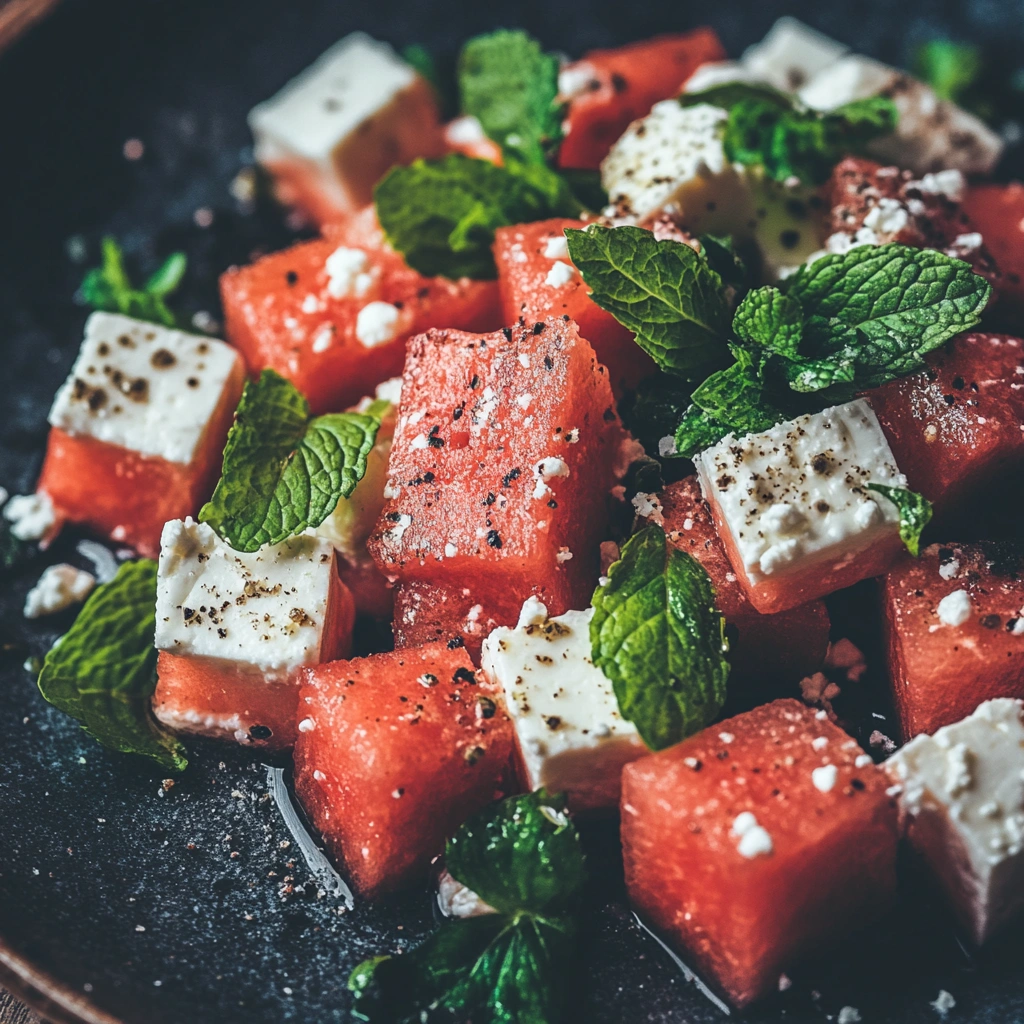
Watermelon Feta Salad
This refreshing watermelon feta salad is the perfect summer side dish, combining juicy, sweet watermelon with tangy feta cheese, crisp red onions, and fresh mint. Finished with a drizzle of olive oil and a splash of lime or balsamic glaze, this salad is hydrating, vibrant, and packed with flavor. It's easy to assemble in under 15 minutes and makes a colorful addition to any barbecue, picnic, or weeknight meal. Light, healthy, and endlessly customizable, it's a warm-weather classic you'll want to make all season long.
Ingredients
- 4 cups watermelon cubed or balled (seedless is easiest!)
- 1 cup crumbled feta cheese look for a creamy Greek feta
- 1/4 cup fresh mint leaves roughly chopped (or basil for a twist)
- 2 tablespoons extra-virgin olive oil
- 1 tablespoon fresh lime juice about half a lime
- 1/4 teaspoon salt adjust to taste
- 1/8 teaspoon black pepper optional, for a little kick
Instructions
- Cut your watermelon into bite-sized cubes or use a melon baller for a fun, rounded look. Place the pieces in a large salad bowl.
- Crumble the feta cheese over the watermelon. If you’re using pre-crumbled feta, you’re already one step ahead!
- Sprinkle the chopped mint (or basil, if you prefer) over the watermelon and feta for a pop of fragrant, herbal flavor.
- In a small bowl, whisk together the olive oil, lime juice, salt, and pepper. This simple dressing ties everything together without overpowering the fresh ingredients.
- Drizzle the dressing over the salad, gently toss everything to combine, and you’re ready to serve! For a little extra flair, garnish with a few whole mint leaves on top.