In this article
Vinegar pie is one of the great make-do desserts of the American farm kitchen. In the winter of 1934 there was no lemon within fifty miles of most farms, and there was a jug of cider vinegar on every back porch. A cook who wanted the bright, sharp taste of a lemon pie used what she had. Two spoonfuls of vinegar went into a custard of eggs, sugar and butter, the sugar hid the rest, and the pie came out smooth, golden and tasting so much like lemon that company put their forks down at the name and picked them up again at the first bite.
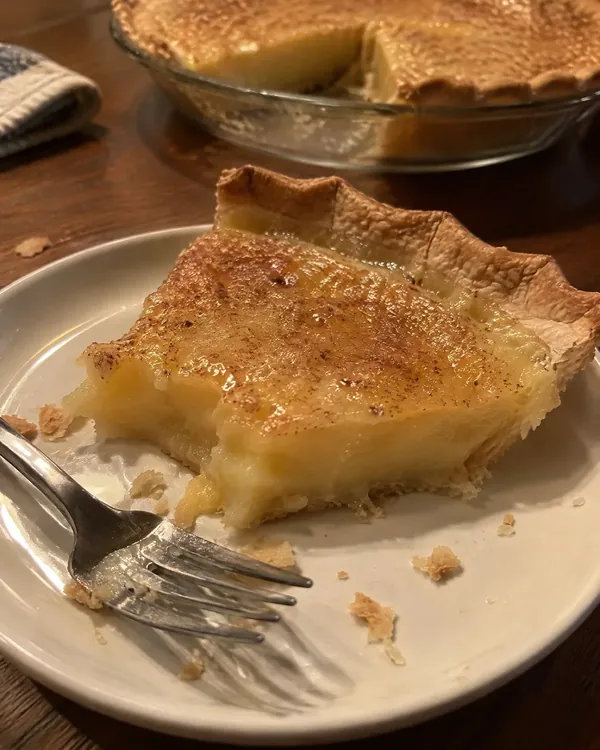
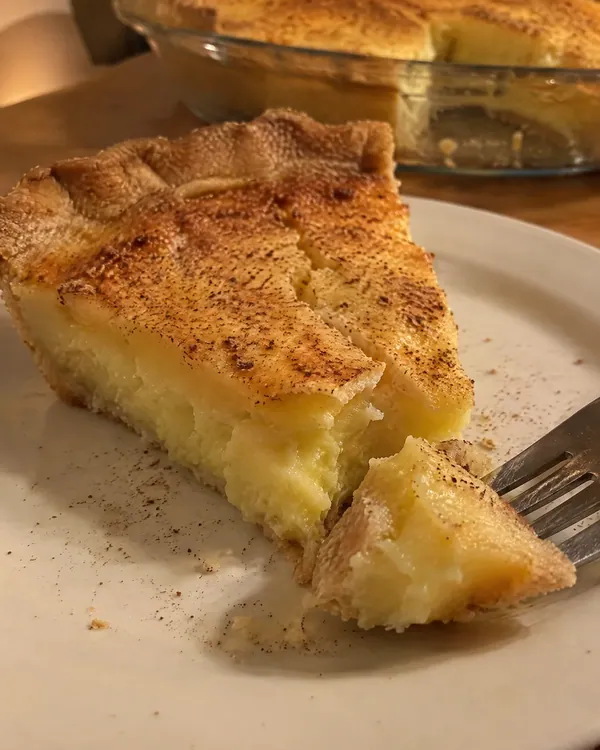
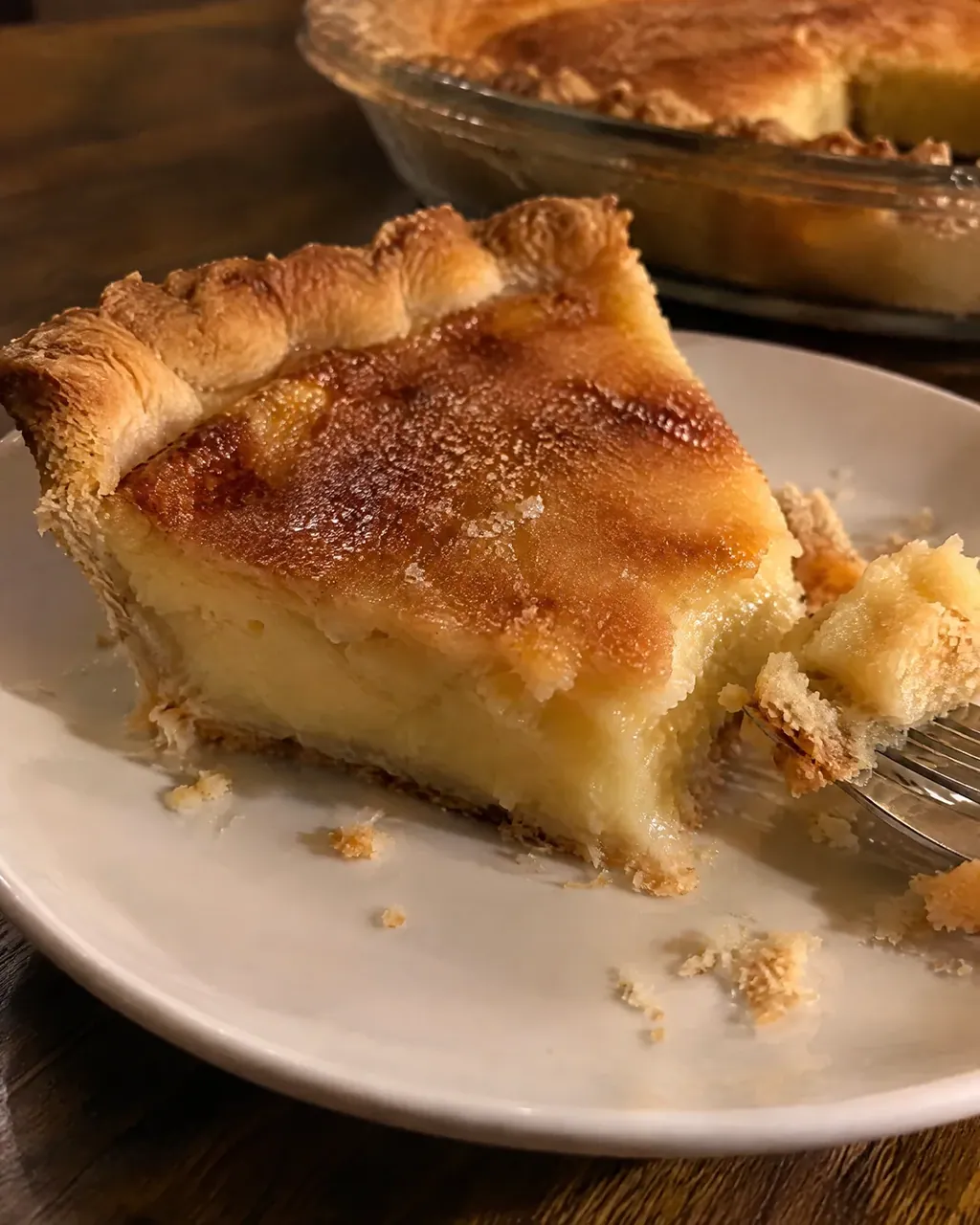
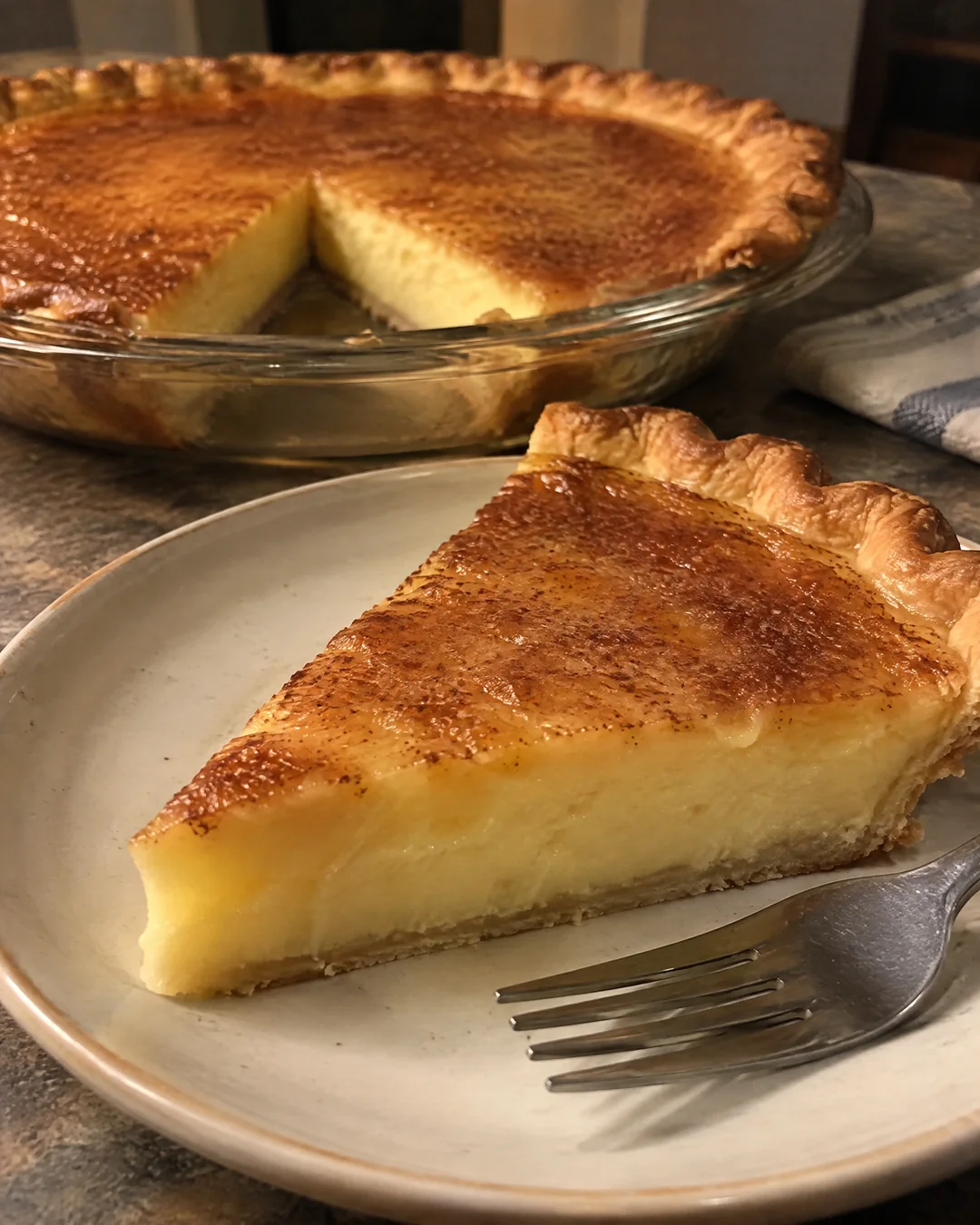
It is a chess pie underneath, which is to say a simple baked custard held together with a little flour. The vinegar does two jobs. It gives the tartness a lemon would, and it keeps the sugar from turning the filling into candy, so the pie sets creamy rather than gritty. Once baked there is no vinegar taste at all. There is just a clean, tangy sweetness that people who did not know would call lemon every time.
The crust is the other half of the story. Farm cooks called it a lazy crust: flour, salt and melted butter stirred into crumbs and pressed into the pie plate with the fingers, no rolling pin and no chilling. And the pie comes out of the oven when the middle just barely shakes. Overbake it and the custard weeps, and then, as one grandmother liked to say, people believe it is the vinegar crying.
Why this vinegar pie works
- Two tablespoons of cider vinegar. Just enough acid to give the custard the tang of lemon and to keep the filling smooth and creamy instead of sugary and grainy.
- A little flour. Two tablespoons hold the custard together so it slices clean, without making it heavy.
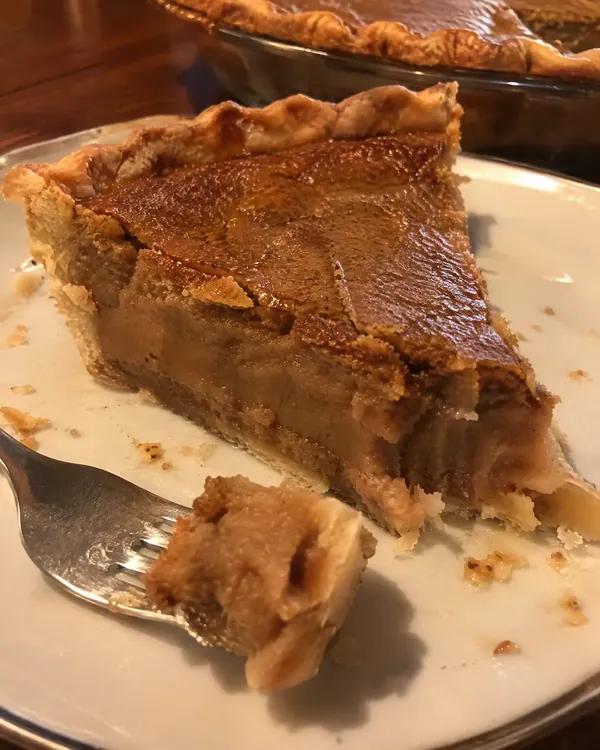
- Melted butter and whole eggs. The old proportions of a chess pie: rich, sweet and set, with a thin brown skin on top.
- Out of the oven while it still shakes. The center finishes setting as the pie cools. Baked until firm, the eggs tighten and the filling weeps.
Ingredients
Makes one 9-inch pie, 8 slices. The measurements are in US cups with grams in brackets.
For the lazy crust
- 1 1/2 cups all-purpose flour (188g)
- 1/2 teaspoon fine salt
- 1 teaspoon granulated sugar
- 1/2 cup unsalted butter (113g), melted
- 1 to 2 tablespoons cold water, only if the dough will not hold together
For the filling
- 3 large eggs
- 1 1/4 cups granulated sugar (250g)
- 2 tablespoons all-purpose flour (16g)
- 1/4 teaspoon fine salt
- 1/2 cup unsalted butter (113g), melted and cooled a little
- 2 tablespoons cider vinegar (30ml)
- 1 teaspoon vanilla extract
Plain cider vinegar is the one. White vinegar is harsher and tastes of pickles. If you have a rolled crust you prefer, use it, but the lazy crust is part of the pie’s history and it takes five minutes.
How to make vinegar pie
- Heat the oven to 350°F (175°C) with a rack in the middle. For the crust, whisk the flour, salt and sugar together in a bowl. Pour in the melted butter and stir with a fork until the mixture looks like damp crumbs that hold together when pressed. If it will not hold, add cold water a tablespoon at a time.
- Tip the crumbs into a 9-inch pie plate. Press them with your fingers evenly over the bottom and up the sides, then flatten the bottom with the base of a measuring cup. Build a small rim and pinch it between your fingers. Prick the bottom a few times with a fork. No chilling and no rolling. Set it aside.
- For the filling, whisk the eggs and sugar together in a large bowl for about a minute, until smooth and a little pale. Whisk in the flour and salt until no lumps remain.
- Whisk in the melted butter in a slow stream, then the 2 tablespoons of cider vinegar and the vanilla. The filling will be thin and glossy and smell of vinegar. That smell bakes away completely.
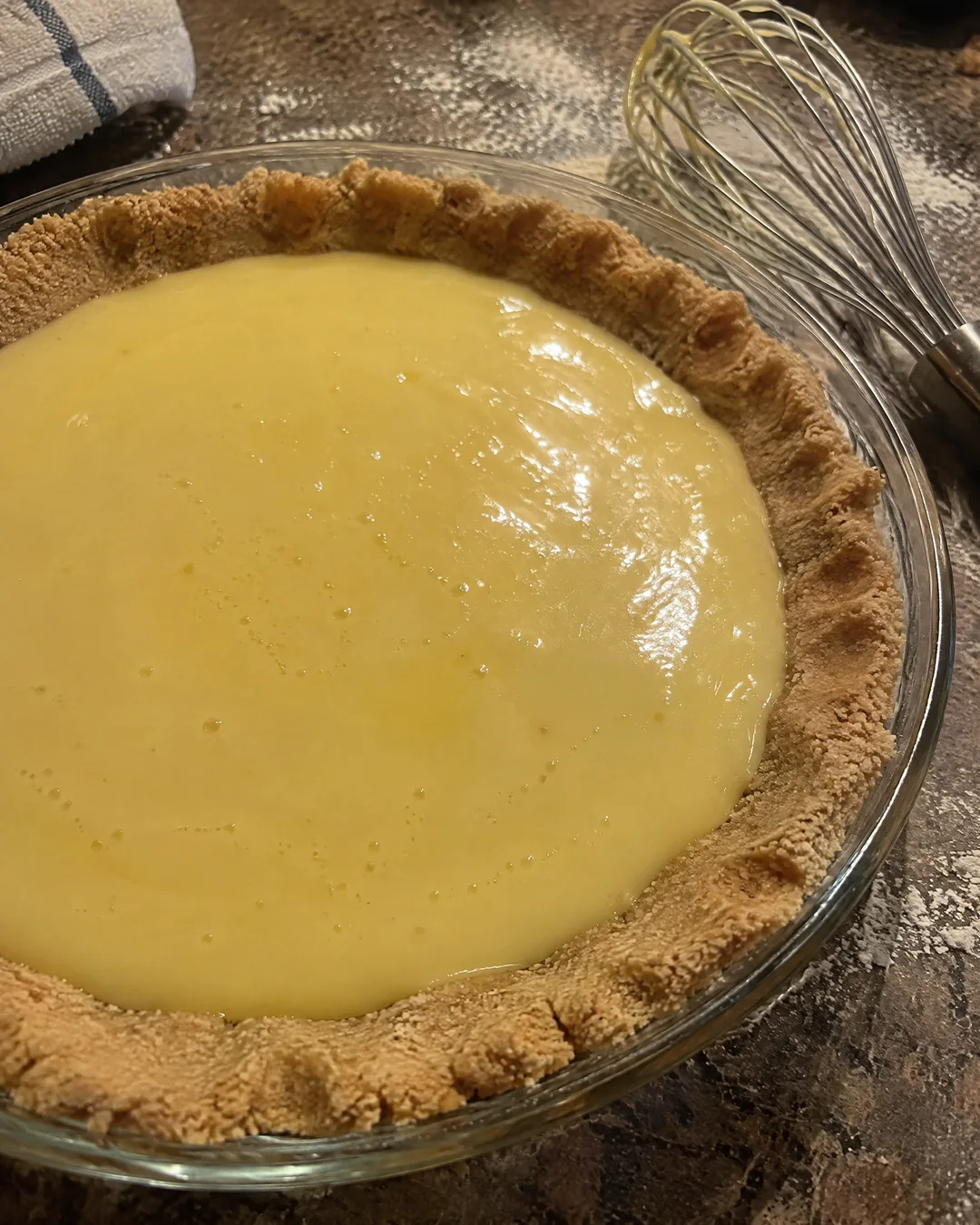
- Pour the filling into the pressed crust and set the pie plate on a baking sheet to make it easy to move.
- Bake at 350°F for 40 to 45 minutes. The top will turn golden brown with a thin skin, the edges will puff and set, and the center should still barely shake when you nudge the plate, like set gelatin, not liquid. If the crust edge browns too fast, lay a strip of foil over it for the last 10 minutes.
- Cool the pie on a rack for at least 3 hours. The center finishes setting as it cools. Slice at room temperature or cold, plain or with a spoonful of whipped cream.
Tips that make the difference
- Measure the vinegar. Two tablespoons gives lemon. Three gives vinegar, and the game is up.
- Do not beat the filling hard once the butter is in. Air in a custard rises to the top and cracks as it cools.
- Trust the shake. A pie that looks fully set in the oven is overbaked and will weep clear liquid at the edges.
- Press the crust thin on the bottom and a little thicker at the rim, where it needs to hold the filling.
Variations
- Spiced. Add 1/2 teaspoon ground cinnamon and 1/4 teaspoon nutmeg to the filling for the version found in many Midwestern community cookbooks.
- Brown sugar. Use 1 1/4 cups packed light brown sugar (250g) in place of the white for a darker, more caramel pie.
- Meringue top. Beat 3 egg whites with 6 tablespoons sugar to stiff peaks, spread over the baked pie and brown at 350°F for 10 minutes.
- Rolled crust. Use a regular 9-inch unbaked pie shell in place of the lazy crust. Nothing else changes.
Storage and make-ahead
Once cooled, the pie keeps loosely covered at room temperature for the first day and in the refrigerator for up to 4 days. Many people prefer it cold.
It freezes well for up to 2 months, wrapped tightly in plastic and then foil. Thaw overnight in the refrigerator.
Frequently asked questions
Does vinegar pie taste like vinegar?
No. Baked with the sugar, butter and eggs, the vinegar gives a clean tartness that tastes remarkably like lemon. The vinegar smell is strong in the raw filling and gone completely after baking.
Why did my pie weep or turn watery?
It was baked too long. When the eggs in a custard cook past set they squeeze out liquid. Take the pie out while the center still barely shakes and let it finish setting as it cools.
Can I use white vinegar instead of cider vinegar?
You can, in the same amount, but the flavor is sharper and less rounded. Cider vinegar has a faint apple sweetness that suits the custard.
What is a lazy crust?
A press-in crust: flour, salt and melted butter stirred to crumbs and pressed into the pie plate by hand, with no rolling pin and no chilling. Farm cooks used it when there was no time, and it makes a tender, cookie-like shell.
Two tablespoons of vinegar, a crust pressed in with your fingers, and out of the oven while the middle still shakes. Then serve it without saying the name, and watch them taste the lemon that isn’t there.
Vinegar Pie (The Depression Custard Pie That Tastes Like Lemon)
Old-fashioned vinegar pie from the Depression years: a smooth golden custard of eggs, sugar, melted butter and a little flour, sharpened with two tablespoons of cider vinegar so it tastes almost exactly like lemon, in a press-in lazy crust with no rolling. Baked at 350°F until the center barely shakes.
Ingredients
- 1 1/2 cups all-purpose flour
- 1/2 teaspoon fine salt
- 1 teaspoon granulated sugar
- 1/2 cup unsalted butter (113g), melted
- 1 to 2 tablespoons cold water, only if the dough will not hold together
- 3 large eggs
- 1 1/4 cups granulated sugar
- 2 tablespoons all-purpose flour
- 1/4 teaspoon fine salt
- 1/2 cup unsalted butter (113g), melted and cooled a little
- 2 tablespoons cider vinegar
- 1 teaspoon vanilla extract
Instructions
- Heat the oven to 350°F (175°C) with a rack in the middle. For the crust, whisk the flour, salt and sugar together in a bowl. Pour in the melted butter and stir with a fork until the mixture looks like damp crumbs that hold together when pressed. If it will not hold, add cold water a tablespoon at a time.
- Tip the crumbs into a 9-inch pie plate. Press them with your fingers evenly over the bottom and up the sides, then flatten the bottom with the base of a measuring cup. Build a small rim and pinch it between your fingers. Prick the bottom a few times with a fork. No chilling and no rolling. Set it aside.
- For the filling, whisk the eggs and sugar together in a large bowl for about a minute, until smooth and a little pale. Whisk in the flour and salt until no lumps remain.
- Whisk in the melted butter in a slow stream, then the 2 tablespoons of cider vinegar and the vanilla. The filling will be thin and glossy and smell of vinegar. That smell bakes away completely.
- Pour the filling into the pressed crust and set the pie plate on a baking sheet to make it easy to move.
- Bake at 350°F for 40 to 45 minutes. The top will turn golden brown with a thin skin, the edges will puff and set, and the center should still barely shake when you nudge the plate, like set gelatin, not liquid. If the crust edge browns too fast, lay a strip of foil over it for the last 10 minutes.
- Cool the pie on a rack for at least 3 hours. The center finishes setting as it cools. Slice at room temperature or cold, plain or with a spoonful of whipped cream.