In this article
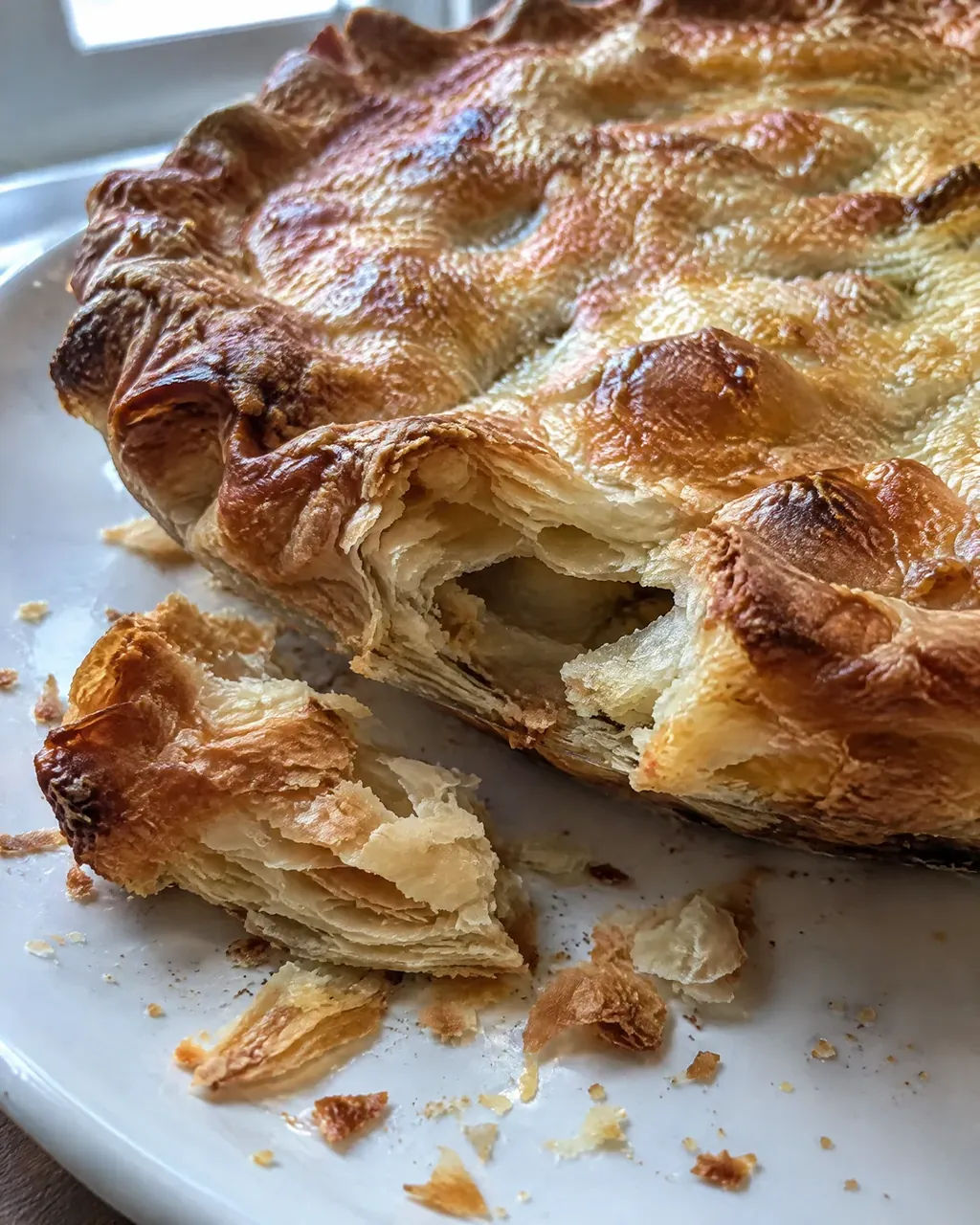
My mother made a pie crust every Saturday of my life, and I never once saw her measure the water with a cup. She measured it with her eyes and her fingertips, a few spoonfuls at a time, and she stopped long before I would have. The dough she wrapped up and put in the icebox looked unfinished to me, rough and crumbly with streaks of butter all through it. It baked into the flakiest, most tender crust in our town, and the women who asked her for the recipe never got it to come out the same, because the recipe was not the secret.
The secret was three habits. The water had ice cubes floating in it and a spoon of vinegar stirred in. The butter came straight from the cold, cut into cubes, and she worked it into the flour only until the biggest pieces were the size of peas, then quit. And she stopped adding water and stopped mixing the moment the dough would hold together when squeezed, pressing it into disks with the flat of her hand rather than kneading it smooth. Every extra minute of mixing builds gluten, and gluten is what turns a crust from flaky to tough. Smooth dough is tough crust. The rough, shaggy dough is the one you want.
Why this pie crust works
- Cold butter in visible pieces. In the oven those pieces melt and release steam, which lifts the dough into flaky layers. Butter worked in until invisible gives a mealy, flat crust.
- Ice water. It keeps the butter solid while you mix. Warm water melts it into the flour.
- A tablespoon of vinegar. The little bit of acid slows gluten development, so the crust stays tender even if you handle it a bit. You will not taste it.
- Stopping early. Shaggy dough pressed together is tender. Kneaded smooth dough is tough.
- An hour of rest. The flour absorbs the water evenly and the gluten relaxes, so the crust rolls easily and does not shrink in the pan.
Ingredients
Makes two 9-inch crusts, enough for one double-crust pie or two single-crust pies. The measurements are in US cups with grams in brackets.
- 2 1/2 cups all-purpose flour (315g)
- 1 teaspoon fine salt
- 1 tablespoon granulated sugar
- 1 cup very cold unsalted butter (226g), cut into 1/2 inch cubes
- 1/2 cup ice water (120ml), measured without the ice
- 1 tablespoon white vinegar or apple cider vinegar
Fill a glass with water and ice cubes before you start, then measure the half cup of ice water from it and stir in the vinegar. You may not need all of it; humidity and flour change the amount every time.
How to make pie crust
- Whisk the flour, salt and sugar together in a large bowl.
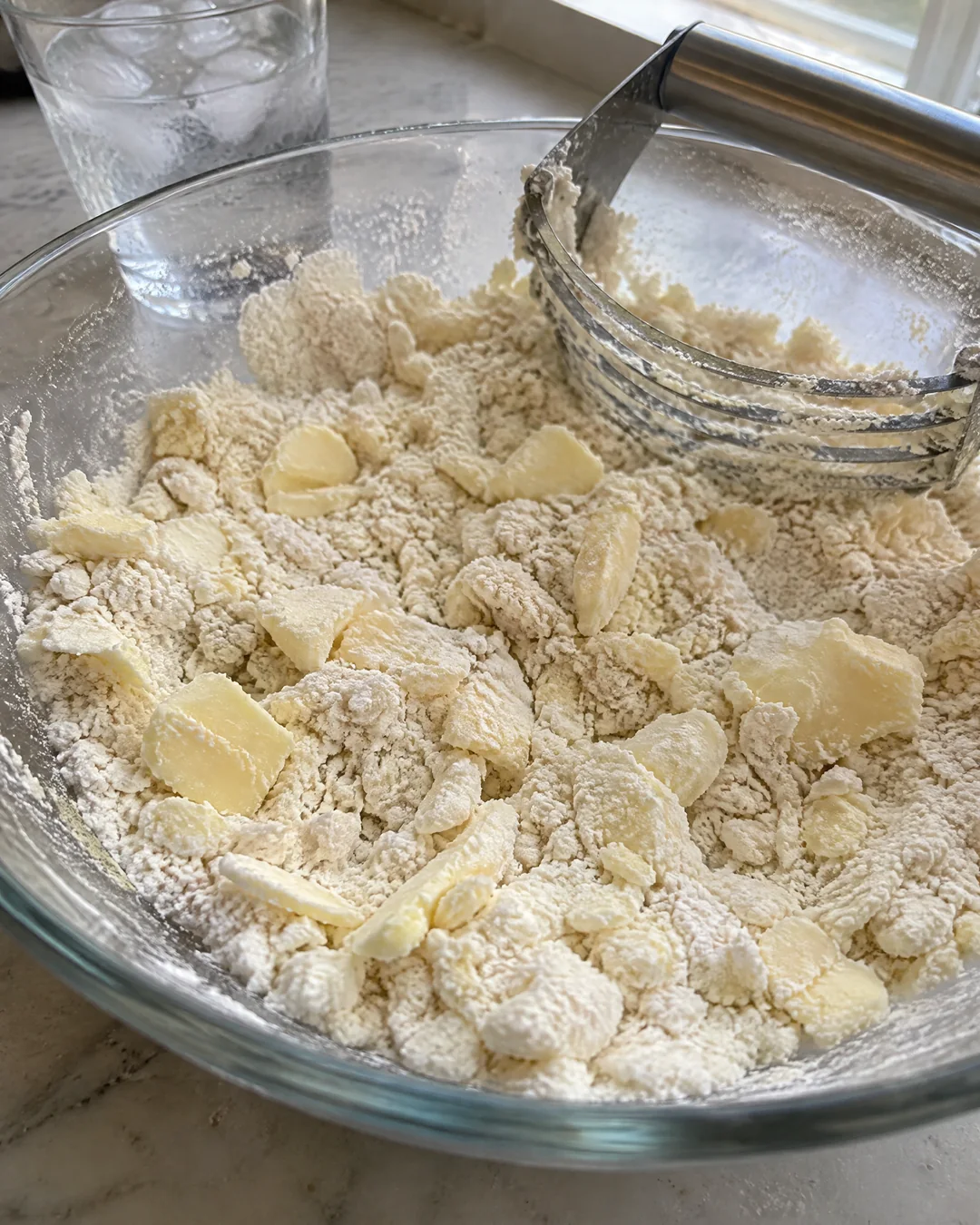
- Add the cold butter cubes. Work them into the flour with a pastry cutter, two knives or your fingertips, pressing the cubes into flat flakes, until the mixture looks like coarse crumbs with plenty of pea-size pieces of butter left. If the butter starts to feel soft, put the bowl in the freezer for 10 minutes.
- Stir the vinegar into the 1/2 cup of ice water. Sprinkle a few spoonfuls over the flour mixture and toss it with a fork. Keep adding a few spoonfuls at a time, tossing after each, until the dough holds together in a clump when you squeeze a handful. It should still look shaggy and dry in places.
- Turn the dough out onto the counter, divide it in half, and press each half into a flat disk about 1 inch thick with the flat of your hands. Do not knead it. Wrap each disk in plastic and refrigerate for at least 1 hour, or up to 2 days.
- To roll, let a disk sit for 5 minutes, then roll it on a lightly floured counter from the middle outward, giving it a quarter turn after every roll so it stays round and does not stick. Roll to a 12 inch circle about 1/8 inch thick.
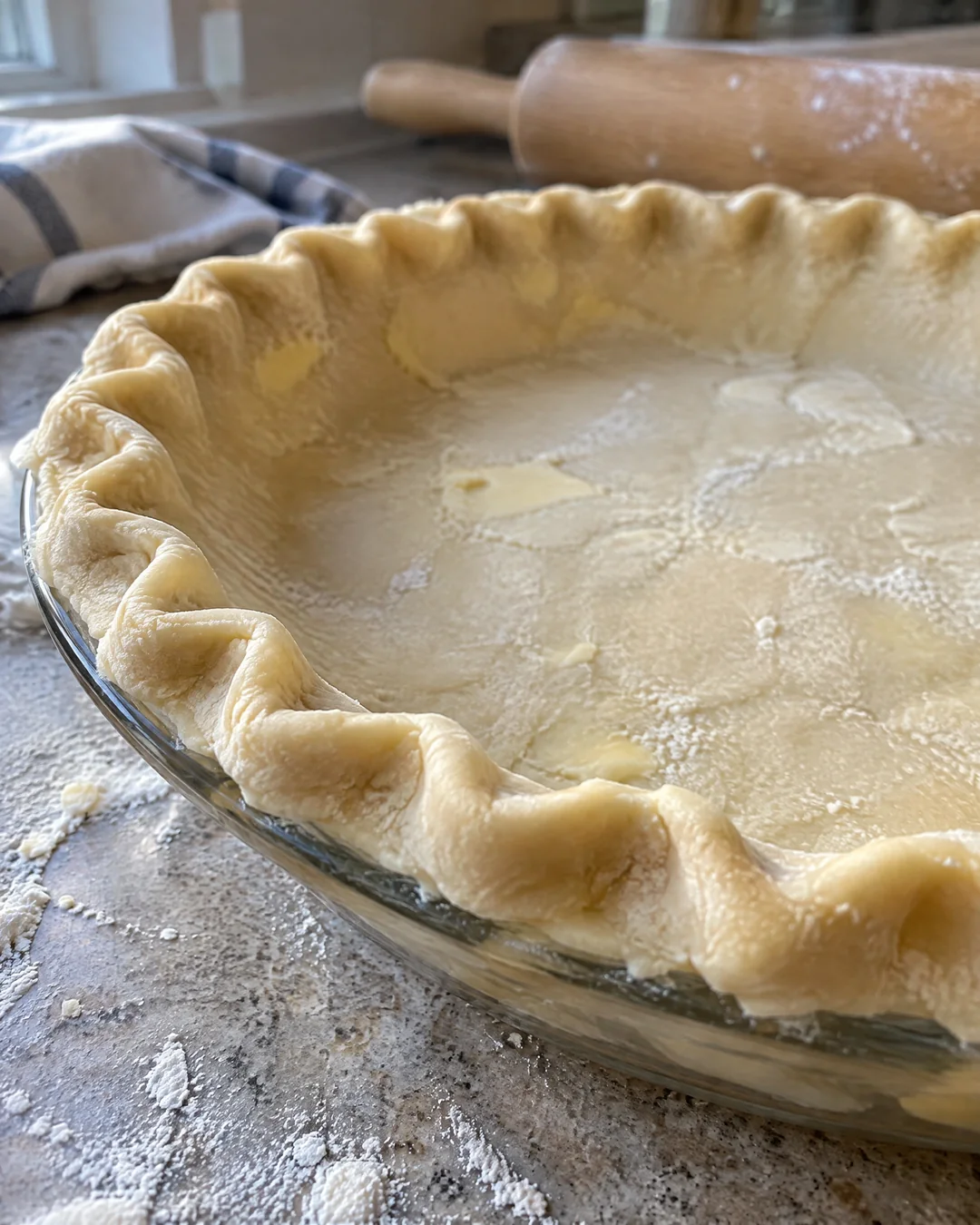
- Fold the dough in half, lift it into a 9 inch pie plate, unfold it and ease it into the corners without stretching it. Trim, leaving a 1 inch overhang, fold the edge under and crimp it. Chill the shell for 15 minutes before baking.
- For a baked shell, heat the oven to 425 degrees (220°C). Line the chilled shell with foil and fill it with dry beans or pie weights. Bake for 15 minutes, lift out the foil and beans, prick the bottom with a fork, and bake 10 more minutes until golden. Cool before filling.
Tips that make the difference
- If you can see the butter, you did it right. Streaks and flecks of butter in the dough are the flakes.
- Add the water slowly. Too much water makes a sticky dough that bakes up tough and shrinks.
- Keep everything cold. On a warm day, chill the flour and the bowl too.
- Do not stretch the dough into the plate. Stretched dough shrinks back down the sides in the oven.
- Rest the shell in the refrigerator before baking. A cold crust holds its crimp.
Variations
- Single crust. Halve every ingredient for one 9 inch shell.
- Food processor. Pulse the flour, salt, sugar and butter 8 to 10 times until pea-size, then pulse in the water a little at a time just until clumps form. Stop there.
- Sweet crust for cream pies. Increase the sugar to 2 tablespoons.
- Savory crust for pot pie. Leave out the sugar and add 1/2 teaspoon dried thyme to the flour.
Storage and make-ahead
Wrapped disks keep in the refrigerator for 2 days and in the freezer for 3 months. Thaw frozen dough overnight in the refrigerator.
A crimped, unbaked shell can be frozen right in its metal pie pan, wrapped well, and baked from frozen; add 5 minutes to the first stage.
A baked empty shell keeps, covered, at room temperature for 1 day.
Frequently asked questions
Why is my pie crust tough?
It was mixed too long, kneaded smooth, or had too much water. All three build gluten. Stop as soon as a squeezed handful holds together.
Why is there vinegar in pie crust?
A small amount of acid keeps the crust tender by slowing gluten development. It bakes off completely and you cannot taste it.
Why did my crust shrink?
The dough was stretched into the pan or did not rest long enough. Ease it in loosely, and chill the shell 15 minutes before it goes into the oven.
Can I use salted butter?
Yes. Reduce the salt to 1/2 teaspoon.
Cold butter you can see, ice water with a spoon of vinegar, and the nerve to stop while it still looks wrong. That is the whole crust, and now it is yours.
Old-Fashioned All-Butter Pie Crust (Ice Water and Vinegar)
A tender, flaky all-butter pie crust the old way: cold butter worked in until pea-size, ice water with a tablespoon of vinegar, stopped while the dough is still shaggy. Makes two crusts, plus how to blind bake a shell at 425 degrees.
Ingredients
- 2 1/2 cups all-purpose flour
- 1 teaspoon fine salt
- 1 tablespoon granulated sugar
- 1 cup very cold unsalted butter (226g), cut into 1/2 inch cubes
- 1/2 cup ice water (120ml), measured without the ice
- 1 tablespoon white vinegar or apple cider vinegar
Instructions
- Whisk the flour, salt and sugar together in a large bowl.
- Add the cold butter cubes. Work them into the flour with a pastry cutter, two knives or your fingertips, pressing the cubes into flat flakes, until the mixture looks like coarse crumbs with plenty of pea-size pieces of butter left. If the butter starts to feel soft, put the bowl in the freezer for 10 minutes.
- Stir the vinegar into the 1/2 cup of ice water. Sprinkle a few spoonfuls over the flour mixture and toss it with a fork. Keep adding a few spoonfuls at a time, tossing after each, until the dough holds together in a clump when you squeeze a handful. It should still look shaggy and dry in places.
- Turn the dough out onto the counter, divide it in half, and press each half into a flat disk about 1 inch thick with the flat of your hands. Do not knead it. Wrap each disk in plastic and refrigerate for at least 1 hour, or up to 2 days.
- To roll, let a disk sit for 5 minutes, then roll it on a lightly floured counter from the middle outward, giving it a quarter turn after every roll so it stays round and does not stick. Roll to a 12 inch circle about 1/8 inch thick.
- Fold the dough in half, lift it into a 9 inch pie plate, unfold it and ease it into the corners without stretching it. Trim, leaving a 1 inch overhang, fold the edge under and crimp it. Chill the shell for 15 minutes before baking.
- For a baked shell, heat the oven to 425 degrees (220°C). Line the chilled shell with foil and fill it with dry beans or pie weights. Bake for 15 minutes, lift out the foil and beans, prick the bottom with a fork, and bake 10 more minutes until golden. Cool before filling.