In this article
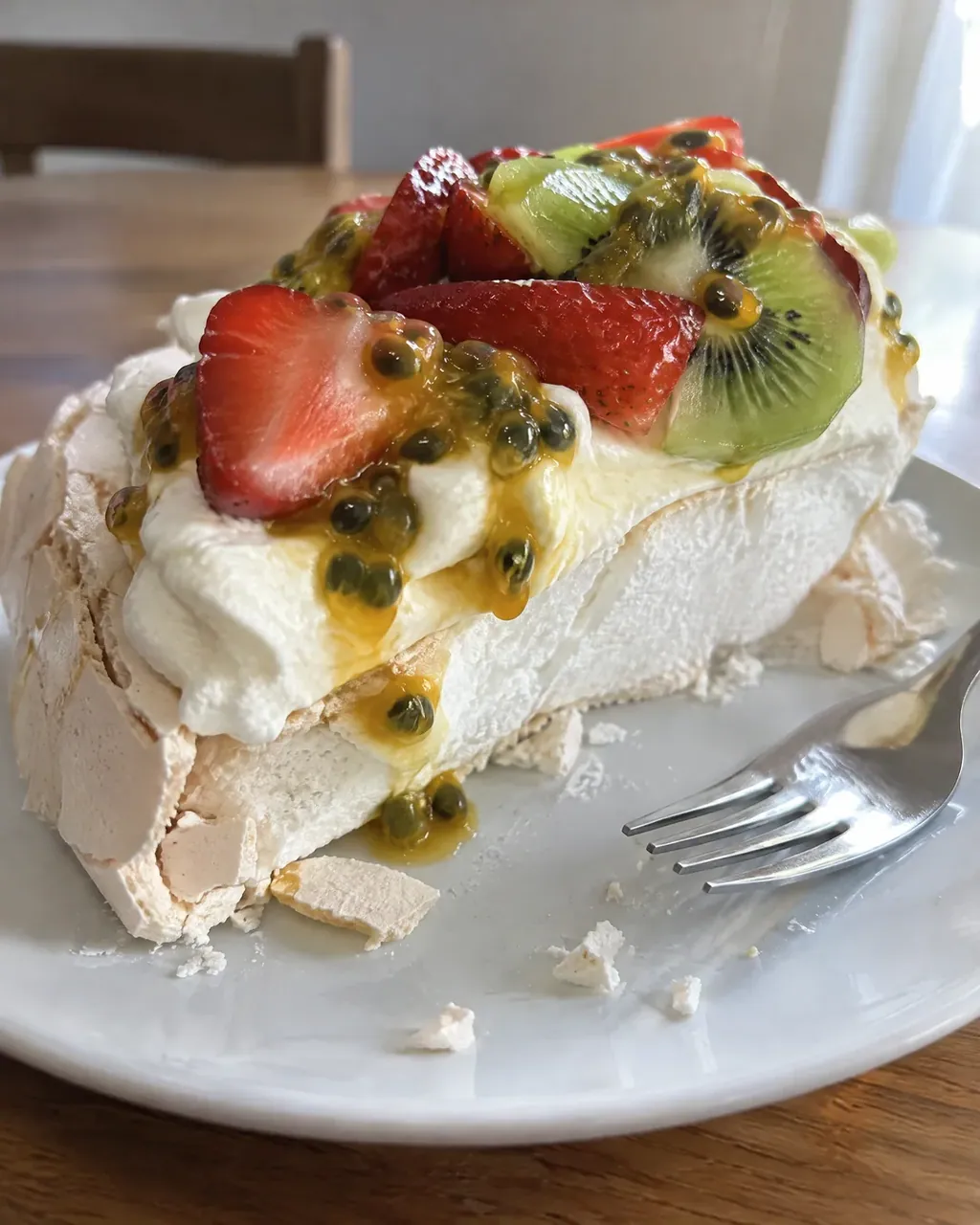
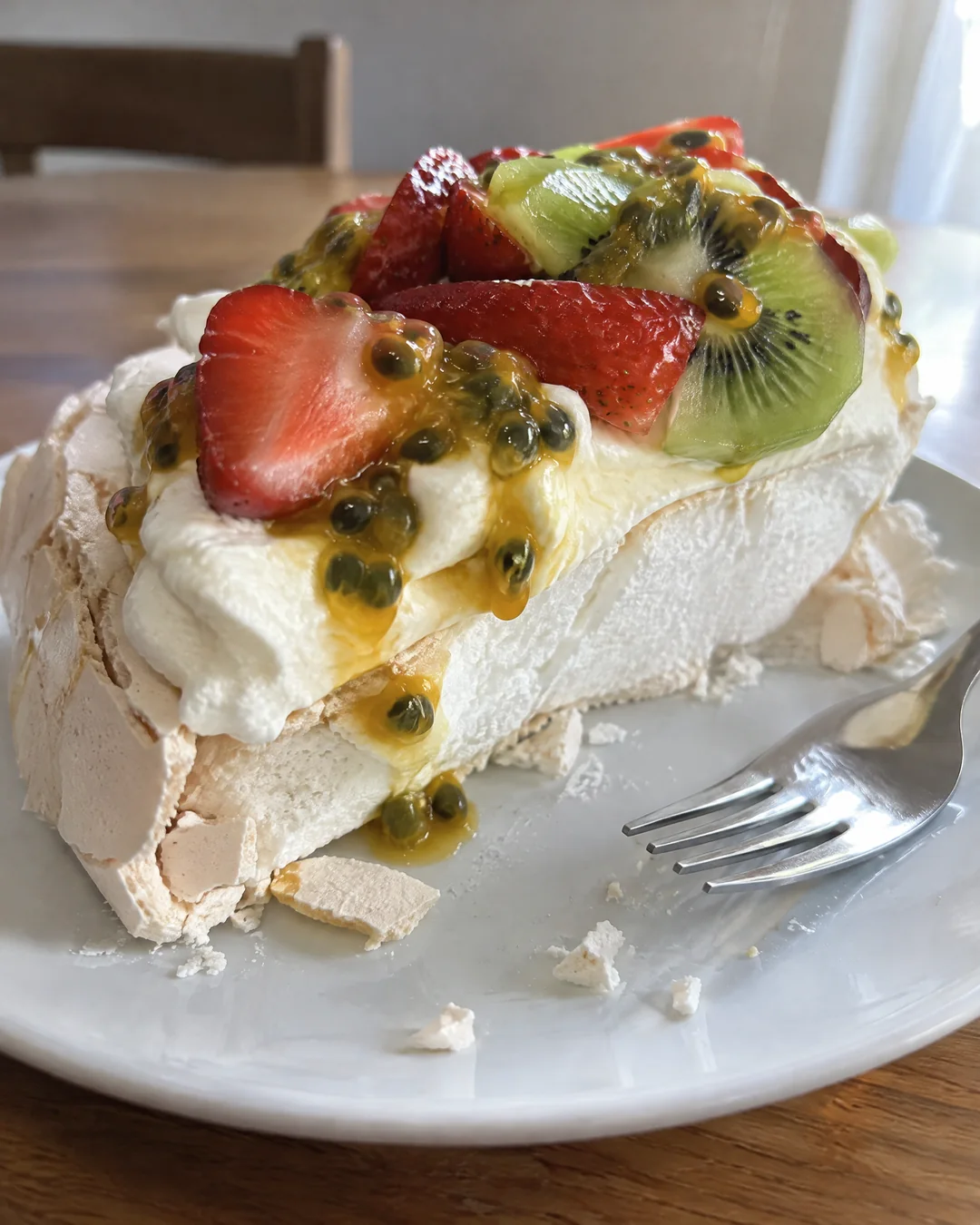
Pavlova has kept Australia and New Zealand arguing for about a hundred years. Both countries say the dessert was created there in the 1920s, in honor of the Russian ballerina Anna Pavlova when she toured that part of the world, and neither side has ever given an inch. What they agree on is what it is: one wide, low round of meringue with a thin shell that shatters under the spoon and a thick, soft middle like marshmallow, covered with whipped cream and fresh fruit. It is on the table at nearly every summer celebration in both countries.
It is made of almost nothing, egg whites and sugar, which is why the method matters more than the ingredients. Three things decide whether a pavlova comes out right. The sugar has to dissolve completely into the whites, or it leaks out later as beads of syrup, which bakers call weeping. A spoonful of cornstarch and a little vinegar go in at the end, and they are what keep the middle soft instead of dry. And when the baking time is up, the oven is turned off and the door stays closed until the pavlova is completely cold, because a sudden change of temperature is what makes it crack and sink. Here is how to get the crisp shell and the marshmallow middle every time.
Why this pavlova works
- Sugar added slowly. One spoonful at a time gives the sugar time to dissolve. Dissolved sugar makes a stable, glossy meringue that does not weep.
- Cornstarch and vinegar. Together they hold moisture in the center, which gives the marshmallow middle under the crisp shell.
- A hot start, then a low oven. The first heat sets the shell, and the low temperature dries it without browning it.
- Cooling in the closed oven. The pavlova cools as slowly as the oven does, so it does not collapse or split wide open.
- Topping at the last minute. Cream softens meringue, so the fruit and cream go on just before it is carried to the table.
Ingredients
Makes one pavlova about 8 inches across, 8 servings. Bake it the evening before and top it just before serving. The measurements are in US cups with grams in brackets.
For the meringue
- 4 large egg whites, at room temperature (about 140g)
- 1 pinch of salt
- 1 cup superfine sugar (200g)
- 2 teaspoons cornstarch
- 1 teaspoon white vinegar
- 1/2 teaspoon vanilla extract
For the topping
- 1 1/4 cups cold heavy whipping cream (300ml)
- 1 tablespoon powdered sugar
- 1 1/2 cups strawberries, hulled and sliced (225g)
- 2 kiwi fruit, peeled and sliced
- 2 passion fruit, pulp scooped out (optional)
Superfine sugar dissolves much faster than ordinary granulated sugar. If you only have granulated, whirl it in a blender or food processor for 30 seconds first. Separate the eggs while they are cold, when the yolks hold together best, then let the whites come to room temperature for 30 minutes. One drop of yolk in the whites will stop them from whipping.
How to make pavlova
Make the meringue
- Heat the oven to 300 degrees (150°C). Draw an 8 inch circle on a sheet of parchment, turn the paper over and lay it on a baking sheet.
- Wipe the mixing bowl and the beaters with a paper towel dampened with a little vinegar. Beat the egg whites and salt on medium speed until they hold soft peaks, about 2 minutes.
- With the mixer running on medium-high, add the sugar one tablespoon at a time, waiting about 20 seconds between spoonfuls. When all the sugar is in, keep beating for 3 to 4 minutes more, until the meringue is very thick and glossy and stands in stiff peaks.
- Rub a little meringue between two fingers. If it feels smooth, it is ready. If it feels gritty, beat for another minute or two and test again.
- Sprinkle the cornstarch, vinegar and vanilla over the meringue and fold them in gently with a spatula, just until mixed.
Shape and bake
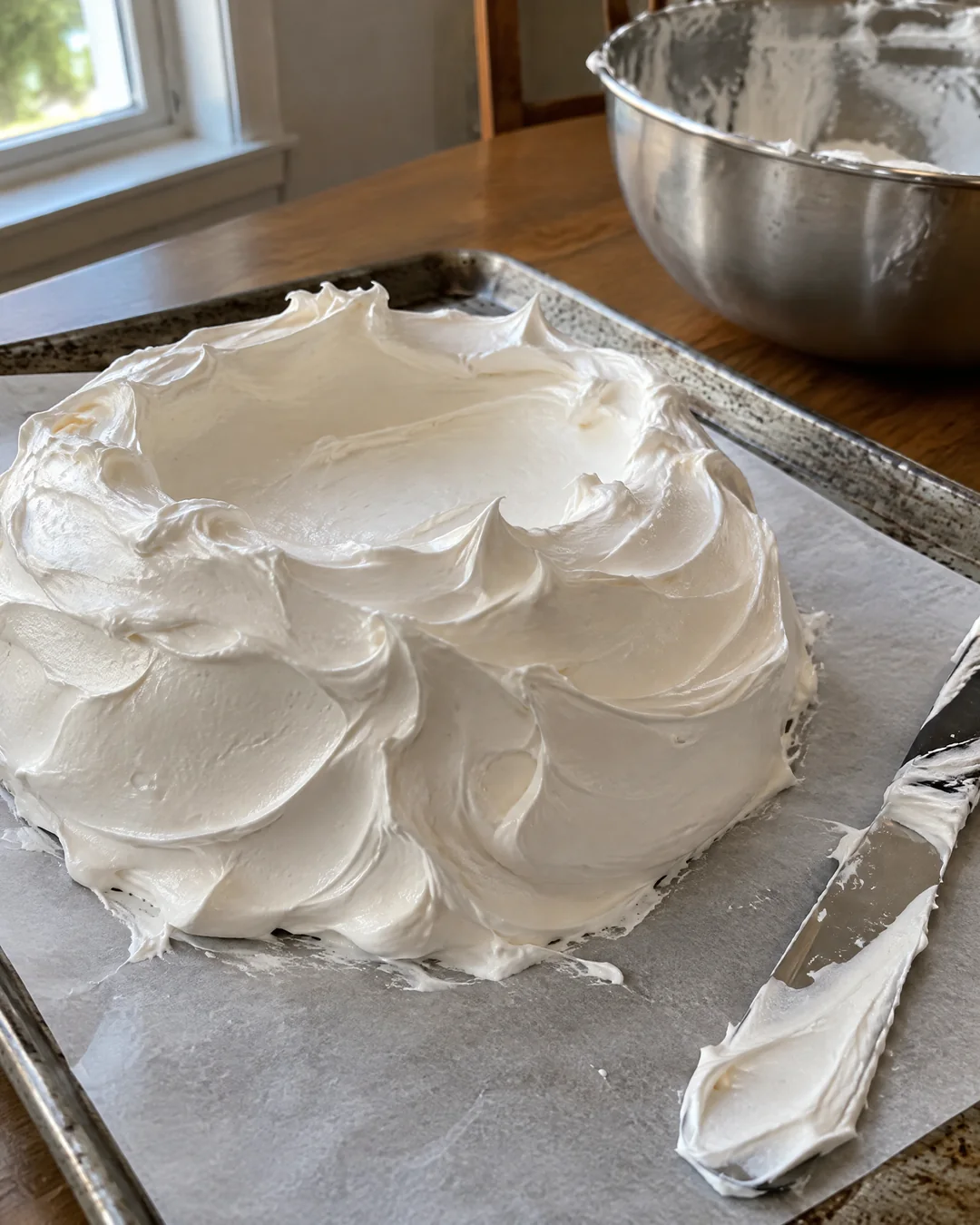
- Spoon the meringue onto the parchment inside the circle. Shape it into a round about 3 inches high with straight sides, and make a shallow dip in the top to hold the cream later.
- Put the pavlova in the oven and immediately lower the temperature to 250 degrees (120°C). Bake for 1 hour 15 minutes. Do not open the door.
- Turn the oven off. Leave the pavlova inside with the door closed until it is completely cold, at least 4 hours or overnight.
Top and serve
- Just before serving, whip the cold cream with the powdered sugar until it holds soft peaks.
- Slide the pavlova onto a serving plate, spoon the cream into the dip on top and pile on the strawberries, kiwi and passion fruit. Cut into wedges with a serrated knife.
Tips that make the difference
- Choose a dry day if you can. Meringue pulls moisture from the air, and a humid kitchen gives a sticky shell.
- Take your time with the sugar. Rushing it is the main cause of syrup beads on the surface.
- A few small cracks are normal and are part of the look of a pavlova. They disappear under the cream.
- Expect the middle to settle a little as it cools. That hollow is where the cream goes.
- Do not top it early. A dressed pavlova begins to soften within the hour.
Variations
- Mixed berries. Top with raspberries, blueberries and blackberries and a spoonful of warmed berry jam.
- Lemon. Spread 1/2 cup of lemon curd over the meringue before the cream.
- Peaches and cream. Use sliced ripe peaches or drained canned peaches and a few toasted almonds.
- Small ones. Shape 8 individual rounds about 3 inches across and bake for 45 minutes before turning the oven off.
Storage and make-ahead
The untopped meringue keeps for up to 2 days in an airtight container at room temperature, or simply left in the cold, closed oven overnight.
Never refrigerate the bare meringue. The damp air makes the shell sticky and soft.
Once topped, pavlova is best eaten the same day. Leftovers can be refrigerated for a day; the shell softens but it still tastes good.
Frequently asked questions
Why did my pavlova crack?
It cooled too fast or the oven was too hot. Lower the heat as soon as it goes in and leave it in the closed, turned-off oven until it is cold. Fine cracks are normal.
Why is my pavlova weeping syrup?
The sugar did not fully dissolve, or the day was very humid. Add the sugar a spoonful at a time and rub a little meringue between your fingers to check that no grains are left.
Why do the cornstarch and vinegar go in?
They are what make a pavlova different from a plain meringue. They hold moisture in the center so it stays soft like marshmallow while the outside dries crisp.
Can I make it ahead?
Yes. Bake it the evening before and leave it in the oven overnight. Whip the cream and add the fruit just before serving.
Bake it in the evening, turn the oven off, and leave the door alone until morning. The hard part is not peeking.
Pavlova (Crisp Shell, Marshmallow Middle, Cooled in the Closed Oven)
A classic Australian and New Zealand pavlova: egg whites and sugar beaten to a glossy meringue with cornstarch and vinegar, baked low, cooled in the closed oven, and topped with whipped cream, strawberries, kiwi and passion fruit.
Ingredients
- 4 large egg whites, at room temperature
- 1 pinch of salt
- 1 cup superfine sugar
- 2 teaspoons cornstarch
- 1 teaspoon white vinegar
- 1/2 teaspoon vanilla extract
- 1 1/4 cups cold heavy whipping cream
- 1 tablespoon powdered sugar
- 1 1/2 cups strawberries, hulled and sliced
- 2 kiwi fruit, peeled and sliced
- 2 passion fruit, pulp scooped out
Instructions
- Heat the oven to 300 degrees (150°C). Draw an 8 inch circle on a sheet of parchment, turn the paper over and lay it on a baking sheet.
- Wipe the mixing bowl and the beaters with a paper towel dampened with a little vinegar. Beat the egg whites and salt on medium speed until they hold soft peaks, about 2 minutes.
- With the mixer running on medium-high, add the sugar one tablespoon at a time, waiting about 20 seconds between spoonfuls. When all the sugar is in, keep beating for 3 to 4 minutes more, until the meringue is very thick and glossy and stands in stiff peaks.
- Rub a little meringue between two fingers. If it feels smooth, it is ready. If it feels gritty, beat for another minute or two and test again.
- Sprinkle the cornstarch, vinegar and vanilla over the meringue and fold them in gently with a spatula, just until mixed.
- Spoon the meringue onto the parchment inside the circle. Shape it into a round about 3 inches high with straight sides, and make a shallow dip in the top to hold the cream later.
- Put the pavlova in the oven and immediately lower the temperature to 250 degrees (120°C). Bake for 1 hour 15 minutes. Do not open the door.
- Turn the oven off. Leave the pavlova inside with the door closed until it is completely cold, at least 4 hours or overnight.
- Just before serving, whip the cold cream with the powdered sugar until it holds soft peaks.
- Slide the pavlova onto a serving plate, spoon the cream into the dip on top and pile on the strawberries, kiwi and passion fruit. Cut into wedges with a serrated knife.