In this article
Banana bread is the cheapest thing that ever came out of my oven, because it starts with the bananas everybody else throws away. My mother kept hers in a brown paper bag on top of the refrigerator until the peels went black and the fruit inside turned soft and sweet. That was how she knew they were ready. Nothing in this loaf costs much: bananas, butter, brown sugar, one egg and flour. What makes the difference is how you treat them.
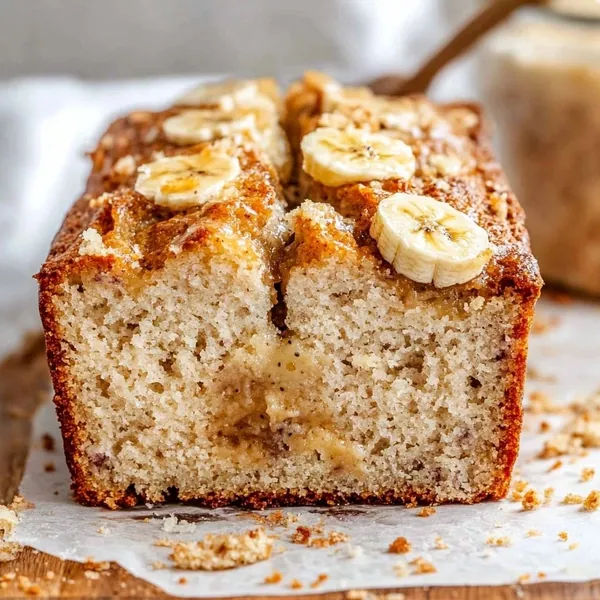
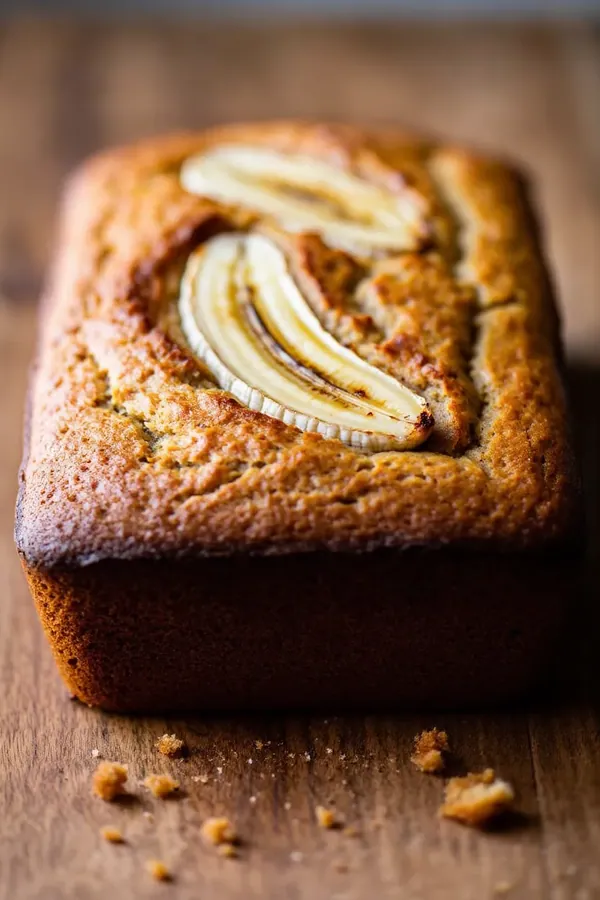
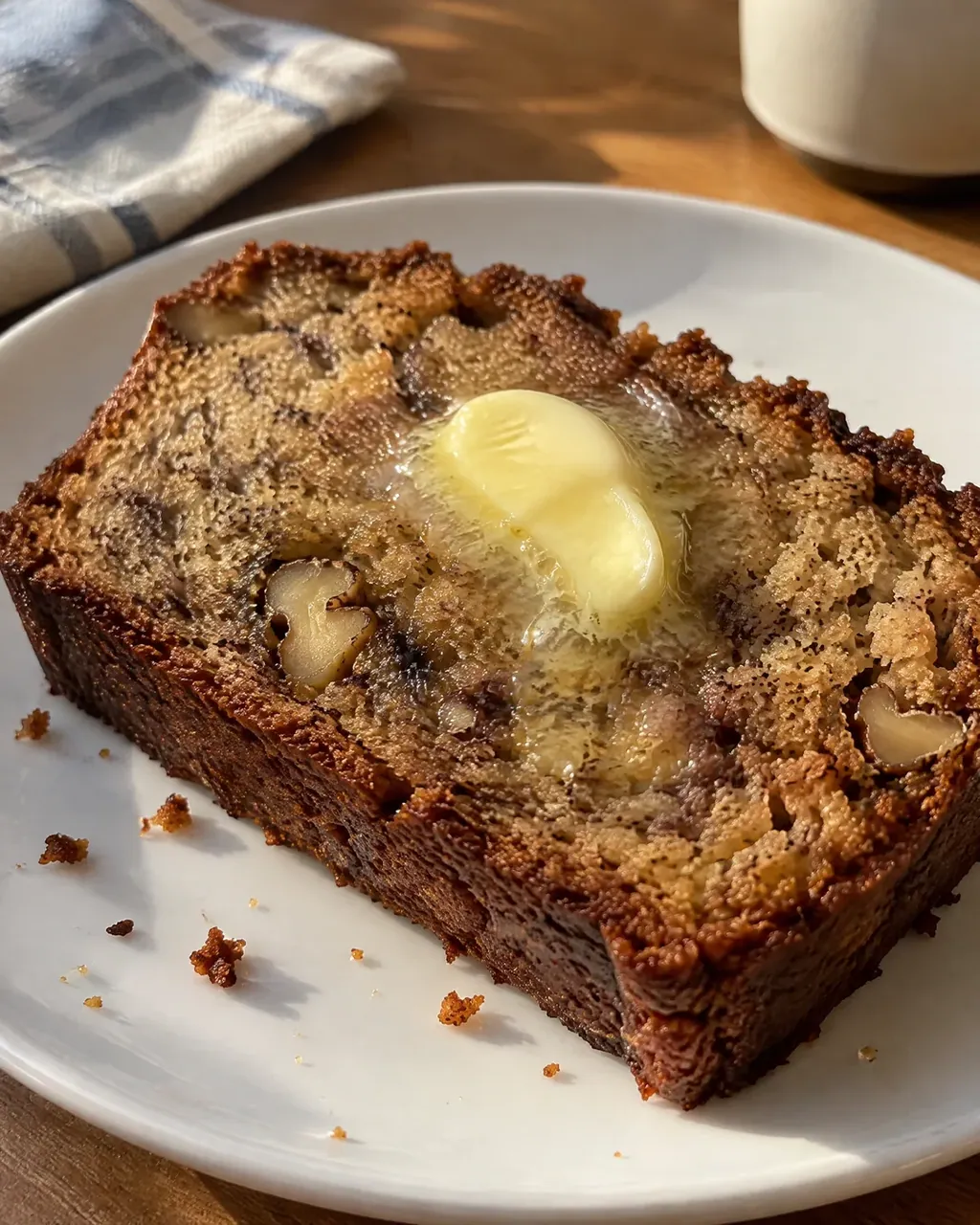
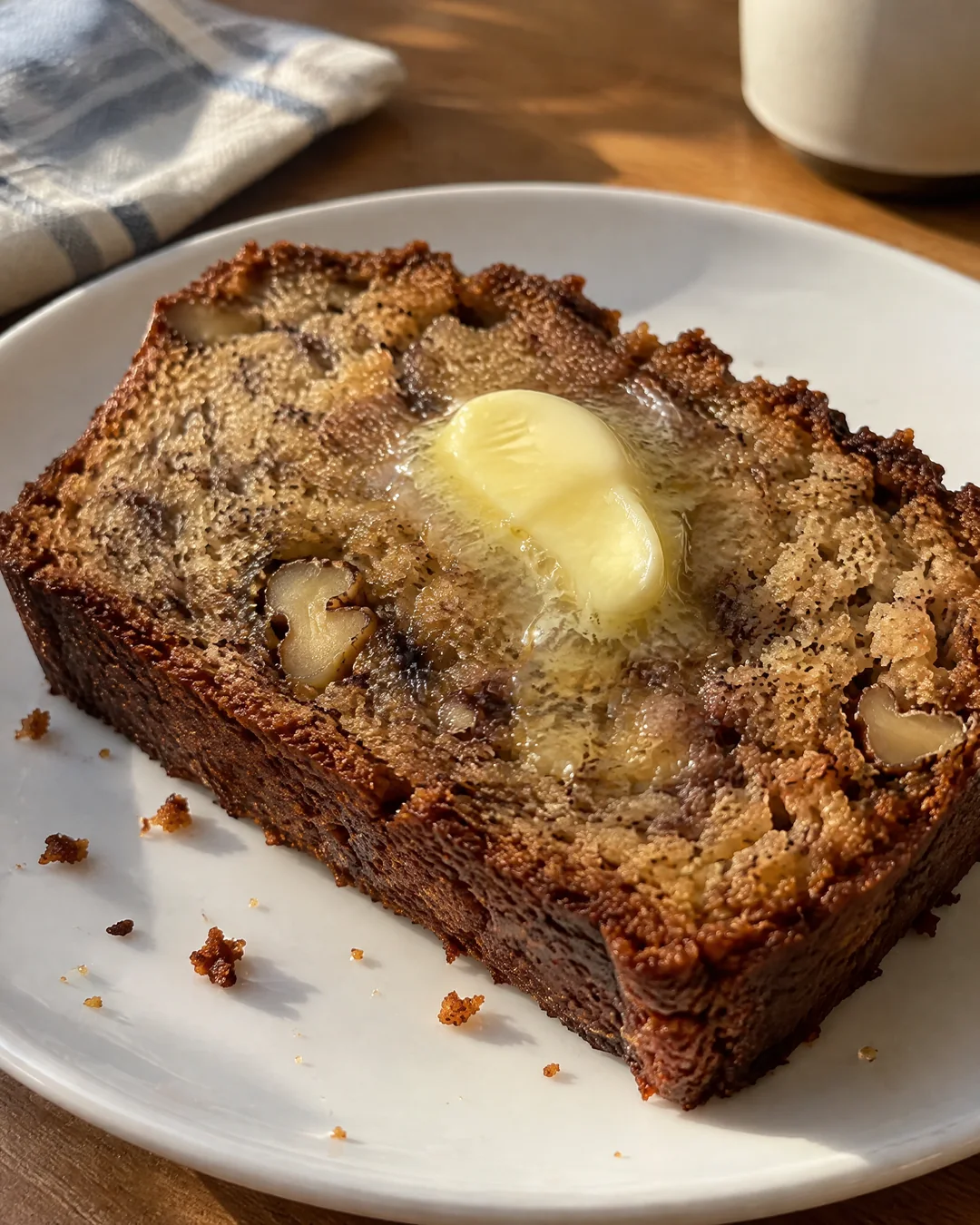
Two things go wrong with homemade banana bread. The top stays flat, or the middle comes out heavy, wet and gummy while the edges are already dark. Both come from the same three habits: bananas that are not ripe enough, a batter stirred like a cake, and an oven that is too hot. Here is how to get the high dome with the crack running down the middle, and a center that is moist and tender all the way through, never gummy.
Why this banana bread works
- Very ripe bananas. Black-spotted bananas carry more sugar and more banana flavor, and they mash easily without extra liquid.
- Melted butter and brown sugar. Melted butter keeps the crumb moist and tender, and brown sugar adds a deep caramel taste and a darker crust.
- Baking soda, measured carefully. The acid in ripe bananas and brown sugar reacts with the soda and lifts the loaf into a dome.
- Folded, not beaten. Stirring the flour in gently by hand keeps the gluten relaxed, so the bread is tender with no tunnels.
- A moderate oven and a long bake. A slower bake lets the middle cook through before the crust gets too dark, which is the cure for a gummy center.
Ingredients
Makes one 9 by 5 inch loaf, about 10 thick slices. The measurements are in US cups with grams in brackets.
For the banana bread
- 3 to 4 very ripe bananas, heavily black-spotted (about 1 1/2 cups mashed, 340g)
- 1/3 cup unsalted butter, melted and slightly cooled (75g)
- 3/4 cup packed light brown sugar (150g)
- 1 large egg, at room temperature
- 1 teaspoon vanilla extract
- 1 teaspoon baking soda
- 1/2 teaspoon fine salt
- 1/2 teaspoon ground cinnamon
- 1 1/2 cups all-purpose flour (190g), spooned and leveled
- 1/2 cup chopped walnuts (60g), optional
For the pan
- Butter or baking spray, and a strip of parchment paper
Measure the mashed banana. Too little and the loaf is dry, too much and the middle stays heavy. Spoon the flour into the cup and level it with a knife; scooping straight from the bag packs in extra flour and makes the bread dense.
How to make banana bread
- Heat the oven to 350 degrees (175°C). Butter a 9 by 5 inch metal loaf pan and line the bottom and long sides with a strip of parchment, leaving a little overhang to lift the loaf out.
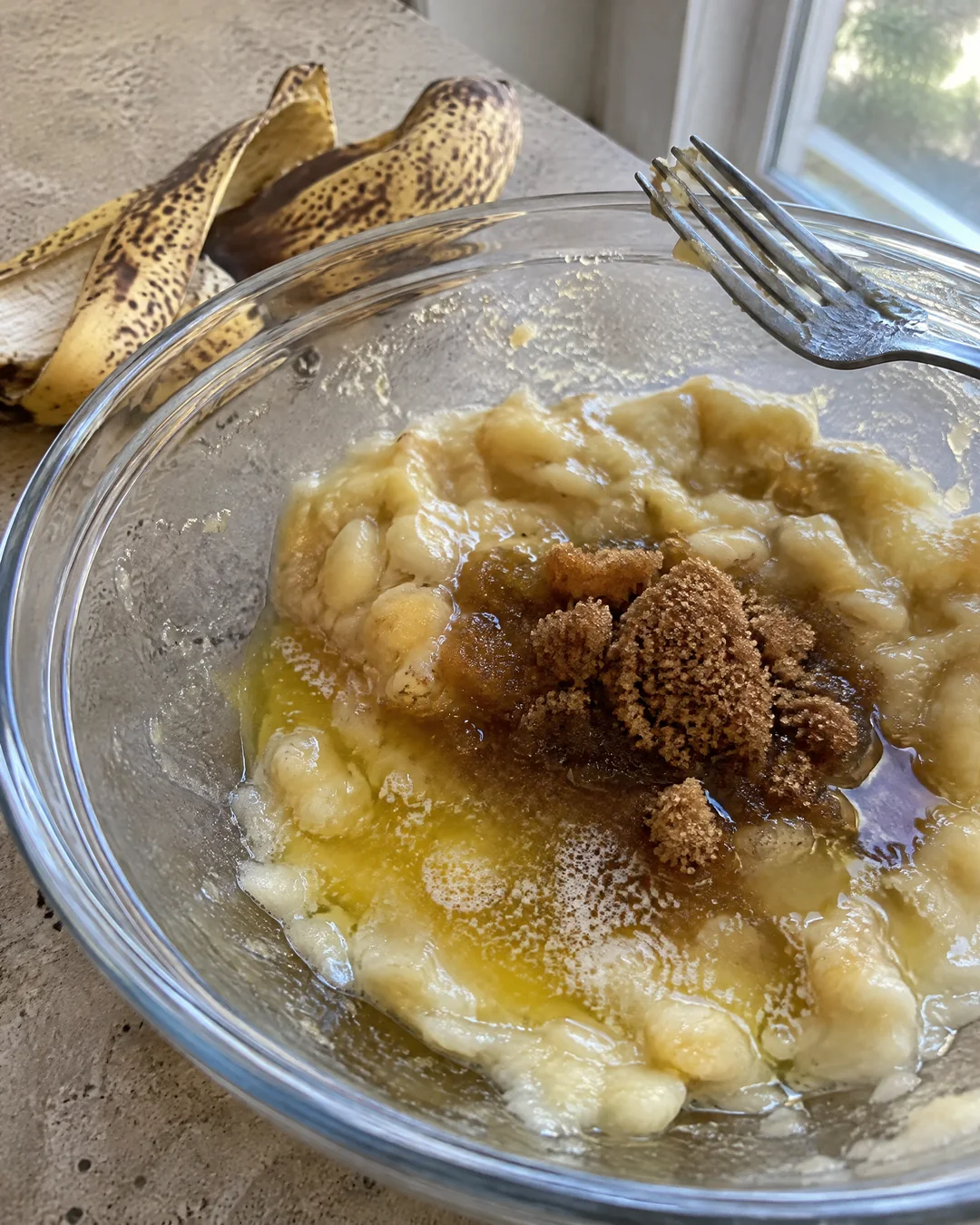
- Peel the bananas into a large bowl and mash them with a fork. Leave a few small lumps; they turn into soft pockets of banana in the bread.
- Stir in the melted butter, then the brown sugar, the egg and the vanilla until everything is evenly mixed.
- Sprinkle the baking soda, salt and cinnamon over the wet mixture and stir them in well, so the soda is spread evenly through the batter.
- Add the flour and fold it in with a spatula, turning the bowl as you go, only until the last streak of flour disappears. Fold in the walnuts if you use them. The batter will be thick and a little lumpy.
- Scrape the batter into the pan and smooth it level. For a deeper crack, run the tip of a buttered knife lengthwise down the middle of the batter, about a quarter of an inch deep.
- Bake on the middle rack for 55 to 70 minutes. After 40 minutes, if the top is already dark brown, lay a loose sheet of foil over the pan.
- Test the loaf in the very center: a wooden skewer should come out with a few moist crumbs but no wet batter, and the middle of the crack should look dry and spring back when pressed. If you use a thermometer, the center should read 200 to 205 degrees (93 to 96°C).
- Cool the bread in the pan on a wire rack for 15 minutes, then lift it out by the parchment and let it cool on the rack for at least 30 minutes before slicing. It keeps cooking as it cools, and slicing too early is the most common cause of a gummy middle.
Tips that make the difference
- Use bananas that look past eating. Yellow bananas with a few spots make a pale, mild loaf with less rise.
- Measure the soda level, not heaped. Too much soda gives a soapy taste and a loaf that rises fast and then sinks.
- A metal pan bakes more evenly than glass. In a glass pan, lower the oven by 25 degrees and start checking early.
- Do not open the oven in the first 40 minutes. The dome sets in that time, and a blast of cool air can make it fall.
- Wait before slicing. A warm loaf cut too soon looks wet in the middle even when it is fully baked.
Variations
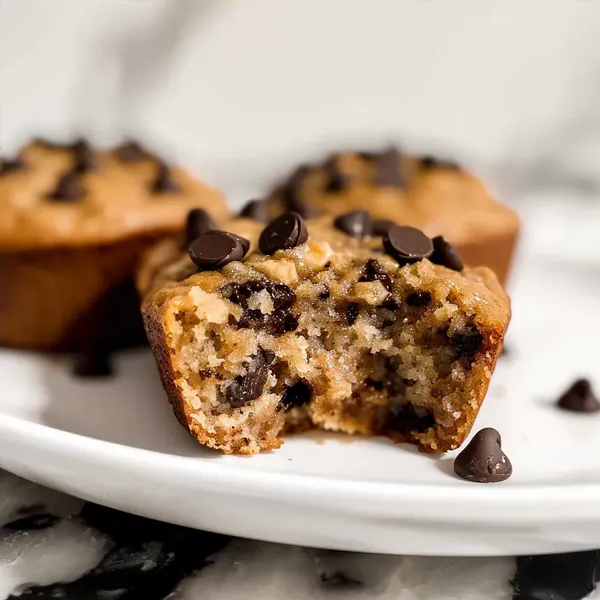
- Chocolate chip banana bread. Fold in 3/4 cup (130g) chocolate chips instead of the walnuts.
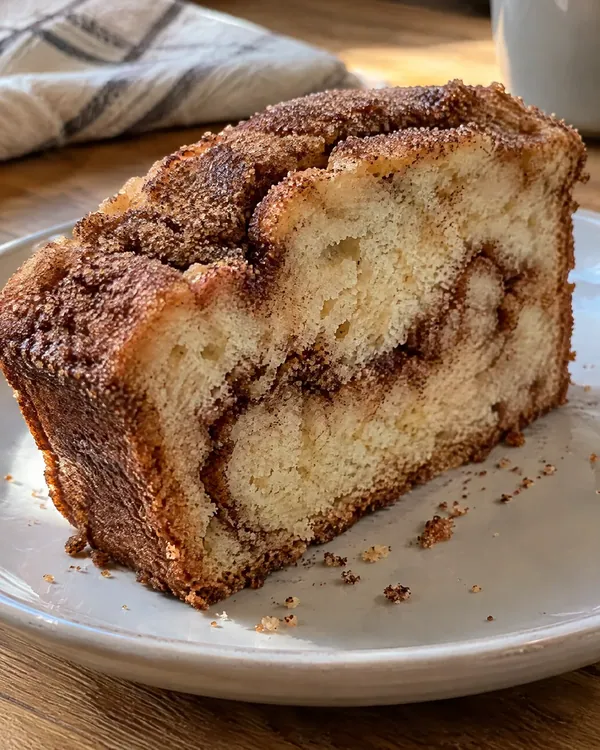
- Cinnamon sugar top. Sprinkle 1 tablespoon sugar mixed with 1/2 teaspoon cinnamon over the batter before baking for a crackly crust.
- Pecan banana bread. Toast the pecans first in a dry skillet and fold them in instead of walnuts.
- Muffins. Divide the batter among 12 lined muffin cups and bake 20 to 24 minutes.
Storage and make-ahead
Wrap the cooled loaf in plastic wrap or keep it in an airtight container at room temperature for up to 4 days. It is even moister on the second day.
To freeze, wrap whole or sliced bread tightly and freeze for up to 3 months. Thaw slices at room temperature or warm them in a toaster.
Freeze ripe bananas in their peels until you have enough. Thaw them in a bowl and use them with all the liquid that comes out.
Frequently asked questions
Why is my banana bread gummy in the middle?
It was underbaked, cut while hot, or the batter was overmixed. Bake until a skewer in the very center comes out with moist crumbs only, then let it cool for at least 30 minutes before slicing.
Why didn’t my banana bread rise or crack?
The bananas were not ripe enough, the soda was old, or the oven was too cool. Fresh baking soda, black-spotted bananas and a full 350 degree oven give the dome and the crack.
Can I use oil instead of butter?
Yes. Use the same amount of a neutral vegetable oil. The bread will be a little softer and less rich in flavor.
How ripe should the bananas be?
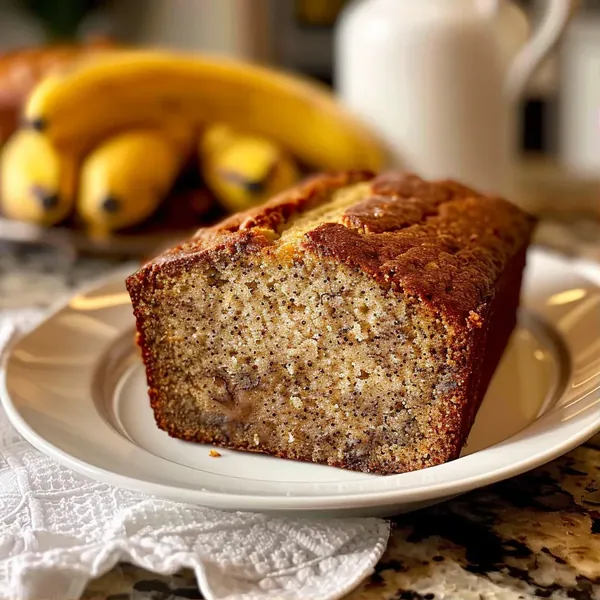
Heavily spotted to almost black, soft when pressed and very fragrant. The darker the peel, the sweeter and more flavorful the bread.
Save the bananas nobody wants this week, and bake the loaf on a slow Saturday morning.
Old-Fashioned Banana Bread (High Dome, Crack on Top, Never Gummy)
Old-fashioned banana bread made with very ripe bananas, melted butter and brown sugar, folded by hand and baked low and slow for a high domed loaf with a crack down the middle and a moist, tender center that is never gummy.
Ingredients
- 3 to 4 very ripe bananas, heavily black-spotted
- 1/3 cup unsalted butter, melted and slightly cooled
- 3/4 cup packed light brown sugar
- 1 large egg, at room temperature
- 1 teaspoon vanilla extract
- 1 teaspoon baking soda
- 1/2 teaspoon fine salt
- 1/2 teaspoon ground cinnamon
- 1 1/2 cups all-purpose flour (190g), spooned and leveled
- 1/2 cup chopped walnuts (60g), optional
- Butter or baking spray, and a strip of parchment paper
Instructions
- Heat the oven to 350 degrees (175°C). Butter a 9 by 5 inch metal loaf pan and line the bottom and long sides with a strip of parchment, leaving a little overhang to lift the loaf out.
- Peel the bananas into a large bowl and mash them with a fork. Leave a few small lumps; they turn into soft pockets of banana in the bread.
- Stir in the melted butter, then the brown sugar, the egg and the vanilla until everything is evenly mixed.
- Sprinkle the baking soda, salt and cinnamon over the wet mixture and stir them in well, so the soda is spread evenly through the batter.
- Add the flour and fold it in with a spatula, turning the bowl as you go, only until the last streak of flour disappears. Fold in the walnuts if you use them. The batter will be thick and a little lumpy.
- Scrape the batter into the pan and smooth it level. For a deeper crack, run the tip of a buttered knife lengthwise down the middle of the batter, about a quarter of an inch deep.
- Bake on the middle rack for 55 to 70 minutes. After 40 minutes, if the top is already dark brown, lay a loose sheet of foil over the pan.
- Test the loaf in the very center: a wooden skewer should come out with a few moist crumbs but no wet batter, and the middle of the crack should look dry and spring back when pressed. If you use a thermometer, the center should read 200 to 205 degrees (93 to 96°C).
- Cool the bread in the pan on a wire rack for 15 minutes, then lift it out by the parchment and let it cool on the rack for at least 30 minutes before slicing. It keeps cooking as it cools, and slicing too early is the most common cause of a gummy middle.