In this article
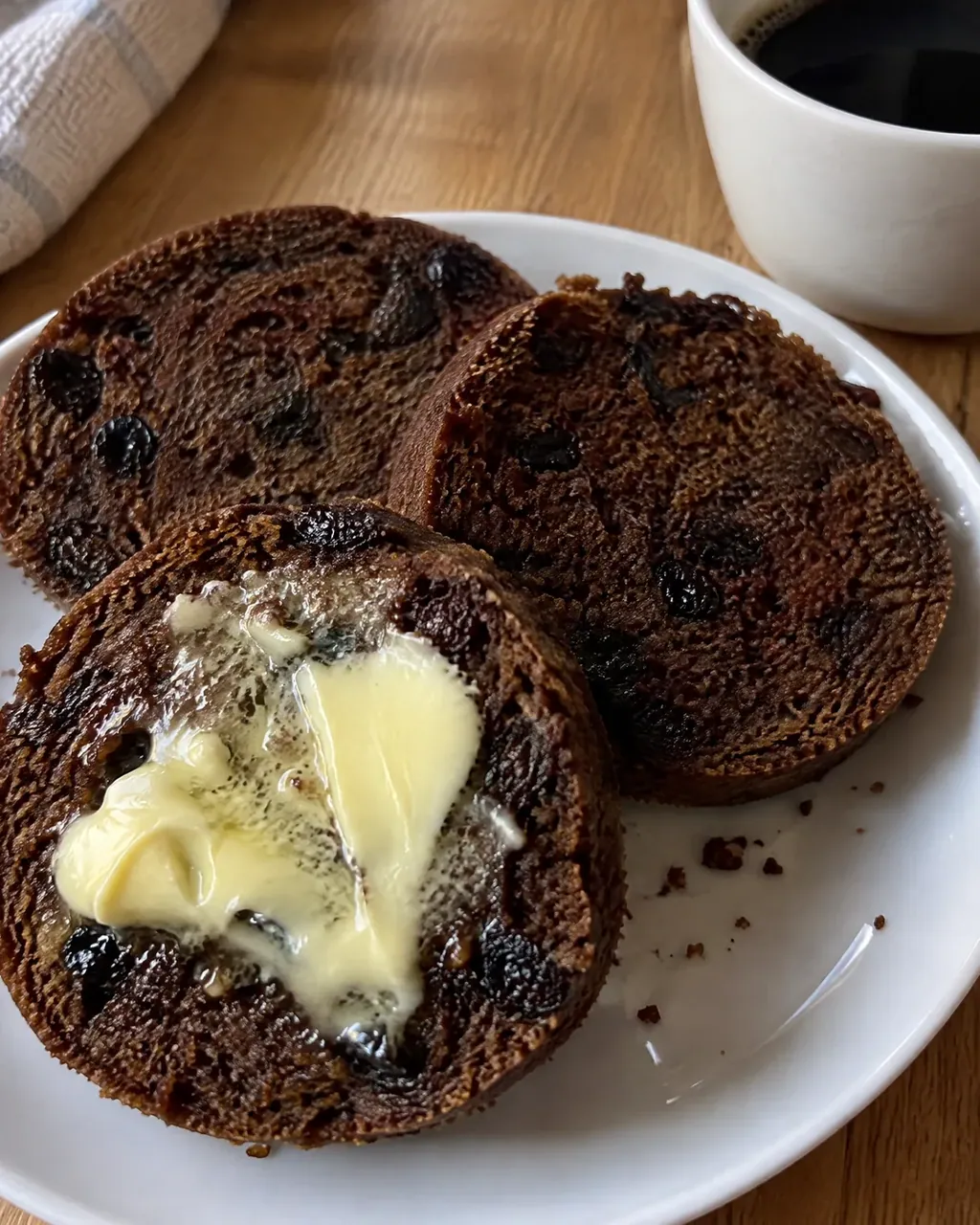
The first time I saw Boston brown bread come out of its can, I was sure somebody had played a trick. It slid out in one piece, a dark, shining cylinder with the ridges of the can still printed on its sides, and it was cut into rounds like slices from a log. Nobody had turned the oven on. The whole thing had been cooked on top of the stove, in a pot of quietly simmering water, with a lid on and a piece of foil tied over the can.
This is one of the oldest breads in New England. It takes three flours at once, rye, cornmeal and whole wheat, and it has no yeast, no eggs and no butter in the batter. Molasses sweetens it, buttermilk and baking soda lift it, and the steam keeps it as moist as a pudding. For generations it was Saturday supper, set on the table next to a pot of baked beans. You need no special mold to make it. Here is how full to fill the can, how long to leave it in the pot, and how to do it all with nothing more than a saucepan and a lid.
Why this Boston brown bread works
- Steam instead of dry heat. A molasses batter this wet would form a hard crust in the oven before the middle cooked. Steam cooks it gently all the way through and leaves no crust at all.
- Three flours. Rye gives the deep, slightly sour taste, cornmeal gives the grain you feel on the tongue, and whole wheat holds the loaf together.
- Buttermilk and baking soda. The acid in the buttermilk and the molasses wakes up the soda, and that is the only thing that raises the bread.
- A can filled two thirds. The batter rises as it steams. The empty third is the room it needs, and the foil lid is tied on loosely enough to let it dome.
Ingredients
Makes one round loaf in a 28 ounce can or a 1 pound coffee can, about 10 slices. The measurements are in US cups with grams in brackets.
For the bread
- 1/2 cup rye flour (60g)
- 1/2 cup whole wheat flour (60g)
- 1/2 cup yellow cornmeal (70g), fine or medium
- 1 teaspoon baking soda
- 1/2 teaspoon salt
- 1 cup buttermilk (240ml), at room temperature
- 1/3 cup molasses (115g)
- 1/2 cup raisins (75g)
For the can and to serve
- Soft butter, for greasing the can
- Butter or cream cheese, to serve
Use regular unsulphured molasses, not blackstrap, which is bitter. No buttermilk in the house? Stir 1 tablespoon of lemon juice or white vinegar into 1 cup of milk and let it stand for 10 minutes. The can must be plain metal inside: a clean 28 ounce tomato can or an old 1 pound coffee can, washed, with the label soaked off and no plastic or white coating on the inside. A 1 quart pudding mold or a heatproof bowl of the same size works too.
How to make Boston brown bread
Get the pot and the can ready
- Choose a deep pot that is tall enough to hold the can with its lid on. Put a small wire rack, a metal jar ring or a folded kitchen towel in the bottom so the can does not sit directly on the hot metal.
- Butter the inside of the can generously, right up to the rim and across the bottom. Put a kettle of water on to boil.
Mix the batter
- In a large bowl, whisk the rye flour, whole wheat flour, cornmeal, baking soda and salt together until there are no lumps of soda.
- In a jug or a second bowl, stir the buttermilk and the molasses together until the mixture is one even dark color.
- Pour the wet mixture into the dry and stir with a wooden spoon just until no dry flour shows. Fold in the raisins. The batter will be loose and dark, like a thick pancake batter.
Steam
- Pour the batter into the buttered can. It should come no more than two thirds of the way up. If you have more batter than that, use a second small can instead of filling the first one higher.
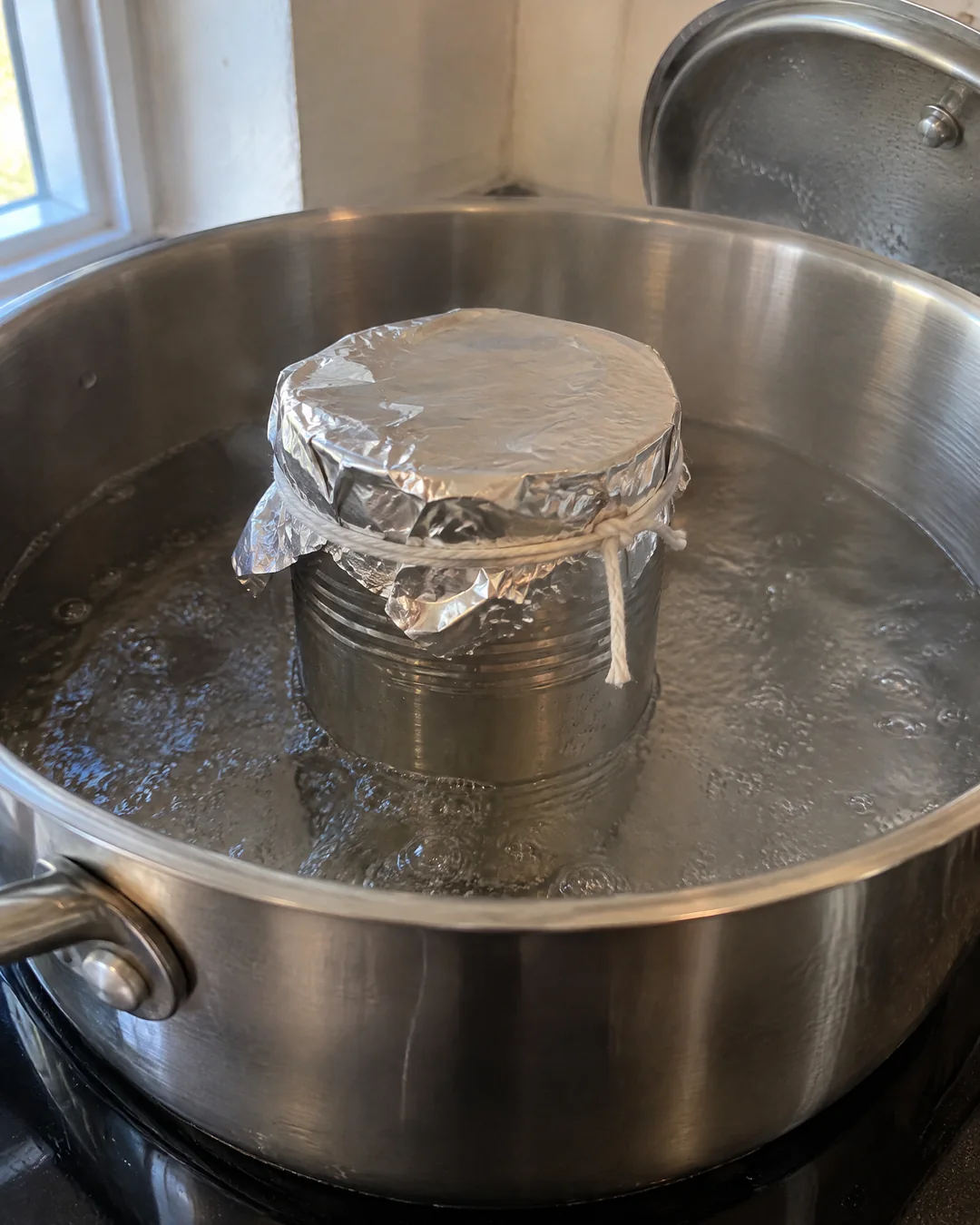
- Butter a square of foil and lay it over the top of the can, buttered side down, with a pleat folded across the middle so the bread has room to rise. Press the foil down the sides and tie it tightly with kitchen string, or hold it with a strong rubber band.
- Stand the can on the rack in the pot. Pour in boiling water from the kettle until it comes halfway up the side of the can. Bring it back to a gentle simmer, put the lid on the pot and turn the heat to low.
- Steam for 2 hours to 2 hours 15 minutes. Look in every 30 minutes and top up with boiling water so the level stays near the halfway mark. The water should bubble gently, never boil hard.
- Lift out the can and take off the foil. The bread is done when the top is firm and dry to the touch and a skewer pushed down the center comes out clean. If it is still sticky, cover it again and steam for 15 minutes more.
- Stand the can on a rack for 10 minutes. Run a thin knife around the inside, turn the can on its side and shake the loaf out gently. If it will not come, open the bottom of the can with a can opener and push the loaf through.
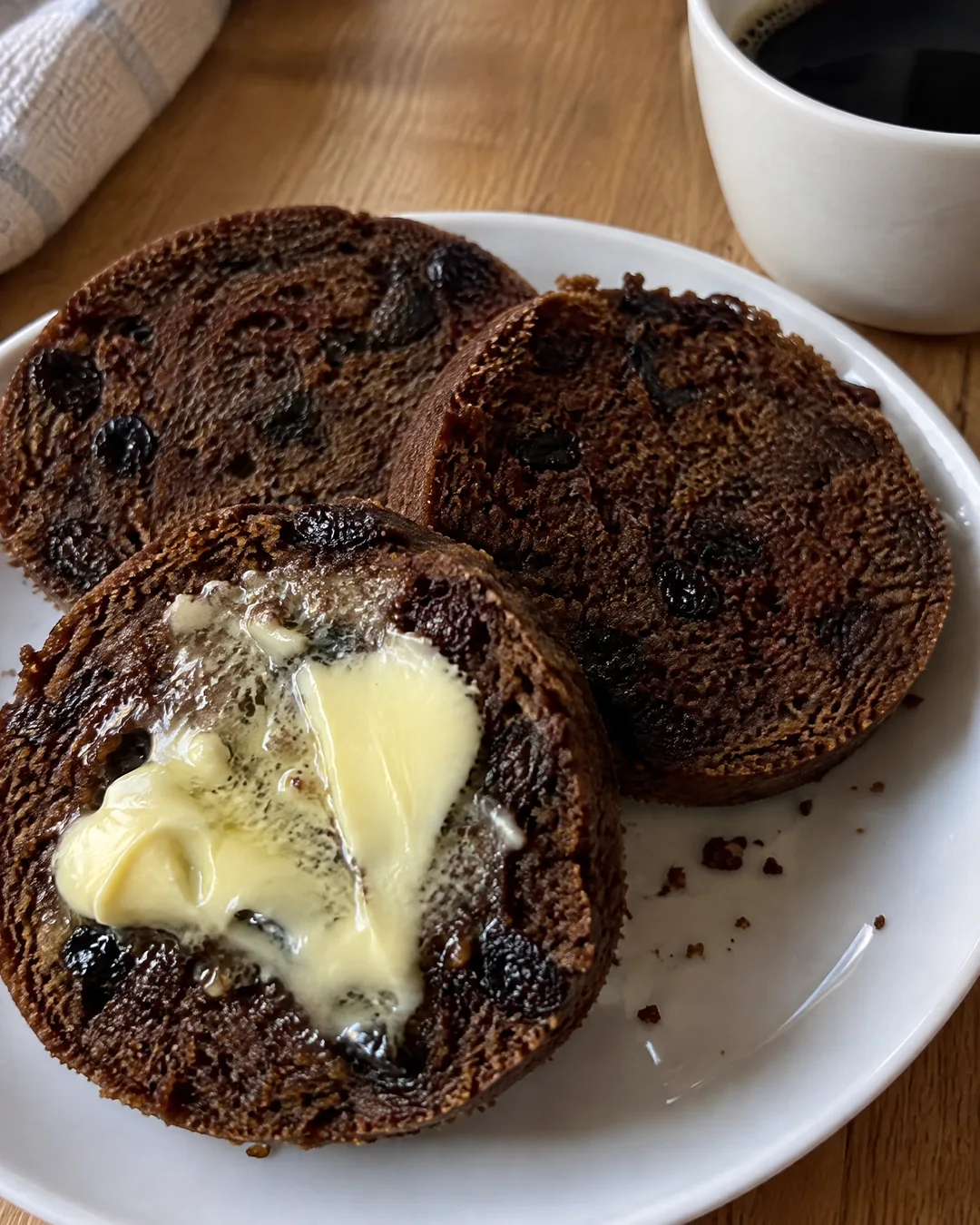
- Let the loaf cool for at least 45 minutes before slicing it into rounds with a serrated knife, or with a length of clean string pulled tight. Serve warm with butter or cream cheese.
Tips that make the difference
- Measure where two thirds comes on your can before you start. A can filled too high pushes its foil off and takes on water.
- Tie the foil on firmly below the rim of the can. Steam that drips under a loose cover leaves a wet, gummy top.
- Do not slice the bread hot from the can. It is soft as a pudding at first and firms up as it cools, and only then cuts into neat rounds.
Variations
- Two small loaves. Divide the batter between two 15 ounce cans, each filled two thirds, and steam for about 1 hour 30 minutes.
- Toasted the next day. Fry the cold rounds in a little butter in a skillet until the faces are crisp. This is how many New England families ate the leftovers for breakfast.
Storage and make-ahead
Wrapped tightly in plastic wrap or foil, Boston brown bread keeps at room temperature for 2 days and in the refrigerator for up to a week.
To freeze, wrap the whole cold loaf or the separate rounds in plastic wrap and then foil, and freeze for up to 3 months. Thaw on the counter, still wrapped.
Frequently asked questions
How full should I fill the can?
No more than two thirds full. The batter rises by about a third as it steams, and it needs that empty space. If the can is fuller than that, the bread pushes against the foil, the cover lifts and water gets in.
How long does Boston brown bread take to steam?
About 2 hours to 2 hours 15 minutes for one loaf in a 28 ounce can or a 1 pound coffee can, at a gentle simmer with the lid on the pot. Two smaller 15 ounce cans take about 1 hour 30 minutes.
Is it safe to cook in a can?
Use a can that is plain bare metal on the inside, with no white or plastic lining, and wash it well. If you are not sure about your can, use a 1 quart heatproof bowl or a pudding mold, covered and steamed in exactly the same way.
Put the pot on in the afternoon, let the windows fog over, and bring the loaf to the table warm with the butter beside it.
Boston Brown Bread (Steamed in a Can on Top of the Stove)
An old-fashioned Boston brown bread: a dark batter of molasses, buttermilk, rye flour, cornmeal and whole wheat flour with raisins, poured into a buttered can, covered with foil and steamed in a pot of simmering water until it slides out as a moist, dark round loaf.
Ingredients
- 1/2 cup rye flour
- 1/2 cup whole wheat flour
- 1/2 cup yellow cornmeal (70g), fine or medium
- 1 teaspoon baking soda
- 1/2 teaspoon salt
- 1 cup buttermilk (240ml), at room temperature
- 1/3 cup molasses
- 1/2 cup raisins
- Soft butter, for greasing the can
- Butter or cream cheese, to serve
Instructions
- Choose a deep pot that is tall enough to hold the can with its lid on. Put a small wire rack, a metal jar ring or a folded kitchen towel in the bottom so the can does not sit directly on the hot metal.
- Butter the inside of the can generously, right up to the rim and across the bottom. Put a kettle of water on to boil.
- In a large bowl, whisk the rye flour, whole wheat flour, cornmeal, baking soda and salt together until there are no lumps of soda.
- In a jug or a second bowl, stir the buttermilk and the molasses together until the mixture is one even dark color.
- Pour the wet mixture into the dry and stir with a wooden spoon just until no dry flour shows. Fold in the raisins. The batter will be loose and dark, like a thick pancake batter.
- Pour the batter into the buttered can. It should come no more than two thirds of the way up. If you have more batter than that, use a second small can instead of filling the first one higher.
- Butter a square of foil and lay it over the top of the can, buttered side down, with a pleat folded across the middle so the bread has room to rise. Press the foil down the sides and tie it tightly with kitchen string, or hold it with a strong rubber band.
- Stand the can on the rack in the pot. Pour in boiling water from the kettle until it comes halfway up the side of the can. Bring it back to a gentle simmer, put the lid on the pot and turn the heat to low.
- Steam for 2 hours to 2 hours 15 minutes. Look in every 30 minutes and top up with boiling water so the level stays near the halfway mark. The water should bubble gently, never boil hard.
- Lift out the can and take off the foil. The bread is done when the top is firm and dry to the touch and a skewer pushed down the center comes out clean. If it is still sticky, cover it again and steam for 15 minutes more.
- Stand the can on a rack for 10 minutes. Run a thin knife around the inside, turn the can on its side and shake the loaf out gently. If it will not come, open the bottom of the can with a can opener and push the loaf through.
- Let the loaf cool for at least 45 minutes before slicing it into rounds with a serrated knife, or with a length of clean string pulled tight. Serve warm with butter or cream cheese.