In this article
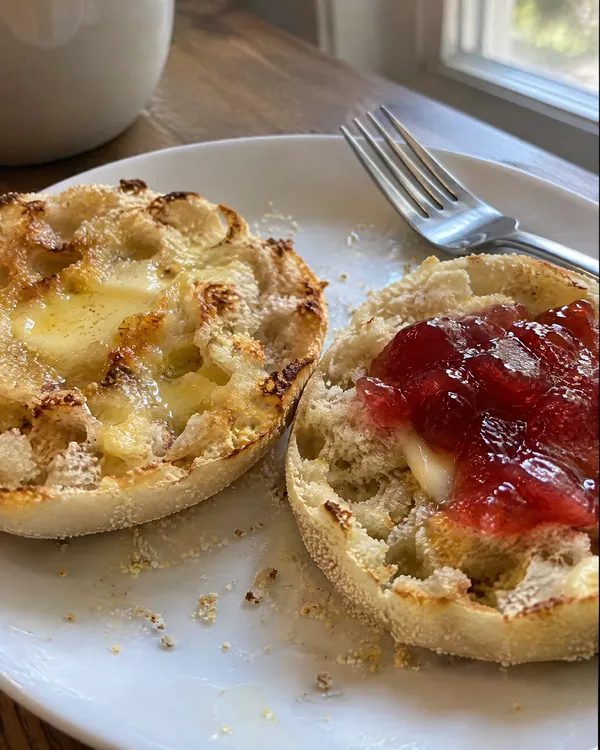
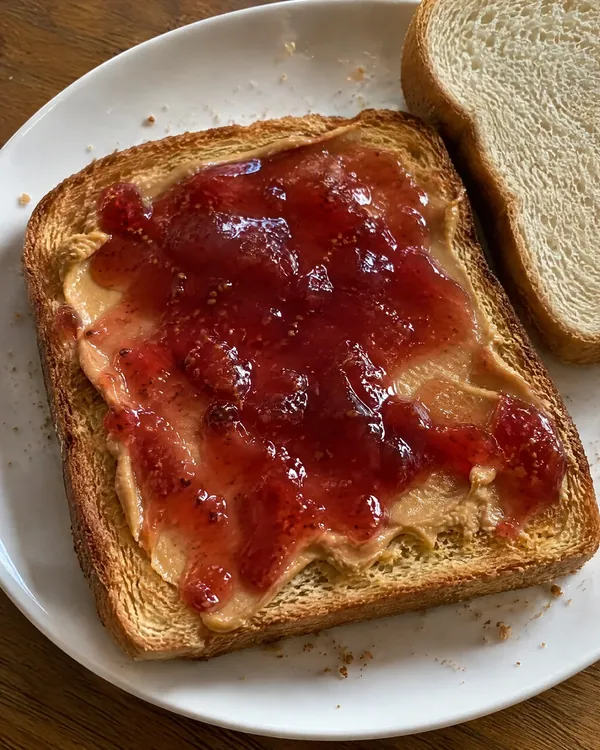
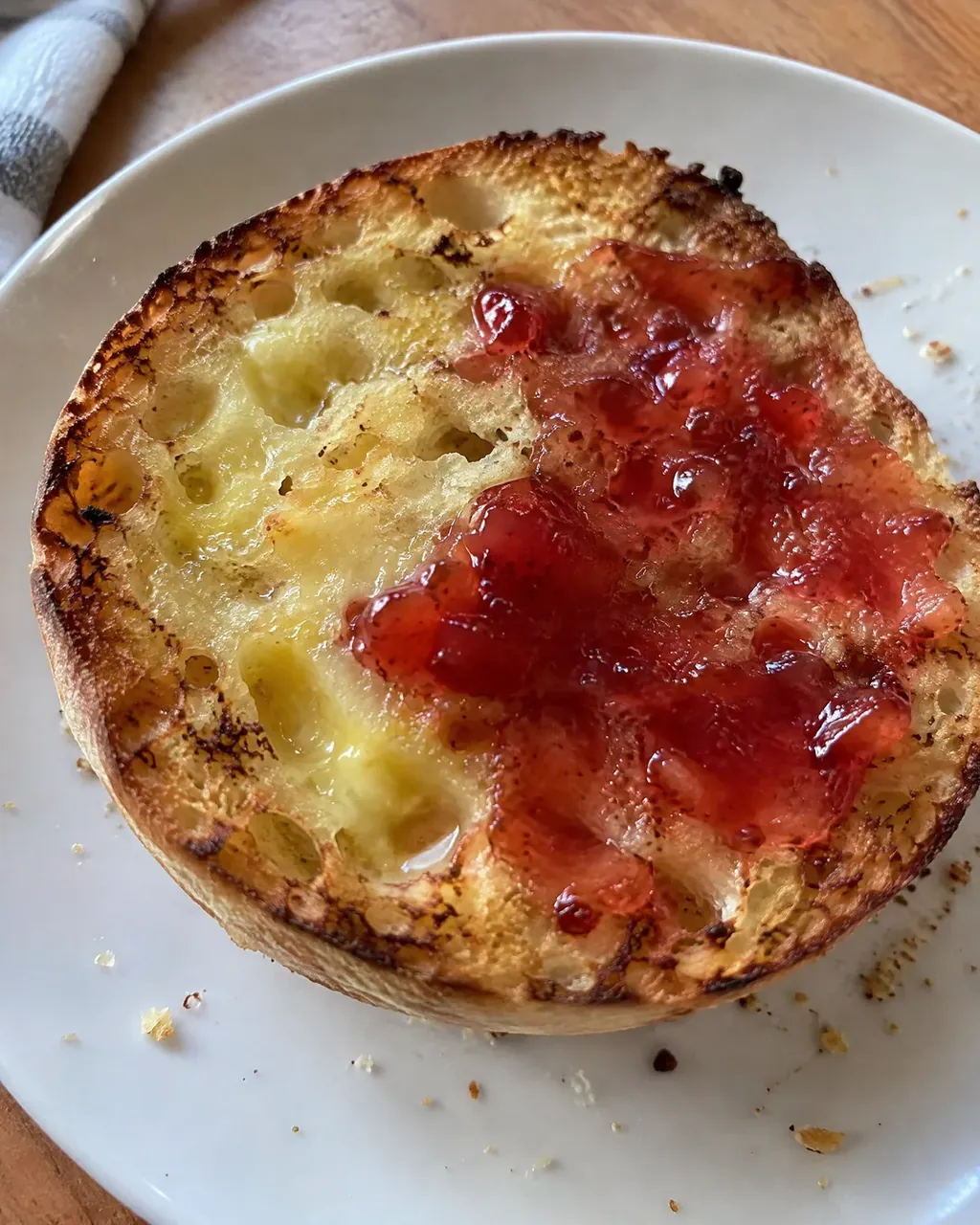
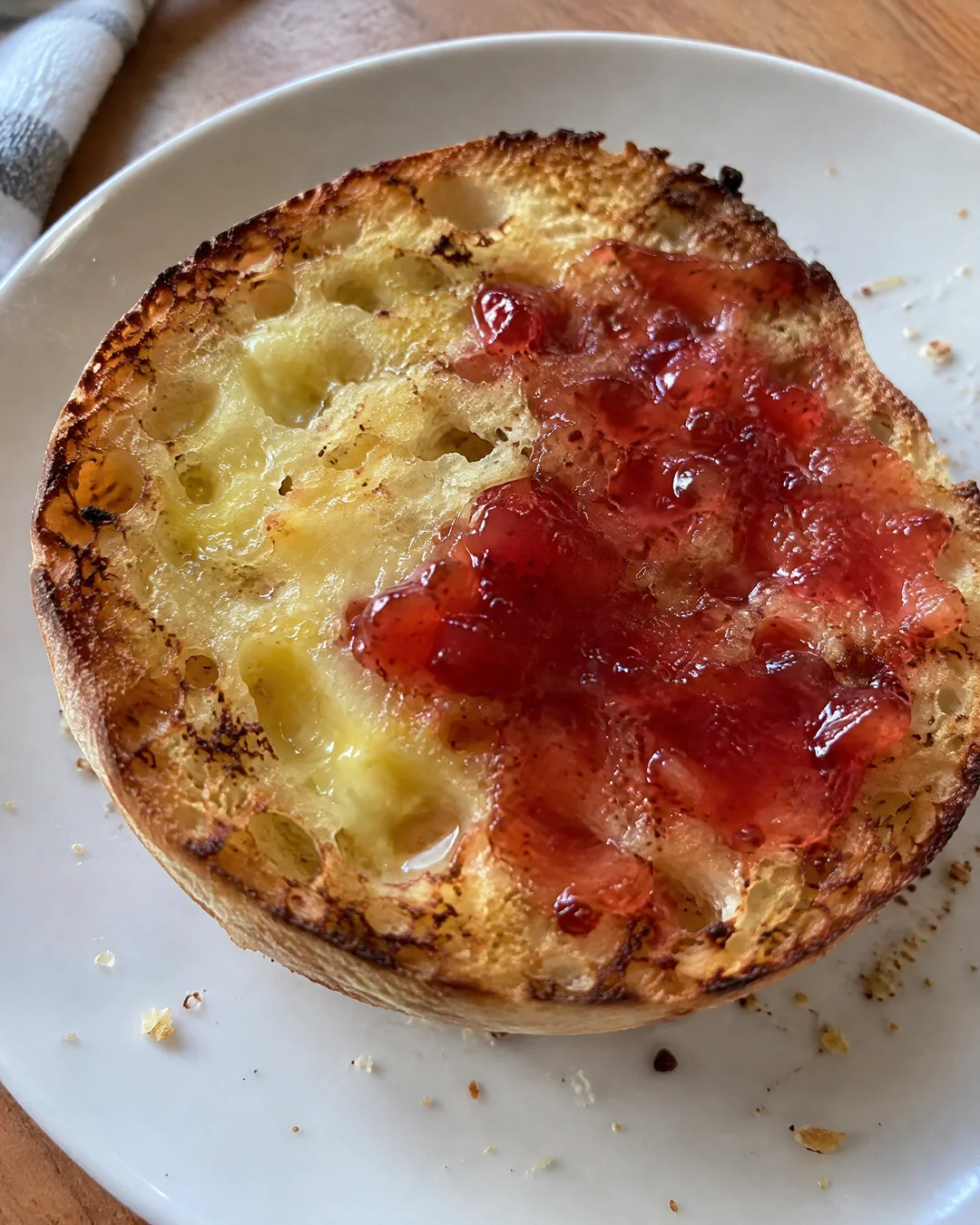
English muffin bread is the loaf my mother baked when she wanted a week of good toast from one morning of work. Nobody in our house ever ate a slice of it plain, because a plain slice is only bread, a little chewy and nothing special. The toaster is what changes it. The inside of this loaf is full of holes, the same uneven holes you find when you pull an English muffin apart, and when a slice is toasted every one of those holes turns crisp at the edge and fills with melted butter. It is also the easiest yeast bread I know. It is never kneaded, it rises only once, right in the pan, and it is in the oven less than an hour after you take out the mixing bowl.
The two questions people ask about this bread are why theirs came out with a tight, ordinary crumb, and how to know when it is done. The answer to the first is the batter. This is not a dough you can pick up and shape. It is a thick, sticky, stretchy batter, too wet to knead, and that wetness is what makes the holes. The answer to the second is color, sound and, if you have one, a thermometer. Here is how wet the batter should be, what it should look like at every stage, and how to tell the loaf is ready.
Why this English muffin bread works
- A wet batter instead of a dough. The extra liquid turns to steam in the oven and blows open the holes that make this bread toast like an English muffin.
- Beating instead of kneading. Two minutes of hard beating with a spoon or a mixer builds enough stretch to hold the bubbles, with no kneading at all.
- Warm milk and water. Warm liquid wakes the yeast quickly, so the batter rises in the pan in about 45 minutes.
- A pinch of baking soda. It softens the tang of the yeast and helps the crust brown, the way it does in real English muffins.
- Cornmeal in the pan. It keeps the sticky batter from gluing itself to the pan and gives the crust the sandy grit of an English muffin.
Ingredients
Makes two loaves (two 8 1/2 by 4 1/2 inch loaf pans), about 12 slices each. One to eat this week and one for the freezer. The measurements are in US cups with grams in brackets.
For the pans
- Soft butter or shortening, for greasing
- 3 tablespoons yellow cornmeal, plus a little more for the tops
For the bread
- 5 cups all-purpose flour or bread flour (625g), divided
- 2 packets instant or rapid-rise yeast (4 1/2 teaspoons, 14g)
- 1 tablespoon granulated sugar
- 2 teaspoons fine salt
- 1/4 teaspoon baking soda
- 2 cups whole milk (480ml)
- 1/2 cup water (120ml)
Bread flour gives slightly bigger holes and a chewier toast, but all-purpose flour works very well. If you only have active dry yeast, use the same amount and let the batter rise 15 to 20 minutes longer.
How to make English muffin bread
Get ready
- Grease two 8 1/2 by 4 1/2 inch loaf pans generously with butter. Add the cornmeal and tilt and tap the pans until the bottoms and sides are coated. Tip out the extra and save it.
- In a large bowl, stir together 3 cups of the flour (375g), the yeast, sugar, salt and baking soda.
Make the batter
- Heat the milk and water together in a small saucepan or in the microwave until very warm but not hot, about 120 to 130 degrees (50 to 55°C). It should feel like a hot bath on your wrist.
- Pour the warm liquid into the flour mixture and beat hard for 2 minutes with a wooden spoon, or with an electric mixer on medium speed. The batter will be smooth, loose and stretchy.
- Stir in the remaining 2 cups of flour (250g), half at a time, until no dry flour is left. The batter should be thick, sticky and shaggy, too wet to knead, and it should stretch and slowly fall from the spoon in a heavy ribbon. If it sits up in a firm ball like bread dough, stir in 2 to 3 tablespoons of warm water.
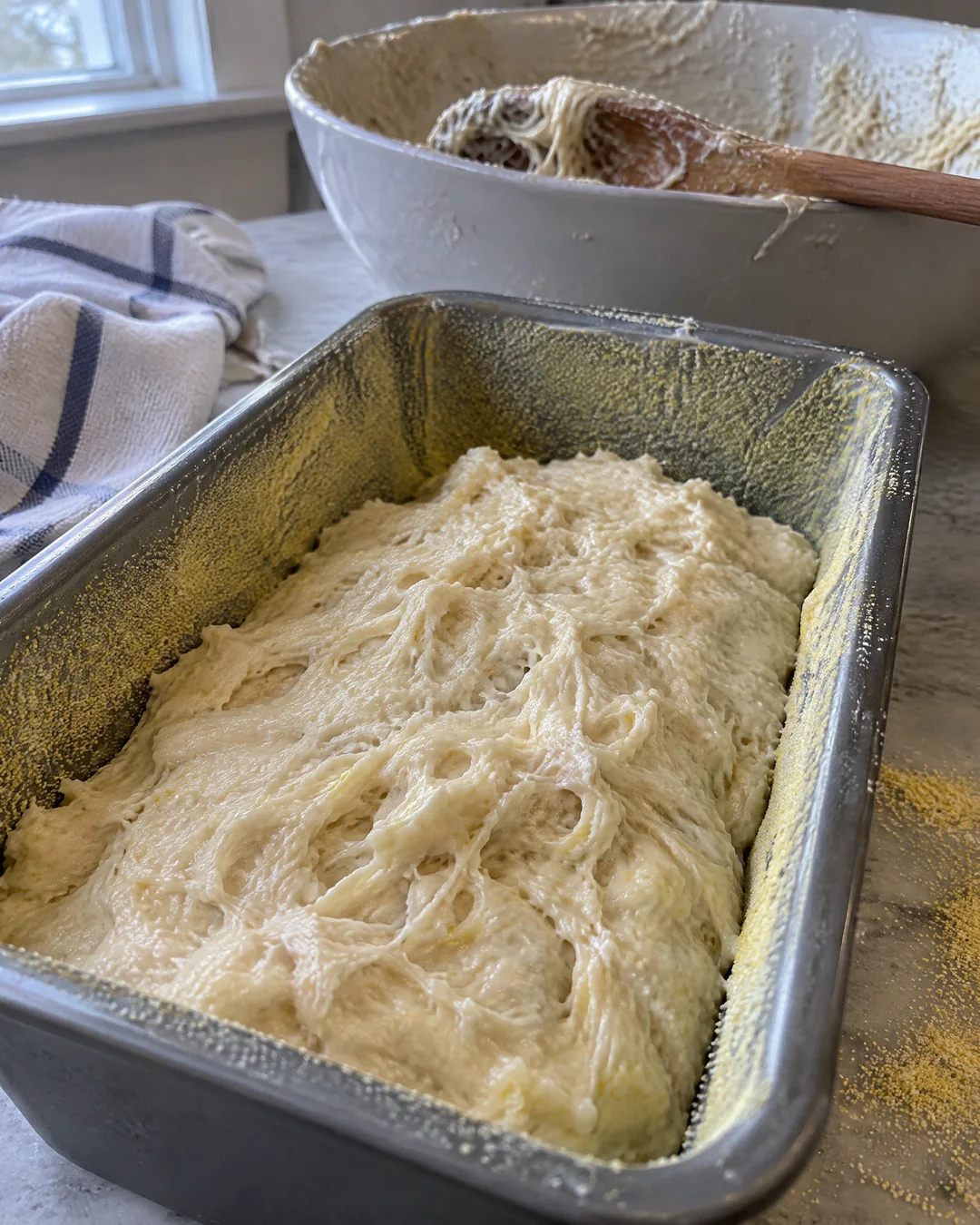
- Spoon the batter into the two pans, dividing it evenly. Push it into the corners with a wet spoon; do not worry about a smooth top. Sprinkle the tops with a little of the leftover cornmeal.
Rise and bake
- Cover the pans loosely with a clean towel and set them in a warm place for about 45 minutes, until the batter has risen to just the rim of the pans. While it rises, heat the oven to 400 degrees (200°C).
- Bake for 22 to 25 minutes, until the loaves are golden on top and sound hollow when you tip one out and tap the bottom. A thermometer pushed into the center should read 190 to 200 degrees (88 to 93°C).
- Turn the loaves out of the pans right away and cool them completely on a wire rack before slicing, at least 1 hour. Slice, toast and butter.
Tips that make the difference
- Do not add flour to make the batter easier to handle. If you can shape it with your hands, it is too dry and the crumb will be tight like sandwich bread.
- Do not let it rise past the rim of the pan. Over-risen batter collapses in the oven and bakes up dense in the middle.
- Take the loaves out of the pans as soon as they come out of the oven, or steam will soften the cornmeal crust.
- Wait until the bread is completely cold before you slice it. Warm, it is gummy and the holes squash under the knife.
- Use a serrated knife and cut slices a little thicker than store-bought bread, so the toast is crisp outside and still soft in the middle.
Variations
- Honey wheat. Replace 1 1/2 cups of the flour with whole wheat flour and the sugar with 2 tablespoons of honey.
- Cinnamon raisin. Stir 1 cup of raisins and 2 teaspoons of cinnamon into the batter with the second addition of flour.
- Cheddar. Add 1 cup of shredded sharp cheddar and a pinch of dry mustard for a savory toasting loaf.
- One loaf. Halve everything and use one packet of yeast; the rising and baking times stay the same.
Storage and make-ahead
Keep the cooled loaf in a bread bag or wrapped in a towel at room temperature for 3 days. It dries a little by the third day, which only makes it toast better.
To freeze, slice the cold loaf, put the slices in a freezer bag and freeze for up to 3 months.
Toast slices straight from the freezer; there is no need to thaw them first.
Frequently asked questions
Why does my English muffin bread have no holes?
The batter was too dry. It must be a sticky batter that you spoon into the pan, not a dough you can knead. Measure the flour by spooning it into the cup, or weigh it, and add a little warm water if the batter is stiff.
How do I know when the loaf is done?
The top is golden, the loaf has pulled slightly from the sides of the pan and the bottom sounds hollow when tapped. Inside, it should read 190 to 200 degrees.
Can I make it without cornmeal?
Yes. Grease the pans well and dust them with flour or fine semolina. You will lose the gritty crust but the bread is the same.
Why did my loaf sink in the middle?
It rose too long before baking. Put it in the oven when the batter reaches the rim of the pan, not higher.
Bake two, slice both, and keep one in the freezer. There will be good toast in the house for weeks.
English Muffin Bread (No Kneading, Full of Holes, Made for Toast)
English muffin bread is a no-knead yeast loaf made from a wet batter, baked in a pan dusted with cornmeal. The crumb is full of the same holes as an English muffin, which makes it the best toasting bread there is.
Ingredients
- Soft butter or shortening, for greasing
- 3 tablespoons yellow cornmeal, plus a little more for the tops
- 5 cups all-purpose flour or bread flour (625g), divided
- 2 packets instant or rapid-rise yeast
- 1 tablespoon granulated sugar
- 2 teaspoons fine salt
- 1/4 teaspoon baking soda
- 2 cups whole milk
- 1/2 cup water
Instructions
- Grease two 8 1/2 by 4 1/2 inch loaf pans generously with butter. Add the cornmeal and tilt and tap the pans until the bottoms and sides are coated. Tip out the extra and save it.
- In a large bowl, stir together 3 cups of the flour (375g), the yeast, sugar, salt and baking soda.
- Heat the milk and water together in a small saucepan or in the microwave until very warm but not hot, about 120 to 130 degrees (50 to 55°C). It should feel like a hot bath on your wrist.
- Pour the warm liquid into the flour mixture and beat hard for 2 minutes with a wooden spoon, or with an electric mixer on medium speed. The batter will be smooth, loose and stretchy.
- Stir in the remaining 2 cups of flour (250g), half at a time, until no dry flour is left. The batter should be thick, sticky and shaggy, too wet to knead, and it should stretch and slowly fall from the spoon in a heavy ribbon. If it sits up in a firm ball like bread dough, stir in 2 to 3 tablespoons of warm water.
- Spoon the batter into the two pans, dividing it evenly. Push it into the corners with a wet spoon; do not worry about a smooth top. Sprinkle the tops with a little of the leftover cornmeal.
- Cover the pans loosely with a clean towel and set them in a warm place for about 45 minutes, until the batter has risen to just the rim of the pans. While it rises, heat the oven to 400 degrees (200°C).
- Bake for 22 to 25 minutes, until the loaves are golden on top and sound hollow when you tip one out and tap the bottom. A thermometer pushed into the center should read 190 to 200 degrees (88 to 93°C).
- Turn the loaves out of the pans right away and cool them completely on a wire rack before slicing, at least 1 hour. Slice, toast and butter.