In this article
For most of my life I believed English muffins were something only a factory could make. They came in a paper sleeve, six to a pack, and I never once wondered how they got their flat tops. Then my friend Margaret, who grew up in Lancashire, watched me toast one and told me that back home they are simply called muffins, and that her mother cooked them on top of the stove. Not in the oven. On a heavy flat pan, with nothing in it but a dusting of meal, a few at a time, while the kettle boiled.
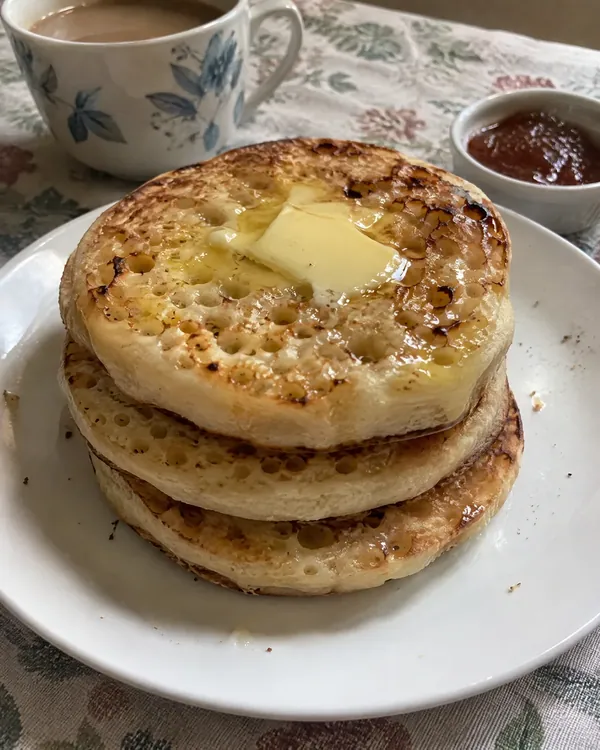
That is the whole secret of an English muffin. The dough is an ordinary soft yeast dough, a little softer than bread dough, made with warm milk and a spoonful of butter. What makes it an English muffin is the griddle: slow, dry heat from below that sets one flat face, then the other, and leaves the sides pale and soft. The only way to get it wrong is to hurry. Here is how low the heat has to be so the middle cooks through before the outside burns, and why a fork does a better job than a knife when it is time to open one.
Why this English muffins works
- A soft, slightly sticky dough. The extra milk turns to steam on the griddle and opens up the holes that make the inside rough.
- Cornmeal under the rounds. It keeps the soft dough from sticking to the tray and the pan, and gives the faces their dry, sandy crust.
- A dry griddle. With no oil or butter in the pan the muffins toast instead of frying, so the faces stay matte and golden.
- Low heat for a long time. A thick round of raw dough needs a good 7 to 8 minutes a side for the heat to reach the center.
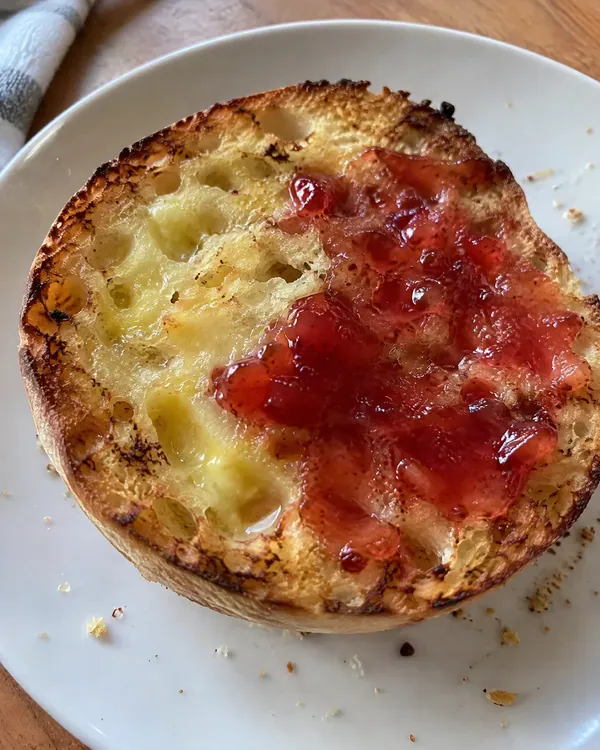
- A fork, not a knife. Tearing the muffin open leaves a craggy surface that toasts crisp on the peaks and holds butter in the hollows.
Ingredients
Makes 10 muffins about 3 1/2 inches (9cm) across. The measurements are in US cups with grams in brackets.
For the dough
- 3 1/2 cups bread flour or all-purpose flour (440g), plus a little for the counter
- 2 1/4 teaspoons instant or active dry yeast (7g), one packet
- 1 tablespoon sugar
- 1 1/2 teaspoons fine salt
- 1 1/4 cups whole milk (300ml), warmed until it feels like bath water
- 2 tablespoons butter (28g), melted
For shaping and cooking
- About 1/3 cup fine yellow cornmeal or semolina (50g), for dusting
Bread flour gives a chewier muffin with bigger holes; all-purpose flour gives a softer one, and both are good. The milk should be warm, not hot: if you cannot hold a finger in it comfortably, it will hurt the yeast. In Britain the dusting is usually semolina or ground rice. Fine cornmeal does the same job.
How to make English muffins
Make the dough
- In a large bowl, stir the flour, yeast, sugar and salt together. Pour in the warm milk and the melted butter and stir with a wooden spoon until a rough, sticky dough forms and no dry flour is left.
- Turn the dough onto a lightly floured counter and knead for 8 minutes, or mix for 5 minutes in a stand mixer with the dough hook, until it is smooth and stretchy. It should stay soft and a little tacky. Add as little extra flour as you can.
- Put the dough back in the bowl, cover it with a plate or a clean towel and leave it in a warm place for about 1 hour, until it has doubled.
Shape and rest
- Scatter half the cornmeal over a large baking sheet. Tip the dough onto a lightly floured counter and pat it out with your palms to a slab about 3/4 inch (2cm) thick. Do not roll it thin.
- Cut out rounds with a 3 inch (7.5cm) cutter or the rim of a glass, pressing straight down. Gather the scraps, pat them out again and cut more, for 10 rounds in all.
- Set the rounds on the cornmeal, a little apart, and sprinkle the rest of the cornmeal over the tops. Cover loosely with a towel and leave for 30 to 40 minutes, until they are puffy and a gentle poke leaves a small dent.
Cook on the griddle
- Set a heavy griddle or a large cast iron skillet over low heat, with nothing in it, and let it warm for 5 minutes. On most stoves the right setting is one notch above the lowest. A pinch of cornmeal dropped on the pan should turn golden slowly, in about a minute, and not scorch.
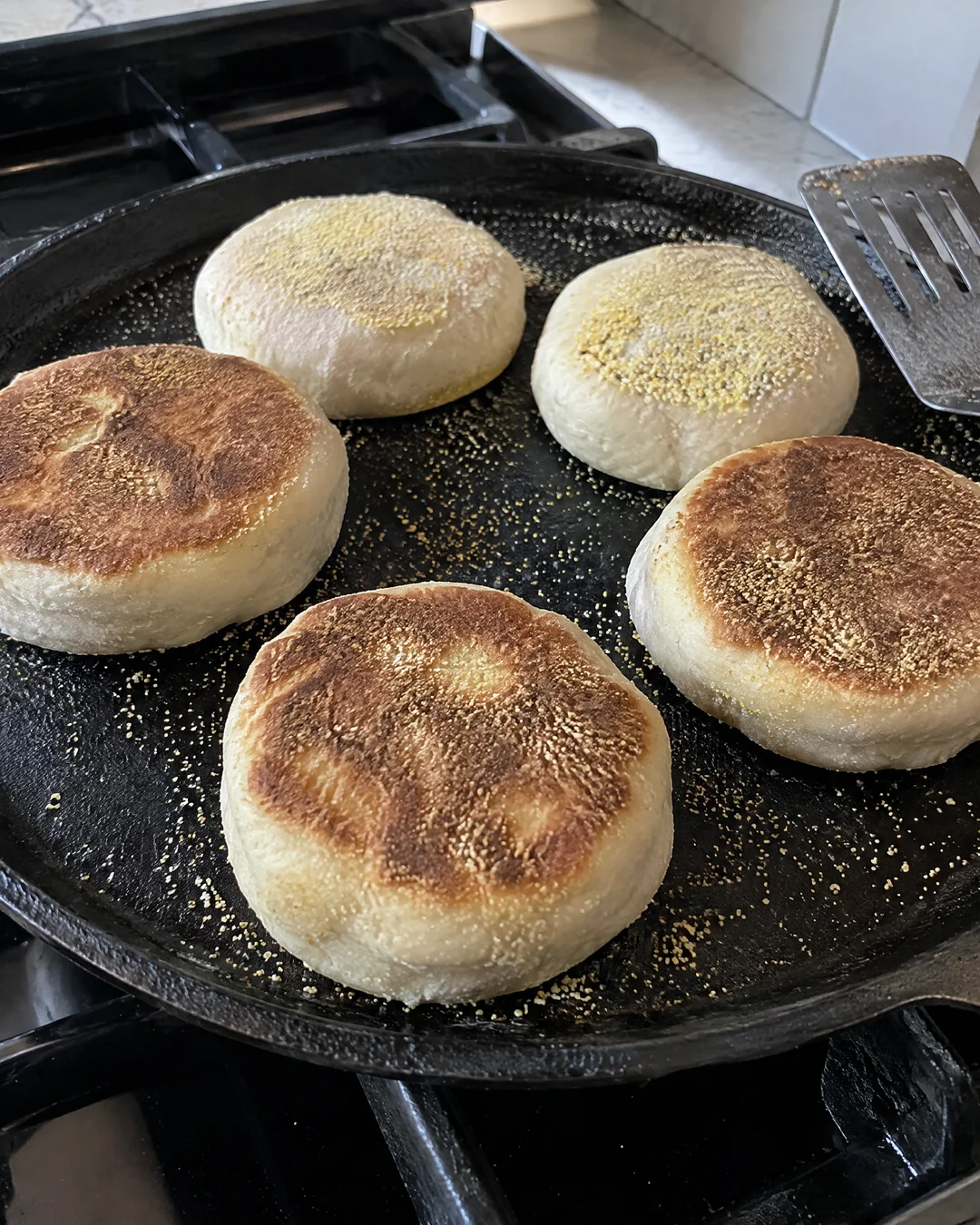
- Lift 4 or 5 muffins onto the dry griddle with a spatula. Cook for 7 to 8 minutes, until the underside is deep golden brown and the muffins have risen. If they are brown after 3 or 4 minutes, the heat is too high: turn it down and lift the pan off the burner for a moment.
- Turn them over and cook the second side for another 7 to 8 minutes. The sides should feel set and springy when pressed gently, not soft and doughy, and the center should reach 200 degrees (93°C) if you have a thermometer.
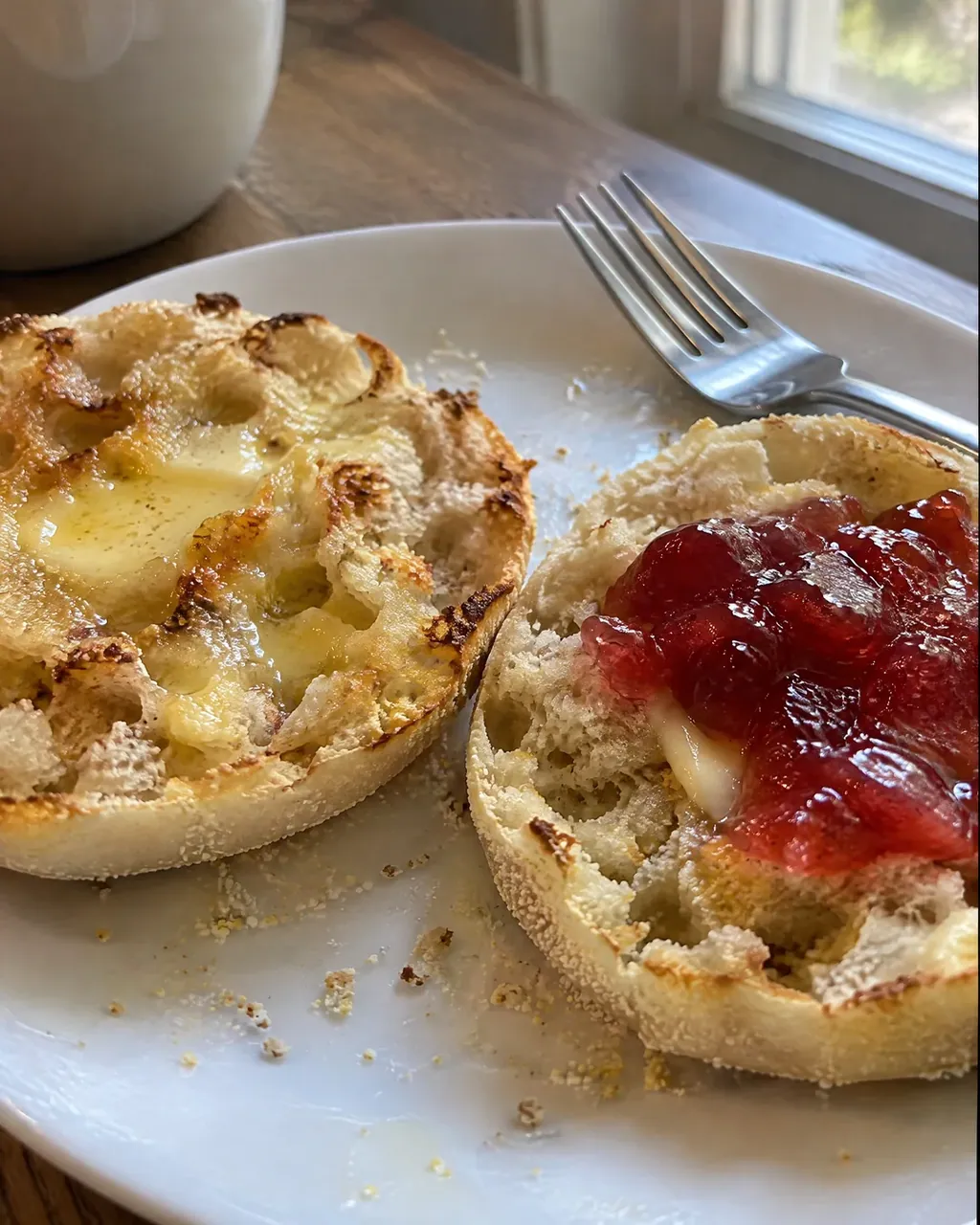
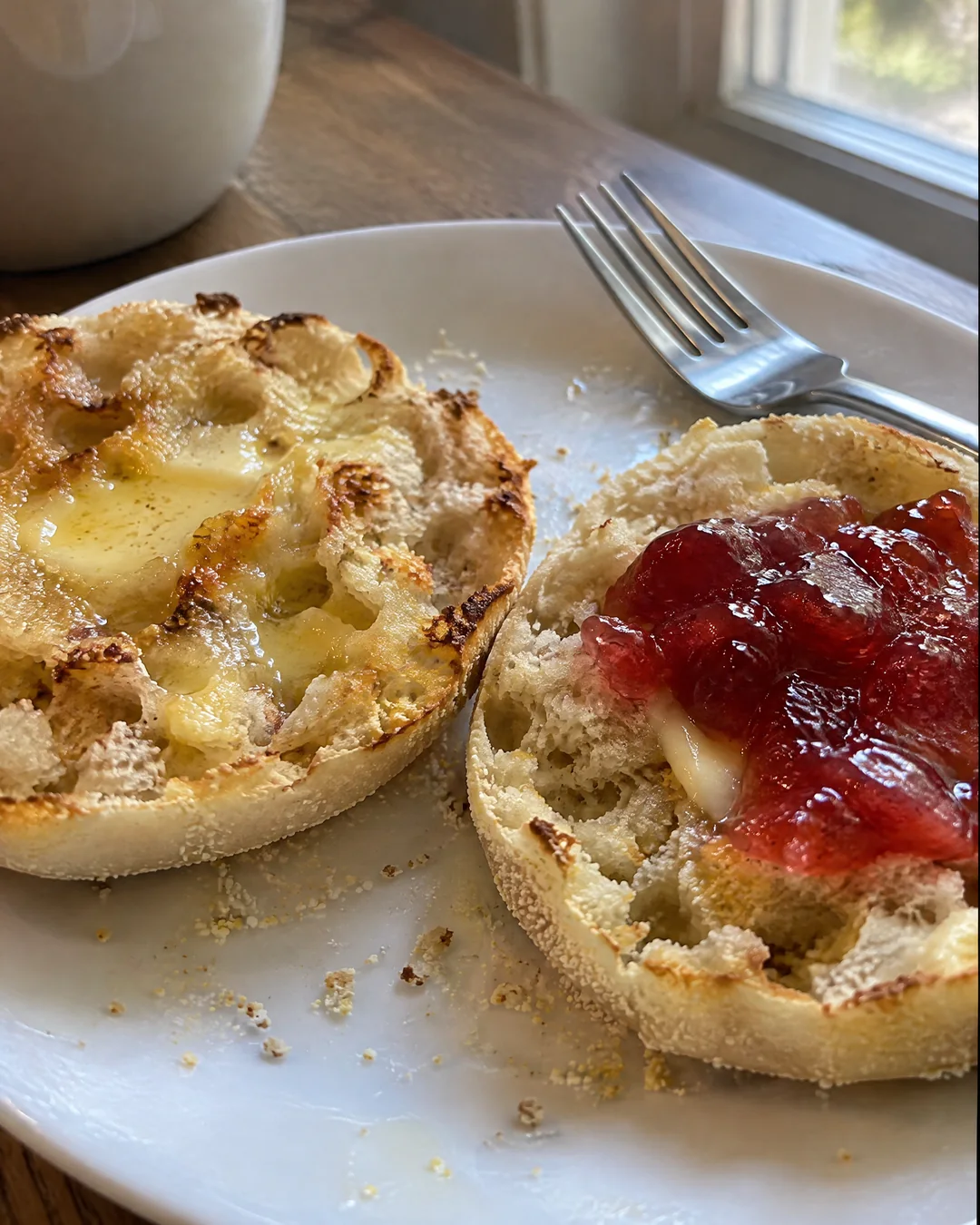
- Cool the muffins on a rack for at least 20 minutes. To serve, push the tines of a fork into the side all the way around, pull the two halves apart, toast them and butter them while hot.
Tips that make the difference
- Trust the low heat. The most common mistake is a pan that is too hot, which gives a dark crust around a band of raw dough.
- If the faces are done but the sides still feel soft, stand the muffins on a baking sheet in a 350 degree (175°C) oven for 5 to 8 minutes to finish the middle.
- Let them cool before you split them. A hot muffin is still setting inside and tears into gummy pieces.
Variations
- Whole wheat English muffins. Replace 1 cup of the flour (125g) with whole wheat flour and add 1 extra tablespoon of milk.
- Cinnamon raisin. Knead 1/2 cup raisins (75g) and 1 teaspoon ground cinnamon into the dough for the last minute of kneading.
- Overnight dough. After kneading, cover the bowl and put it in the refrigerator overnight. In the morning pat out the cold dough, cut it, and give the rounds about an hour to puff. The flavor is deeper.
Storage and make-ahead
Keep the cooled muffins in a paper bag or a bread box for 2 days, or in a sealed bag for 4 days. They are meant to be toasted, so a day-old muffin is as good as a fresh one.
To freeze, split each muffin with a fork first, press the halves back together and freeze them in a freezer bag for up to 3 months. The halves can go straight from the freezer into the toaster.
Frequently asked questions
Why are my English muffins raw in the middle?
The heat was too high, so the faces browned before the center had time to cook. Keep the burner low, allow a full 7 to 8 minutes a side, and finish any doubtful ones in a 350 degree oven for a few minutes.
Why split them with a fork?
A knife cuts a smooth, flat surface, like a slice of bread. A fork tears along the natural holes in the crumb and leaves peaks and hollows. The peaks toast crisp and the hollows hold the butter and jam.
Can I make them without a cutter?
Yes. The rim of a drinking glass dipped in flour works, or you can divide the dough into 10 equal pieces, roll each into a ball and flatten it to 3/4 inch thick with your palm.
Make them on a slow morning, when there is no reason to rush the pan, and eat the first one standing at the counter with the butter still melting.
Homemade English Muffins (Cooked on a Griddle, Split with a Fork)
Homemade English muffins: a soft yeast dough of flour, warm milk and a little butter, cut in rounds, rested on cornmeal and cooked slowly on a dry griddle until both faces are golden, then split with a fork so the inside is full of holes for the butter.
Ingredients
- 3 1/2 cups bread flour or all-purpose flour (440g), plus a little for the counter
- 2 1/4 teaspoons instant or active dry yeast (7g), one packet
- 1 tablespoon sugar
- 1 1/2 teaspoons fine salt
- 1 1/4 cups whole milk (300ml), warmed until it feels like bath water
- 2 tablespoons butter (28g), melted
- About 1/3 cup fine yellow cornmeal or semolina (50g), for dusting
Instructions
- In a large bowl, stir the flour, yeast, sugar and salt together. Pour in the warm milk and the melted butter and stir with a wooden spoon until a rough, sticky dough forms and no dry flour is left.
- Turn the dough onto a lightly floured counter and knead for 8 minutes, or mix for 5 minutes in a stand mixer with the dough hook, until it is smooth and stretchy. It should stay soft and a little tacky. Add as little extra flour as you can.
- Put the dough back in the bowl, cover it with a plate or a clean towel and leave it in a warm place for about 1 hour, until it has doubled.
- Scatter half the cornmeal over a large baking sheet. Tip the dough onto a lightly floured counter and pat it out with your palms to a slab about 3/4 inch (2cm) thick. Do not roll it thin.
- Cut out rounds with a 3 inch (7.5cm) cutter or the rim of a glass, pressing straight down. Gather the scraps, pat them out again and cut more, for 10 rounds in all.
- Set the rounds on the cornmeal, a little apart, and sprinkle the rest of the cornmeal over the tops. Cover loosely with a towel and leave for 30 to 40 minutes, until they are puffy and a gentle poke leaves a small dent.
- Set a heavy griddle or a large cast iron skillet over low heat, with nothing in it, and let it warm for 5 minutes. On most stoves the right setting is one notch above the lowest. A pinch of cornmeal dropped on the pan should turn golden slowly, in about a minute, and not scorch.
- Lift 4 or 5 muffins onto the dry griddle with a spatula. Cook for 7 to 8 minutes, until the underside is deep golden brown and the muffins have risen. If they are brown after 3 or 4 minutes, the heat is too high: turn it down and lift the pan off the burner for a moment.
- Turn them over and cook the second side for another 7 to 8 minutes. The sides should feel set and springy when pressed gently, not soft and doughy, and the center should reach 200 degrees (93°C) if you have a thermometer.
- Cool the muffins on a rack for at least 20 minutes. To serve, push the tines of a fork into the side all the way around, pull the two halves apart, toast them and butter them while hot.