In this article
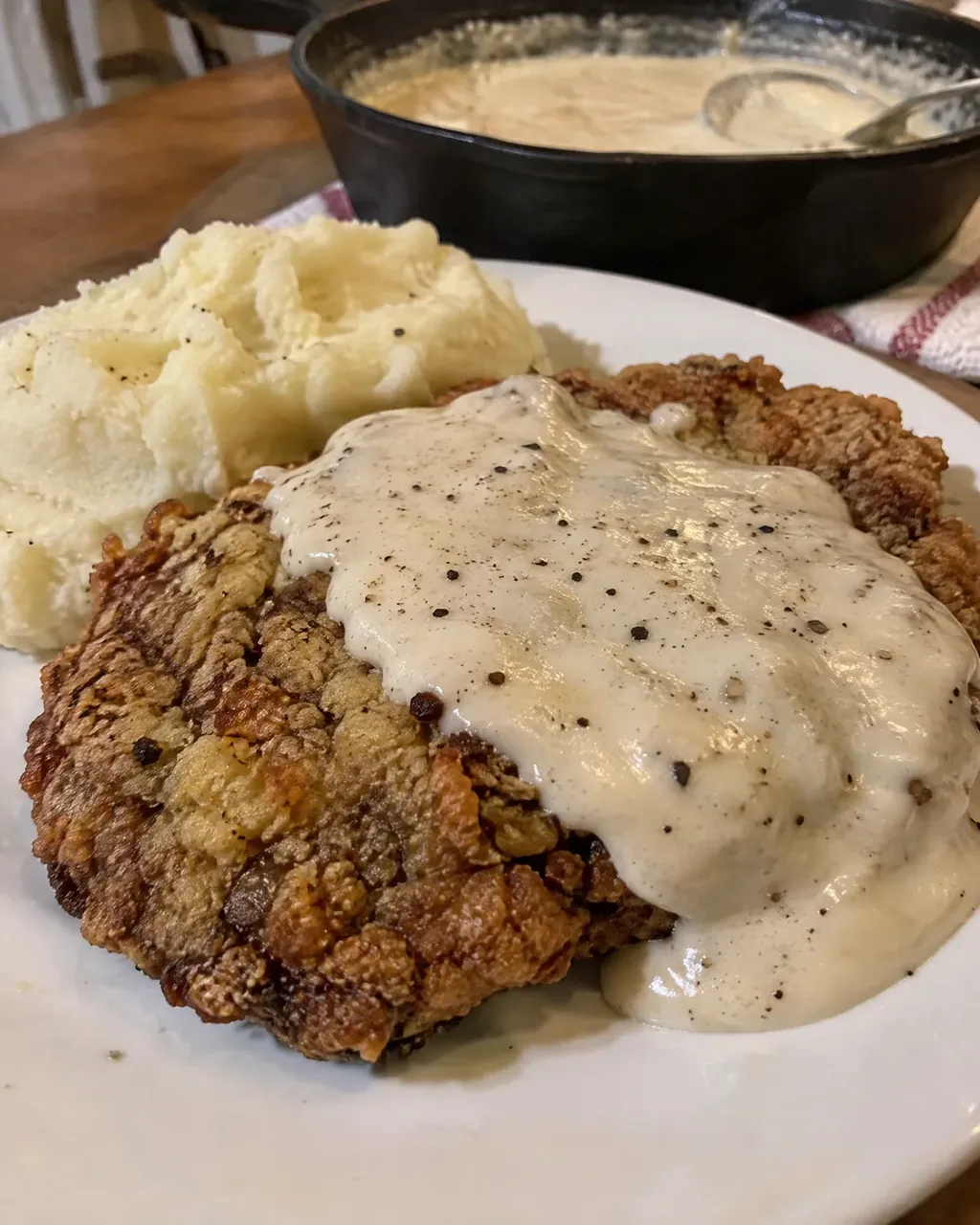
Some fathers judged a cook on her biscuits, some on her pie crust. In a good many houses across Texas, Oklahoma and the rest of the South, the judgment fell on one thing only: the gravy on the chicken fried steak. The steak itself was cube steak, the cheap cut the butcher had already run through the tenderizer, pounded a little thinner at home, dredged twice and fried in a black skillet until the crust went deep gold and craggy. Then the pan was tipped, most of the fat poured off, and the gravy was built on the brown bits that were left. White, thick, and with more black pepper than seemed reasonable.
If the gravy was right, you got a nod. That was the whole review, and some of us are still thinking about the first time we earned it. The recipe below is that steak and that gravy, written out with measurements. The two things that separate it from a plate of soggy breading are a 10-minute rest after the dredge, so the coating grabs the meat, and a gravy made in the same pan the steaks came out of, never in a clean one.
Why this chicken fried steak works
- Cube steak, pounded thinner. The butcher’s tenderizer has already done most of the work. A few more strokes with a mallet take it to 1/4 inch, so it cooks in 3 minutes a side and stays tender under the crust.
- A double dredge. Flour, buttermilk egg, flour again, pressed in hard. The second coat is what makes the craggy crust that holds the gravy.
- A 10-minute rest before frying. The flour hydrates and glues itself to the meat. Steaks that go straight into the oil are the ones whose crust slides off in one piece.
- Gravy in the same skillet. The fat and the browned crumbs in the pan carry the flavor. The gravy is seasoned before the milk goes in, and the milk goes in slowly.
Ingredients
Serves 4. US cups with grams in brackets.
For the steaks
- 4 beef cube steaks (about 6 oz / 170g each, 1 1/2 lb total)
- Salt and black pepper for both sides
- 1 1/2 cups all-purpose flour (190g)
- 1 teaspoon salt
- 1 teaspoon black pepper
- 1 teaspoon paprika
- 2 large eggs
- 1/2 cup buttermilk (120ml)
- Vegetable or canola oil for frying, about 1/2 inch (1.2cm) deep in the skillet
For the white pepper gravy
- 3 tablespoons of the frying fat, with the brown bits left in the pan
- 3 tablespoons all-purpose flour (24g)
- 2 1/2 cups whole milk (600ml), at room temperature
- 1/2 to 1 teaspoon black pepper, to taste
- Salt, to taste
If your grocery store has no cube steak, ask for bottom round or top round cut 1/2 inch thick and pound it to 1/4 inch yourself. Whole milk makes the right gravy; 2% works but it will be thinner.
How to make chicken fried steak
Fry the steaks
- Lay the cube steaks between two sheets of plastic wrap and pound them with a meat mallet or a heavy skillet until they are about 1/4 inch thick. Season both sides with salt and pepper.
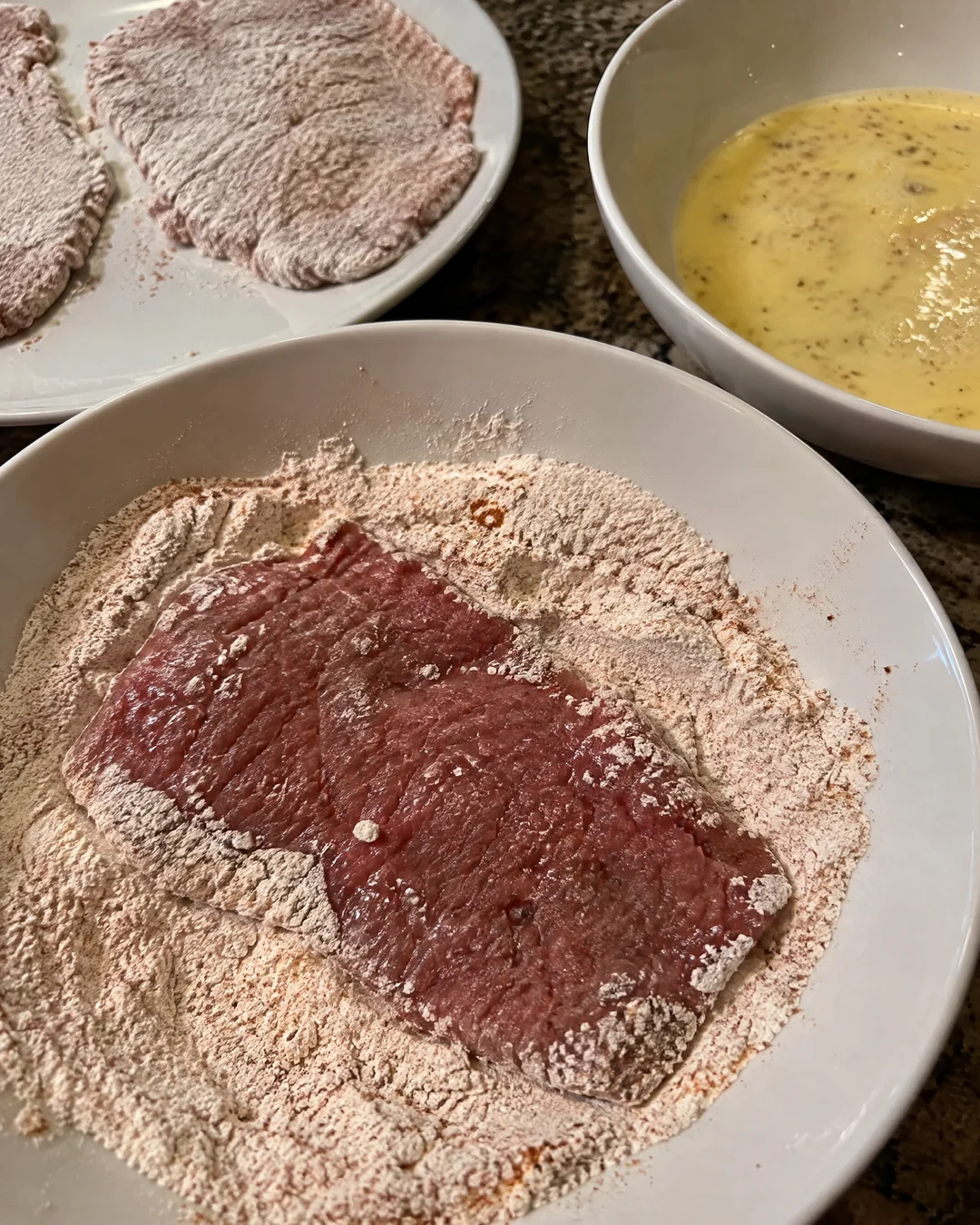
- Set up two shallow bowls. Bowl 1: the flour, 1 teaspoon salt, 1 teaspoon pepper and the paprika, whisked together. Bowl 2: the eggs whisked with the buttermilk.
- Dredge each steak in the flour, shake off the extra, dip it in the egg and let it drip, then press it back into the flour on both sides, pushing the flour into the meat with your fingers so the coating is thick and shaggy. Set the steaks on a plate.
- Let the dredged steaks rest for 10 minutes. The coating turns from powdery to pasty and grabs the meat. Meanwhile pour 1/2 inch of oil into a large cast iron skillet and heat it over medium-high until a pinch of flour sizzles at once, about 350°F (175°C).
- Fry two steaks at a time, 3 to 4 minutes a side, until the crust is deep gold and crisp. Do not crowd the pan and do not move them for the first 2 minutes. Lift onto a wire rack set over a sheet pan, never onto paper, so the crust stays crisp. Keep warm in a 200°F (95°C) oven while you fry the rest.
Make the gravy in the same pan
- Pour off the oil into a heatproof jar, leaving about 3 tablespoons of fat in the skillet along with all the brown crumbs. Set the skillet over medium heat.
- Sprinkle in the 3 tablespoons of flour and stir it into the fat for a full minute, scraping the bottom, until it smells toasty and turns the color of sand.
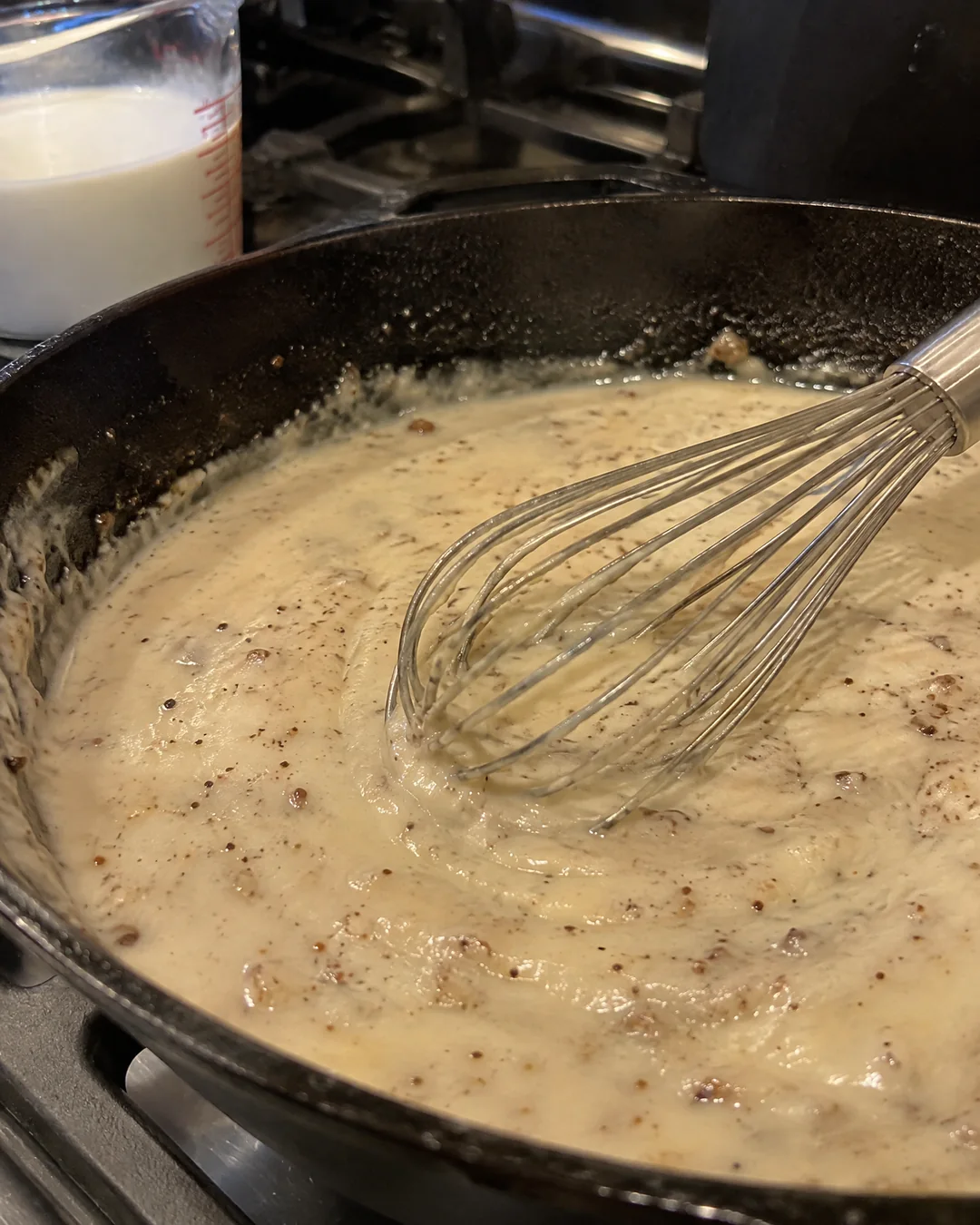
- Pour in the milk slowly, about 1/2 cup at a time, whisking hard after each addition so no lumps form. Once it is all in, bring to a gentle simmer.
- Simmer 3 to 5 minutes, whisking, until the gravy coats the back of a spoon. Season with more black pepper than you think it needs, then salt to taste. If it gets too thick, loosen it with a splash of milk.
- Put a steak on each plate, spoon the gravy over half of it so the crust still shows, and serve with mashed potatoes and whatever green vegetable is on the stove.
Tips that make the difference
- Use one hand for the dry bowl and the other for the wet bowl, or you will bread your fingers instead of the steak.
- The oil must be hot before the first steak goes in. Too cool and the crust soaks oil and slides off; too hot and it darkens before the meat is done. A pinch of flour should sizzle at once without burning.
- A rack, not paper towels, for draining. Paper steams the underside and softens the crust you worked for.
- Room-temperature milk whisks into the roux without lumps. Cold milk seizes it.
- Taste the gravy at the end, not the start. The salt from the pan drippings varies, and the pepper only shows once the gravy has thickened.
Variations
- Country fried steak. The same steak, but the gravy is brown instead of white: swap the milk for 2 1/2 cups of beef broth and add a sliced onion cooked in the fat before the flour goes in.
- Hot sauce dredge. Add 1 tablespoon of hot sauce to the egg and buttermilk. A Texas habit that gives warmth without heat.
- Chicken fried chicken. Pound boneless chicken thighs or breasts to 1/2 inch and follow the recipe exactly, 4 to 5 minutes a side.
- Oven finish for a crowd. Fry 8 steaks in batches, hold them on racks in a 200°F (95°C) oven for up to 30 minutes, and make a double gravy at the end.
Storage and make-ahead
Chicken fried steak is best the minute it is made. Leftovers keep 3 days in the refrigerator; reheat the steaks on a rack in a 375°F (190°C) oven for 10 to 12 minutes so the crust crisps again, never in the microwave.
The gravy keeps 3 days in a covered jar. Reheat gently on the stove with a splash of milk, whisking, and it comes back smooth.
The steaks can be dredged and refrigerated on a plate, uncovered, up to 4 hours ahead. The long rest only helps the crust stick.
Frequently asked questions
Why does the breading fall off my chicken fried steak?
Almost always because the steak went into the oil straight after dredging, or was moved too soon. Rest the dredged steaks 10 minutes so the flour hydrates and grips the meat, press the second coat of flour in hard, and leave each steak alone for the first 2 minutes in the pan.
What is the difference between chicken fried steak and country fried steak?
The steak is the same. Chicken fried steak wears a crisp, craggy crust and white pepper gravy made with milk. Country fried steak usually has a lighter, smoother coating and brown gravy made with beef broth and onions.
Can I make chicken fried steak in the oven or an air fryer?
You can, but the crust will be thinner and paler and the gravy loses its pan drippings. If you must, spray the dredged steaks with oil and bake at 425°F (220°C) for 15 minutes, turning once, and make the gravy with 3 tablespoons of butter instead of the frying fat.
Why is my gravy lumpy?
The milk went in too fast or too cold. Add it 1/2 cup at a time to the roux, whisking hard, and use milk at room temperature. A lumpy gravy can be saved by pushing it through a fine sieve.
Get the gravy right and you may get a nod. In some families that nod was worth more than any compliment, and it still is.
Chicken Fried Steak with White Pepper Gravy (Cube Steak, Double Dredge, Cast Iron Skillet)
Classic chicken fried steak: cube steak pounded thin, dredged twice in seasoned flour and buttermilk egg, fried in a cast iron skillet until deep gold, and covered in white pepper gravy made from the drippings in the same pan. Four steaks in 40 minutes. Cups and grams, plus the reason the crust slides off and how to stop it.
Ingredients
- 4 beef cube steaks
- Salt and black pepper for both sides
- 1 1/2 cups all-purpose flour
- 1 teaspoon salt
- 1 teaspoon black pepper
- 1 teaspoon paprika
- 2 large eggs
- 1/2 cup buttermilk
- Vegetable or canola oil for frying, about 1/2 inch (1.2cm) deep in the skillet
- 3 tablespoons of the frying fat, with the brown bits left in the pan
- 3 tablespoons all-purpose flour
- 2 1/2 cups whole milk (600ml), at room temperature
- 1/2 to 1 teaspoon black pepper, to taste
- Salt, to taste
Instructions
- Lay the cube steaks between two sheets of plastic wrap and pound them with a meat mallet or a heavy skillet until they are about 1/4 inch thick. Season both sides with salt and pepper.
- Set up two shallow bowls. Bowl 1: the flour, 1 teaspoon salt, 1 teaspoon pepper and the paprika, whisked together. Bowl 2: the eggs whisked with the buttermilk.
- Dredge each steak in the flour, shake off the extra, dip it in the egg and let it drip, then press it back into the flour on both sides, pushing the flour into the meat with your fingers so the coating is thick and shaggy. Set the steaks on a plate.
- Let the dredged steaks rest for 10 minutes. The coating turns from powdery to pasty and grabs the meat. Meanwhile pour 1/2 inch of oil into a large cast iron skillet and heat it over medium-high until a pinch of flour sizzles at once, about 350°F (175°C).
- Fry two steaks at a time, 3 to 4 minutes a side, until the crust is deep gold and crisp. Do not crowd the pan and do not move them for the first 2 minutes. Lift onto a wire rack set over a sheet pan, never onto paper, so the crust stays crisp. Keep warm in a 200°F (95°C) oven while you fry the rest.
- Pour off the oil into a heatproof jar, leaving about 3 tablespoons of fat in the skillet along with all the brown crumbs. Set the skillet over medium heat.
- Sprinkle in the 3 tablespoons of flour and stir it into the fat for a full minute, scraping the bottom, until it smells toasty and turns the color of sand.
- Pour in the milk slowly, about 1/2 cup at a time, whisking hard after each addition so no lumps form. Once it is all in, bring to a gentle simmer.
- Simmer 3 to 5 minutes, whisking, until the gravy coats the back of a spoon. Season with more black pepper than you think it needs, then salt to taste. If it gets too thick, loosen it with a splash of milk.
- Put a steak on each plate, spoon the gravy over half of it so the crust still shows, and serve with mashed potatoes and whatever green vegetable is on the stove.