In this article
- The Origins of Étouffée
- Chicken vs Crawfish Étouffée
- Key Ingredients in Chicken Étouffée
- How to Make Chicken Étouffée – Step-by-Step
- How to Serve Chicken Étouffée
- Chicken Étouffée Recipe Variations
- Tips for Perfect Étouffée Every Time
- How to Store and Reheat
- Frequently Asked Questions (FAQs)
- Conclusion & Final Thoughts
Chicken Étouffée is a beloved Louisiana dish that perfectly captures the rich, soulful essence of Cajun and Creole cooking. The word “étouffée” comes from French, meaning “smothered,” and that’s exactly what happens in this dish — chicken is gently simmered in a thick, flavorful roux-based sauce, full of spices, herbs, and the classic Southern “Holy Trinity” of vegetables: onion, celery, and bell pepper.
While crawfish is the traditional protein in étouffée, chicken has become a widely loved alternative, especially for home cooks who want a more accessible version. This dish is hearty, aromatic, and perfect for family dinners, gatherings, or cold nights when comfort food is calling. In this guide, we’ll dive into the history, ingredients, variations, and step-by-step recipe to make an authentic Chicken Étouffée that rivals any Southern kitchen.
The Origins of Étouffée
Étouffée has its roots in both Cajun cuisine and Creole cuisine, two unique culinary traditions that emerged in Louisiana. While they share similarities, Cajun and Creole dishes are distinct in their use of spices, ingredients, and preparation methods.
Crawfish Étouffée is believed to have originated in the small towns of the Acadiana region, where Cajun settlers adapted French techniques using local ingredients. Creole versions, found more commonly in New Orleans, tend to incorporate tomatoes and have a slightly more refined flair, often influenced by Spanish, African, and Caribbean flavors.
Over time, the dish evolved as people began substituting crawfish with chicken, shrimp, and even sausage to make it more versatile. What remains consistent is the method: smothering the meat in a flavorful sauce made from a roux, vegetables, and rich stock, then serving it over rice.
Chicken vs Crawfish Étouffée
While crawfish remains the traditional choice in classic étouffée, chicken has become increasingly popular for a number of reasons. First, chicken thigh or breast is more widely available and easier to work with for those outside of the Gulf Coast. Second, the flavor of chicken pairs beautifully with the savory roux and bold spices without overpowering them.
Chicken also makes the dish more accessible for people who may not enjoy or have access to shellfish. It’s also easier to adjust cooking times with chicken, as it doesn’t require the delicate handling that seafood does.
In terms of flavor, crawfish offers a brinier, more oceanic taste, while chicken provides a milder canvas that allows the spices and sauce to take center stage.

Key Ingredients in Chicken Étouffée
At the heart of any étouffée lies a careful balance of ingredients that build layers of flavor:
The Roux
The base of the sauce is the roux — a mixture of flour and fat (usually butter or oil) cooked together. A medium or dark roux gives the dish its characteristic nutty, rich flavor. Be careful not to burn it; roux requires constant attention and stirring.
The Holy Trinity
In Southern cooking, the “Holy Trinity of Cajun cooking” refers to diced onions, celery, and bell pepper. These aromatics are sautéed in the roux and form the flavorful base of the sauce.
Chicken
Boneless, skinless chicken thighs are ideal for this dish. They stay tender and juicy during the simmering process. Chicken breasts can be used but are more prone to drying out if overcooked.
Stock
A good quality chicken stock or broth adds depth. Some recipes even mix in a bit of seafood stock for a hybrid flavor.
Seasonings
Typical spices include cayenne pepper, paprika, thyme, oregano, and bay leaves. Many cooks also add a splash of Creole seasoning blend for a burst of layered flavor.
Optional Ingredients
Creole versions may include tomatoes or tomato paste. Sausage, shrimp, or okra can also be added for extra complexity.

How to Make Chicken Étouffée – Step-by-Step
Here’s a detailed, foolproof method to make traditional Chicken Étouffée at home.
Ingredients:
-
1½ lbs boneless, skinless chicken thighs, cubed
-
¼ cup all-purpose flour
-
¼ cup unsalted butter or oil
-
1 cup chopped onion
-
½ cup chopped celery
-
½ cup chopped green bell pepper
-
4 cloves garlic, minced
-
2 cups chicken stock
-
1 teaspoon Creole seasoning
-
½ teaspoon paprika
-
½ teaspoon cayenne pepper (adjust to taste)
-
1 teaspoon thyme
-
2 bay leaves
-
Salt and pepper, to taste
-
2 tablespoons chopped parsley (for garnish)
-
2 green onions, sliced (for garnish)
-
Cooked white rice, for serving
Instructions:
-
Make the Roux
In a large, heavy-bottomed skillet or Dutch oven, melt the butter over medium heat. Add the flour and stir constantly with a wooden spoon. Cook until the roux turns a light to medium brown — about 10 to 15 minutes. Be careful not to burn it. -
Sauté the Vegetables
Add the chopped onion, celery, and bell pepper to the roux. Cook for about 5-7 minutes, stirring frequently, until softened. Add the minced garlic and cook another minute. -
Cook the Chicken
Add the cubed chicken to the pot and season with salt, pepper, Creole seasoning, cayenne, paprika, and thyme. Stir well to coat the chicken in the roux mixture. -
Add Stock and Simmer
Pour in the chicken stock, stirring constantly to avoid lumps. Add the bay leaves and bring the mixture to a boil. Reduce heat to low and simmer uncovered for 25–30 minutes, until the chicken is tender and the sauce has thickened. -
Adjust Seasoning and Serve
Remove bay leaves. Taste and adjust salt or heat if needed. Serve the étouffée over a bed of hot white rice. Garnish with chopped parsley and green onions.
How to Serve Chicken Étouffée
Chicken Étouffée is traditionally served over a bed of steamed white rice, which soaks up the flavorful sauce. For sides, consider cornbread, collard greens, or sautéed green beans. A slice of French bread can help sop up any leftover sauce in the bowl.
For drinks, sweet iced tea, a cold beer, or a light white wine like Sauvignon Blanc pair beautifully. You can also serve it alongside a light salad with a vinaigrette to balance the richness.
Chicken Étouffée Recipe Variations
While the classic version is unbeatable, there are many ways to adapt Chicken Étouffée:
-
Creole-style Étouffée: Add diced tomatoes or tomato paste for a tangier sauce.
-
Cajun-style Étouffée: Keep it rustic and spicy with no tomatoes and extra cayenne.
-
With Sausage or Shrimp: Add shrimp or Andouille sausage for a surf-and-turf feel.
-
Vegetarian Version: Substitute chicken with mushrooms or chickpeas, and use vegetable stock.
-
Gluten-Free Option: Replace flour in the roux with gluten-free flour or use a cornstarch slurry.
Tips for Perfect Étouffée Every Time
-
Don’t Rush the Roux: A perfect roux adds nutty depth to the dish. Take your time to avoid burning it.
-
Use a Cast Iron Pan or Dutch Oven: These hold heat evenly and deepen flavor.
-
Deglaze When Needed: Use a splash of stock or wine to lift any browned bits from the bottom of the pan.
-
Let It Sit: Like many stews, étouffée tastes even better after sitting for a few hours or overnight.
How to Store and Reheat
Chicken Étouffée stores well and even improves in flavor over time.
-
Refrigerate in an airtight container for up to 4 days.
-
Freeze in portioned containers for up to 3 months.
-
Reheat gently on the stovetop with a splash of broth or water to loosen the sauce. Avoid microwaving, which can overcook the chicken.
Frequently Asked Questions (FAQs)
What does étouffée mean in cooking?
Étouffée is a French term meaning “smothered.” In cooking, it refers to slowly simmering meat in a rich sauce made with roux and vegetables.
What is the difference between gumbo and étouffée?
Both dishes are iconic to Louisiana, but gumbo is more like a soup or stew and usually includes okra or filé powder as a thickener. Étouffée is thicker and served over rice with a gravy-like sauce.
Can I use chicken breast instead of thighs?
Yes, but be cautious not to overcook them. Thighs are more forgiving and remain juicy during long cooking.
How do I make my étouffée thicker?
If your sauce is too thin, let it simmer longer uncovered. You can also add a bit of cornstarch mixed with water at the end.
Can I make Chicken Étouffée ahead of time?
Absolutely. In fact, the flavor improves after a day. Store it in the fridge and reheat gently before serving.
Is étouffée supposed to be spicy?
It can be! Cajun versions tend to be spicier. You can adjust the cayenne and Creole seasoning to fit your heat preference.
Conclusion & Final Thoughts
Chicken Étouffée is a deeply satisfying dish that reflects the warmth, culture, and culinary heritage of Louisiana. With its smoky roux, tender chicken, and fragrant spices, it brings people together around the dinner table like few dishes can. Whether you’re a lifelong Southern cook or a first-time adventurer into Creole flavors, this Chicken Étouffée recipe is the perfect way to bring authentic Southern comfort to your kitchen.
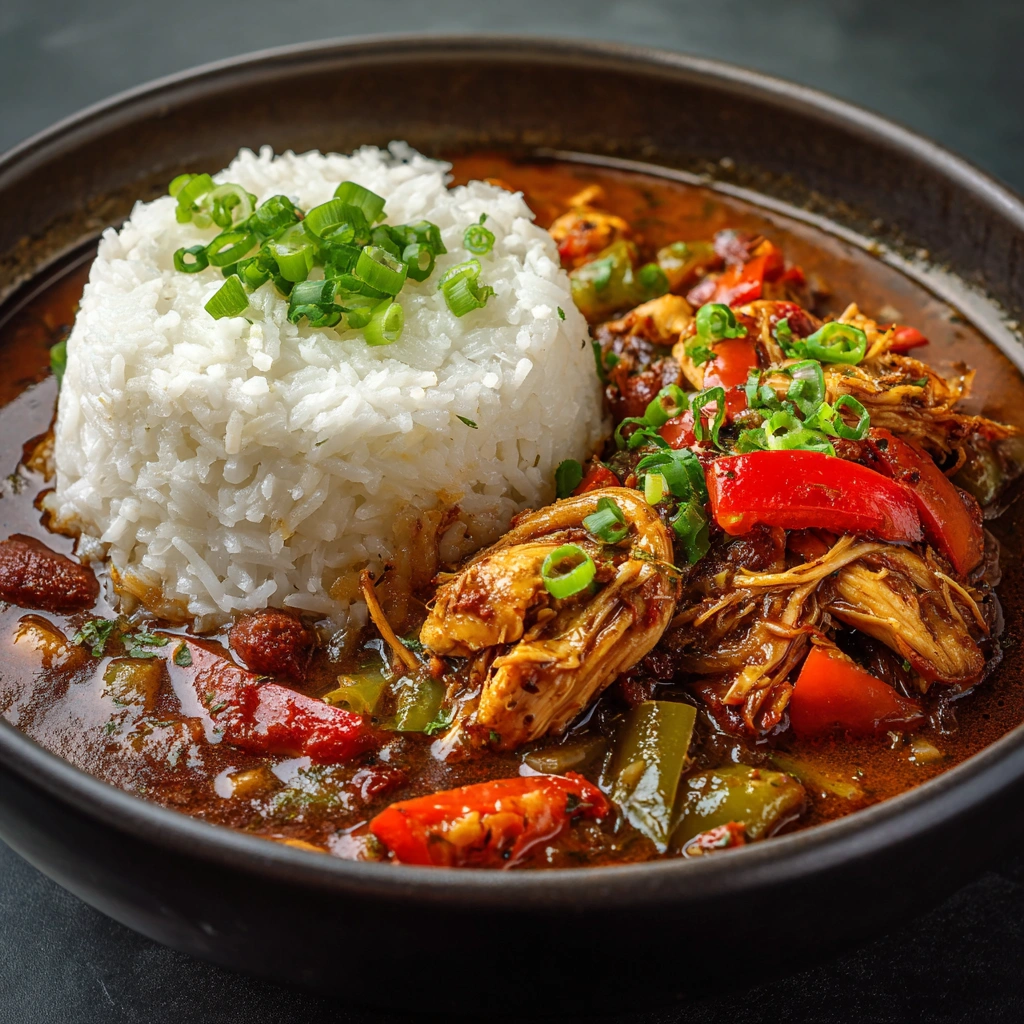
Chicken Étouffée
A rich, hearty, and soul-warming Louisiana classic, Chicken Étouffée brings together tender chicken, bold Cajun and Creole spices, and a deep, flavorful roux-based sauce. Smothered in the traditional Southern “holy trinity” of onion, celery, and bell pepper, this dish is slow-cooked to perfection and best served over fluffy white rice. Whether you’re a Southern food lover or new to the cuisine, this Chicken Étouffée is a comforting and authentic taste of Louisiana in your own kitchen.
Ingredients
- 3 pounds boneless chicken thighs
- 2-3 teaspoons (*see note)
- 1 tablespoon avocado oil (or vegetable oil)
- 8 tablespoons unsalted butter
- ½ cup all purpose flour
- 1 large onion
- 1 green bell pepper
- 1 red bell pepper
- 2 stalks celery
- 5 green onions
- 6 cloves garlic
- 3 cups chicken broth (warmed)
- 1 teaspoon browning sauce (*see note)
- ¼ cup parsley leaves (loosely packed)
- Cooked white rice for serving
Instructions
- Finely chop onion, bell peppers, celery, green onions, and parsley. Mince garlic. Measure out other ingredients. Season chicken to taste with cajun seasoning.
- SEAR: Heat a large skillet over medium-high heat and add avocado oil. Sear chicken thighs in batches, about 3-5 minutes on each side until browned, then set aside.
- ROUX: In the same skillet, lower heat to medium and melt butter. Whisk flour into the butter. It may be foamy at first. Cook while stirring constantly for about 10-15 minutes, or until the roux turns to a medium brown peanut butter color.
- SAUTÉ: Add in onions, bell peppers, celery, and half the green onions to the roux. Mix together and sauté for about 10 minutes until vegetables are softening. Stir and scrape the bottom frequently so nothing sticks. Add in garlic and cook for about 1 minute while stirring. Warm the chicken broth while the vegetables are sautéing.
- SIMMER: Slowly whisk in warmed broth until it is all incorporated and there are no remaining lumps of flour. Add browning sauce and stir. Add chicken back to pan and simmer on low for about 30 minutes, stirring occasionally, until the sauce thickens to the desired consistency and the chicken is cooked through.
- FINISH: Remove chicken thighs, chop into bitesized pieces, and add back to the pot. Add parsley and more cajun seasoning if needed.
- SERVE: Serve over rice and top with remaining green onions.