In this article
My friend Margaret grew up in England, and she says the British have been turning stale bread into this pudding for three hundred years, and she is not about to be the one who stops. Recipes for bread and butter pudding appear in English cookbooks from the 1700s, and it was never meant to be grand. It was what a careful kitchen did with the end of the loaf. In the war, when rationing made every crust count, nearly every home in Britain made it, and Margaret’s mother made it every week whether bread was short or not.
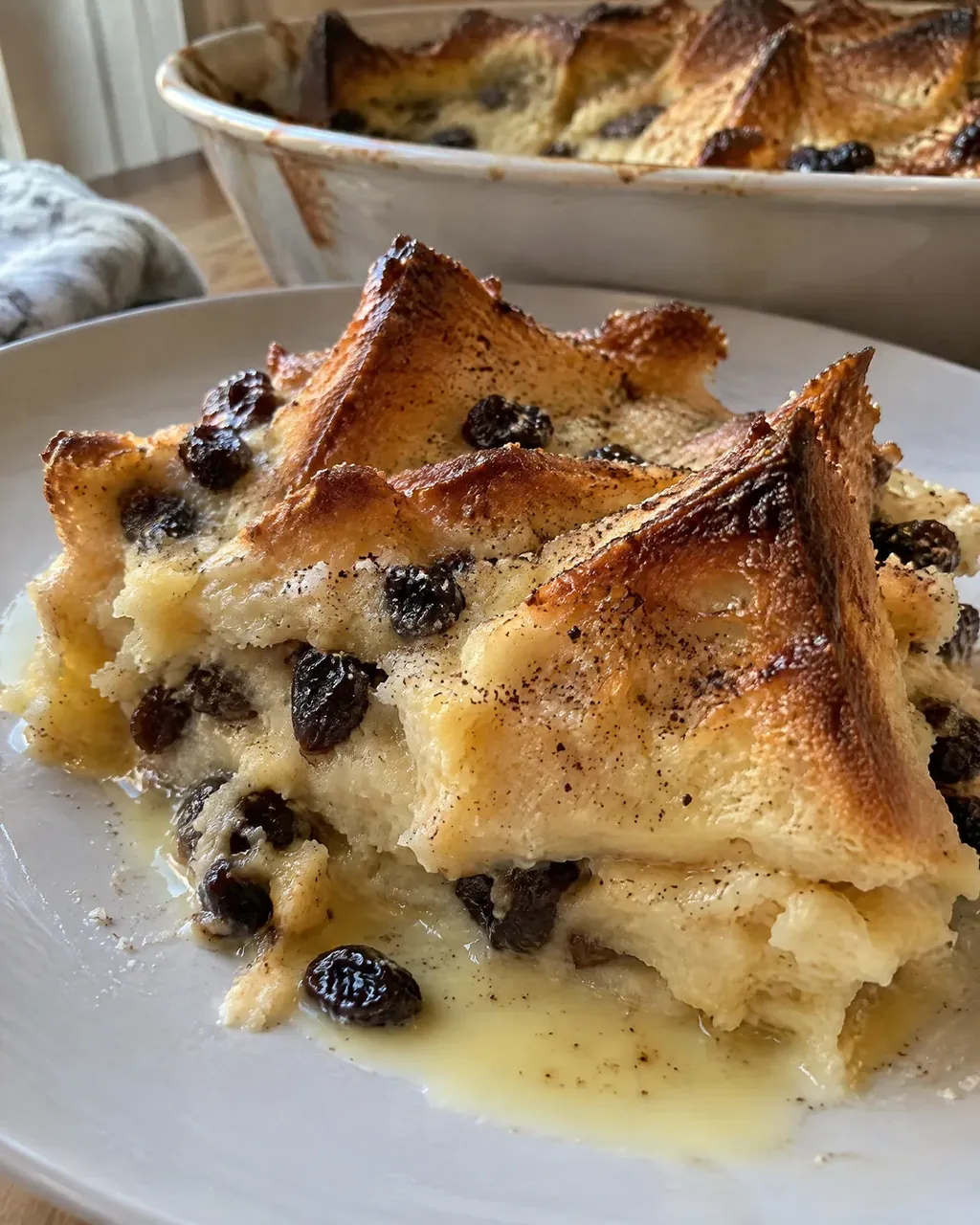
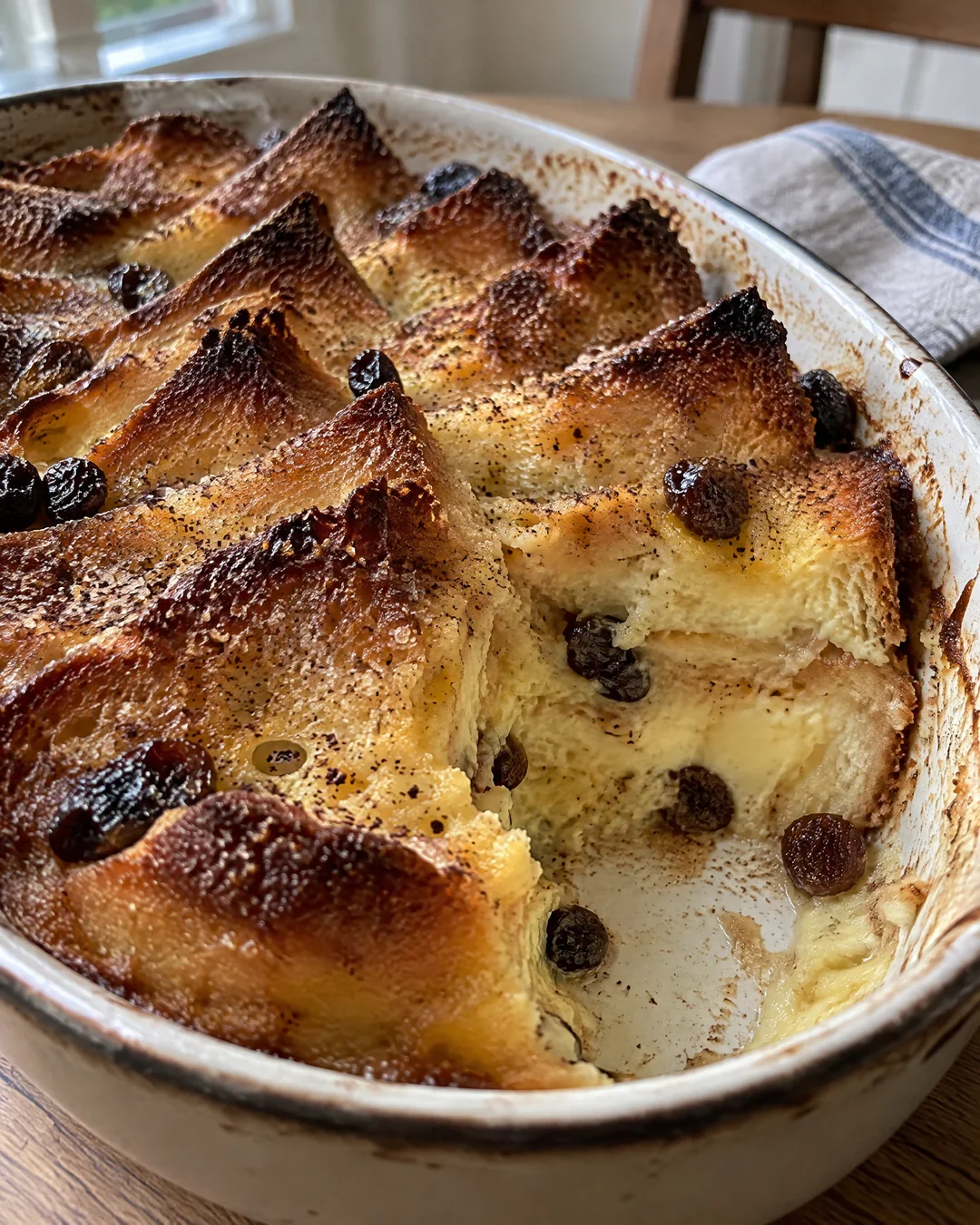
Her method has never changed. Day-old white bread, buttered right to the edges and cut into triangles, layered into the dish standing up a little and overlapping like roof tiles, with currants scattered between. A custard of eggs, milk, cream, sugar and vanilla is poured over, and then comes the step most recipes skip: the dish sits for half an hour so the bread drinks the custard all the way through. A grating of nutmeg and a little sugar go on top, and it bakes in a pan of hot water until the custard is just set and the corners sticking up are crisp and golden. Margaret says the corners are the whole point, and she has fought her brother for them since 1958.
Why this bread and butter pudding works
- Day-old bread. Slightly dry bread soaks up custard without falling apart. Fresh bread turns to paste.
- Butter on every slice. The buttered tops fry in the oven, which is what makes the corners crisp and golden.
- A 30 minute soak. Letting the custard soak in before baking gives a pudding that is soft and even all the way through, not dry bread floating on egg.
- A water bath. Baking the dish inside a pan of hot water keeps the custard silky and stops the edges from scrambling.
- Standing triangles. Overlapping the slices with points up leaves edges above the custard to toast while the rest stays soft.
Ingredients
Serves 6 from a 2 quart (about 2 liter) baking dish. The measurements are in US cups with grams and milliliters in brackets.
For the pudding
- 8 slices day-old white sandwich bread (about 250g)
- 4 tablespoons unsalted butter, softened (56g), plus a little for the dish
- 1/2 cup dried currants or raisins (75g)
For the custard
- 3 large eggs
- 1 large egg yolk
- 1/3 cup granulated sugar (65g)
- 1 1/2 cups whole milk (360ml)
- 1/2 cup heavy cream (120ml)
- 1 teaspoon vanilla extract
- Pinch of fine salt
For the top
- 1/4 teaspoon freshly grated nutmeg
- 1 tablespoon granulated or demerara sugar (12g)
Plain white sandwich bread is traditional, but a day-old white loaf or brioche works beautifully. Leave the crusts on: they hold the slices together and give the best crisp edges.
How to make bread and butter pudding
- Butter a 2 quart (about 2 liter) oval or square baking dish.
- Spread one side of each slice of bread with softened butter right to the edges. Cut each slice corner to corner into two triangles.
- Arrange a layer of triangles in the dish, buttered side up, overlapping like roof tiles. Scatter half the currants over them. Add the rest of the bread, points standing up a little, and scatter the remaining currants, tucking most of them down between the slices so they do not burn.
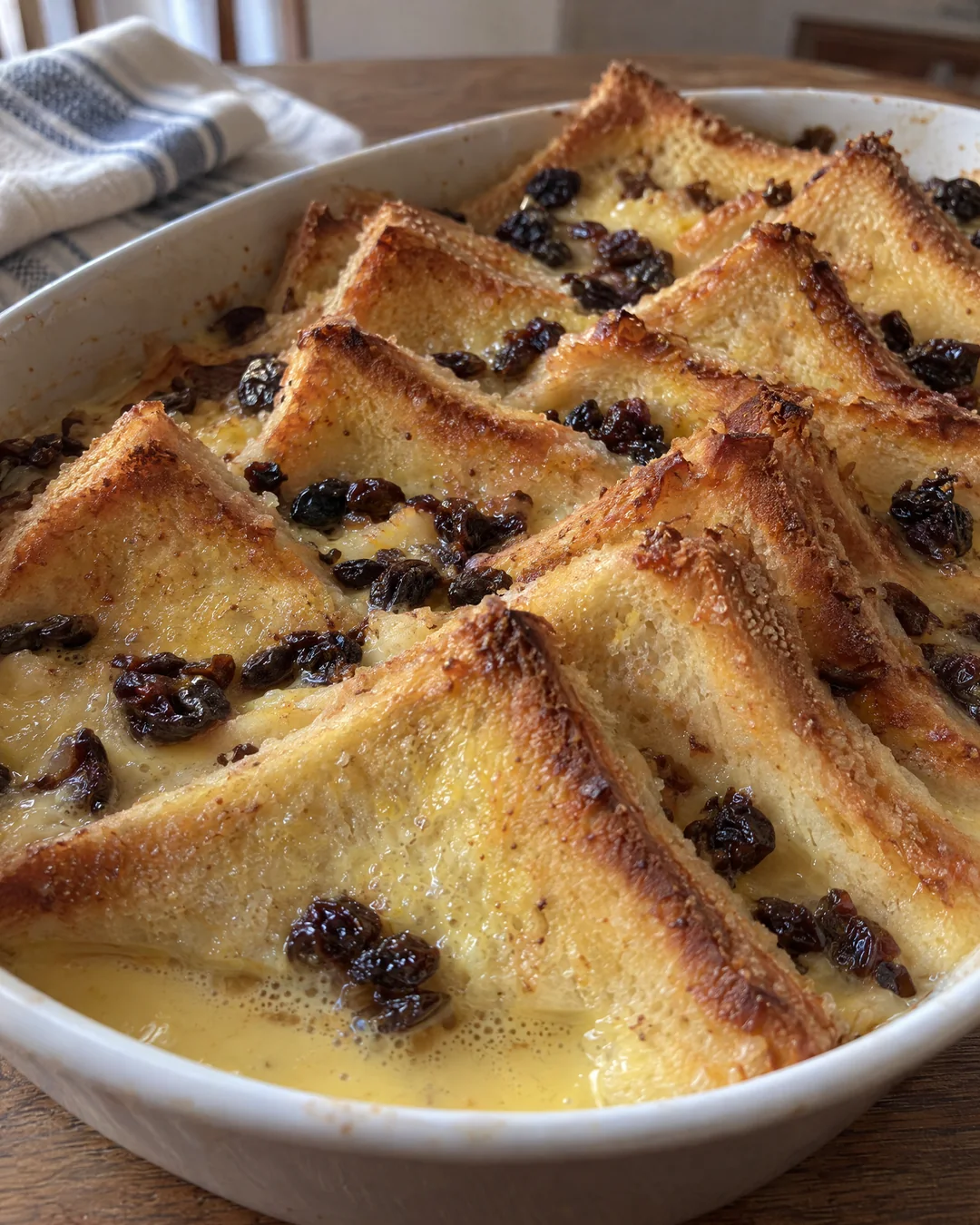
- Whisk the eggs, egg yolk and sugar together in a bowl. Whisk in the milk, cream, vanilla and salt until smooth.
- Pour the custard slowly and evenly over the bread, pressing the slices down gently with a spatula so they all get wet. Leave the dish to soak on the counter for 30 minutes, pressing the bread down once or twice.
- Meanwhile, heat the oven to 350 degrees (175°C) and put a kettle of water on to boil.
- Grate the nutmeg over the pudding and sprinkle the sugar on top. Set the dish in a larger roasting pan, place it in the oven, and pour hot water into the roasting pan to come halfway up the sides of the dish.
- Bake for 35 to 40 minutes, until the custard is just set with a slight wobble in the center and the bread corners are crisp and golden. Lift the dish out of the water and let it rest 10 minutes before serving warm.
Tips that make the difference
- Do not skip the soak. Thirty minutes is what turns stale bread into pudding instead of toast in egg.
- Tuck the currants down between the slices. Currants left on top burn and turn bitter.
- If the corners are browning too fast before the custard sets, lay a loose sheet of foil over the dish for the last 10 minutes.
- Pull it out while the center still wobbles a little. It keeps setting as it rests, and overbaked custard weeps.
- Margaret serves it with hot pouring custard on the side, and a spoonful of cold cream for anyone who prefers it.
Variations
- Marmalade. Spread a thin layer of orange marmalade over the buttered bread before layering, a favorite in British tearooms.
- Brioche or croissants. Use day-old brioche or torn croissants for a richer, softer pudding.
- Chocolate. Leave out the currants and scatter chopped dark chocolate between the layers.
- Apple. Add a thinly sliced apple between the layers with a pinch of cinnamon in the custard.
Storage and make-ahead
Bread and butter pudding is best warm on the day it is baked, when the corners are crisp. Leftovers keep covered in the refrigerator for up to 3 days.
Reheat portions in a 325 degree oven for 10 to 15 minutes, or for about a minute in the microwave. The oven brings back some of the crispness.
To make ahead, assemble the pudding, pour the custard over, cover and refrigerate overnight. Let it stand at room temperature for 20 minutes before baking, and add 5 to 10 minutes to the time.
Frequently asked questions
How long should the bread soak in the custard?
About 30 minutes on the counter, pressing the slices down once or twice. The bread should feel soft and saturated before it goes in the oven. Overnight in the refrigerator works too.
What is the difference between bread and butter pudding and bread pudding?
In Britain, bread and butter pudding is layered slices of buttered bread in custard with a crisp top. Bread pudding is a denser cake made from bread soaked and mashed with dried fruit and spice, served in squares.
Why is my bread and butter pudding watery?
Either it was underbaked or it baked too hot and the custard curdled and wept. Use a water bath and take it out when the middle has only a slight wobble.
Can I use fresh bread?
It works better with bread that is a day or two old. If yours is fresh, lay the slices on a rack for a few hours, or dry them for 5 minutes in a low oven before buttering.
Save the end of the loaf. Butter it, soak it, bake it, and fight your brother for the corners the way Margaret has since 1958.
Traditional British Bread and Butter Pudding (Crisp Corners, Soft Custard)
Classic British bread and butter pudding: buttered day-old bread layered with currants, soaked 30 minutes in a vanilla egg custard, sprinkled with nutmeg and baked at 350 degrees for 35 to 40 minutes in a water bath. US cups with grams.
Ingredients
- 8 slices day-old white sandwich bread
- 4 tablespoons unsalted butter, softened (56g), plus a little for the dish
- 1/2 cup dried currants or raisins
- 3 large eggs
- 1 large egg yolk
- 1/3 cup granulated sugar
- 1 1/2 cups whole milk
- 1/2 cup heavy cream
- 1 teaspoon vanilla extract
- Pinch of fine salt
- 1/4 teaspoon freshly grated nutmeg
- 1 tablespoon granulated or demerara sugar
Instructions
- Butter a 2 quart (about 2 liter) oval or square baking dish.
- Spread one side of each slice of bread with softened butter right to the edges. Cut each slice corner to corner into two triangles.
- Arrange a layer of triangles in the dish, buttered side up, overlapping like roof tiles. Scatter half the currants over them. Add the rest of the bread, points standing up a little, and scatter the remaining currants, tucking most of them down between the slices so they do not burn.
- Whisk the eggs, egg yolk and sugar together in a bowl. Whisk in the milk, cream, vanilla and salt until smooth.
- Pour the custard slowly and evenly over the bread, pressing the slices down gently with a spatula so they all get wet. Leave the dish to soak on the counter for 30 minutes, pressing the bread down once or twice.
- Meanwhile, heat the oven to 350 degrees (175°C) and put a kettle of water on to boil.
- Grate the nutmeg over the pudding and sprinkle the sugar on top. Set the dish in a larger roasting pan, place it in the oven, and pour hot water into the roasting pan to come halfway up the sides of the dish.
- Bake for 35 to 40 minutes, until the custard is just set with a slight wobble in the center and the bread corners are crisp and golden. Lift the dish out of the water and let it rest 10 minutes before serving warm.