In this article
My mother made Swiss steak every Tuesday for twenty years and had no idea why it was called that, and neither did anybody else on our street. It was the cheapest steak the butcher sold, a slab of round too tough to broil, and Tuesday was the day she could leave the oven on all afternoon.
The name has nothing to do with Switzerland. Swissing is an old butcher’s word for running tough meat between rollers to break the fibers down, and a home cook did the same thing with flour and whatever was heavy and had an edge. In our kitchen it was a saucer. Flour on both sides of the steak, then the edge of the saucer brought down over and over until the meat was half as thick and twice as wide, and my brother and I fought over who got to hit it.
The tomatoes are the other secret. Their acid keeps working on the meat for the whole bake, which is why a steak you could not cut at noon falls apart by six. Onions on top, a lid, a low oven, and never a hot one. Heat toughens it right back.
Why this Swiss steak works
- Pounded with flour. The pounding breaks down the tough fibers, and the flour driven into the meat thickens the tomato juices into gravy as it bakes.
- Browned first. A hard sear gives the gravy its deep color and flavor. Grey meat makes a pale, flat gravy.
- Canned tomatoes and a lid. The acid tenderizes for two and a half hours, and the lid keeps the moisture in so the meat braises instead of drying out.
- A low oven. At 300°F the meat has time to soften. A hot oven seizes the fibers and the steak comes out tough no matter how long you leave it.
Ingredients
Serves 6, with plenty of tomato gravy for the potatoes. The measurements are in US cups with grams in brackets.
- 2 1/2 pounds beef round steak (1.1kg), cut about 3/4 inch thick
- 1/2 cup all-purpose flour (63g), plus a little more if needed
- 1 1/2 teaspoons fine salt
- 1 teaspoon black pepper
- 3 tablespoons vegetable oil (45ml)
- 2 large yellow onions, sliced into rings
- 2 cloves garlic, finely chopped
- 1 large can whole or diced tomatoes with their juice (28 ounces, 794g)
- 1 can tomato sauce (8 ounces, 227g)
- 1/2 teaspoon dried thyme, or 1 bay leaf
- Mashed potatoes, for serving
Ask for top or bottom round, about 3/4 inch thick. Cut it into 6 pieces before you pound it; they are easier to handle in the skillet and the dish.
How to make Swiss steak
- Trim any thick fat from the edges of the steak and cut it into 6 pieces. Mix the flour, salt and pepper on a large plate and lay the pieces out on a cutting board.
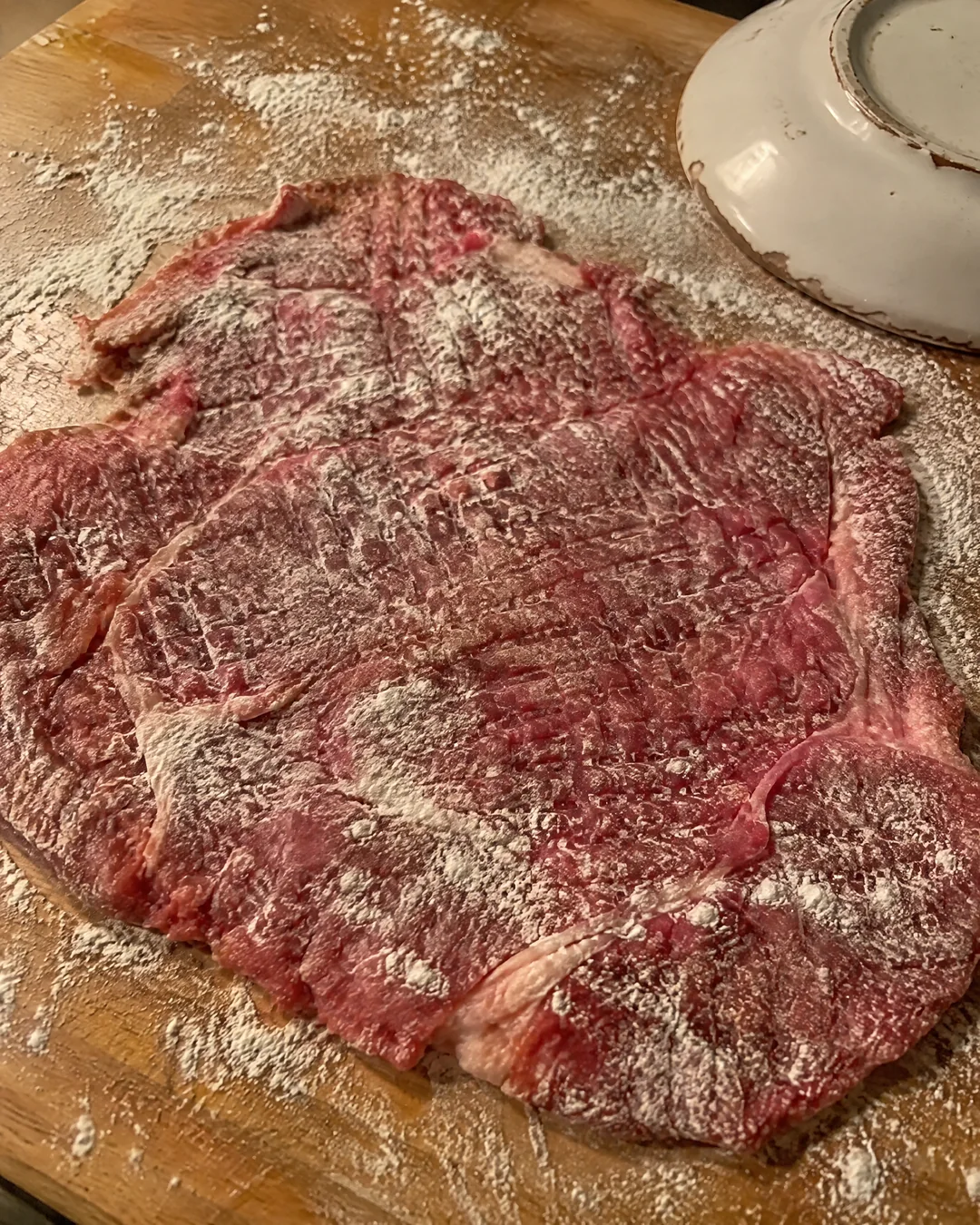
- Dust both sides of each piece heavily with the seasoned flour. Now swiss it: bring the edge of a heavy saucer, or a meat mallet, down across the meat in rows, then turn it and go the other way, flour it again, and keep going until each piece is about half its original thickness and noticeably wider. Work in more flour whenever the surface looks wet. This takes about 10 minutes and it is the whole recipe.
- Heat the oven to 300°F (150°C). Heat the oil in a large heavy skillet over medium-high until it shimmers. Brown the steak in two batches, 3 to 4 minutes a side, until deep brown, and move the pieces to a 9 by 13 inch baking dish or a Dutch oven, overlapping them a little.
- Turn the heat down to medium, add the sliced onions to the skillet and cook them for 5 minutes in the drippings, scraping up the browned bits, until they soften. Add the garlic for the last minute.
- Add the tomatoes with their juice, breaking whole ones up with the spoon, then the tomato sauce and the thyme or bay leaf. Bring it to a bubble and let it cook for 2 minutes.
- Pour the onions and tomatoes over the steak so every piece is covered. Cover the dish tightly with a lid or a double layer of foil.
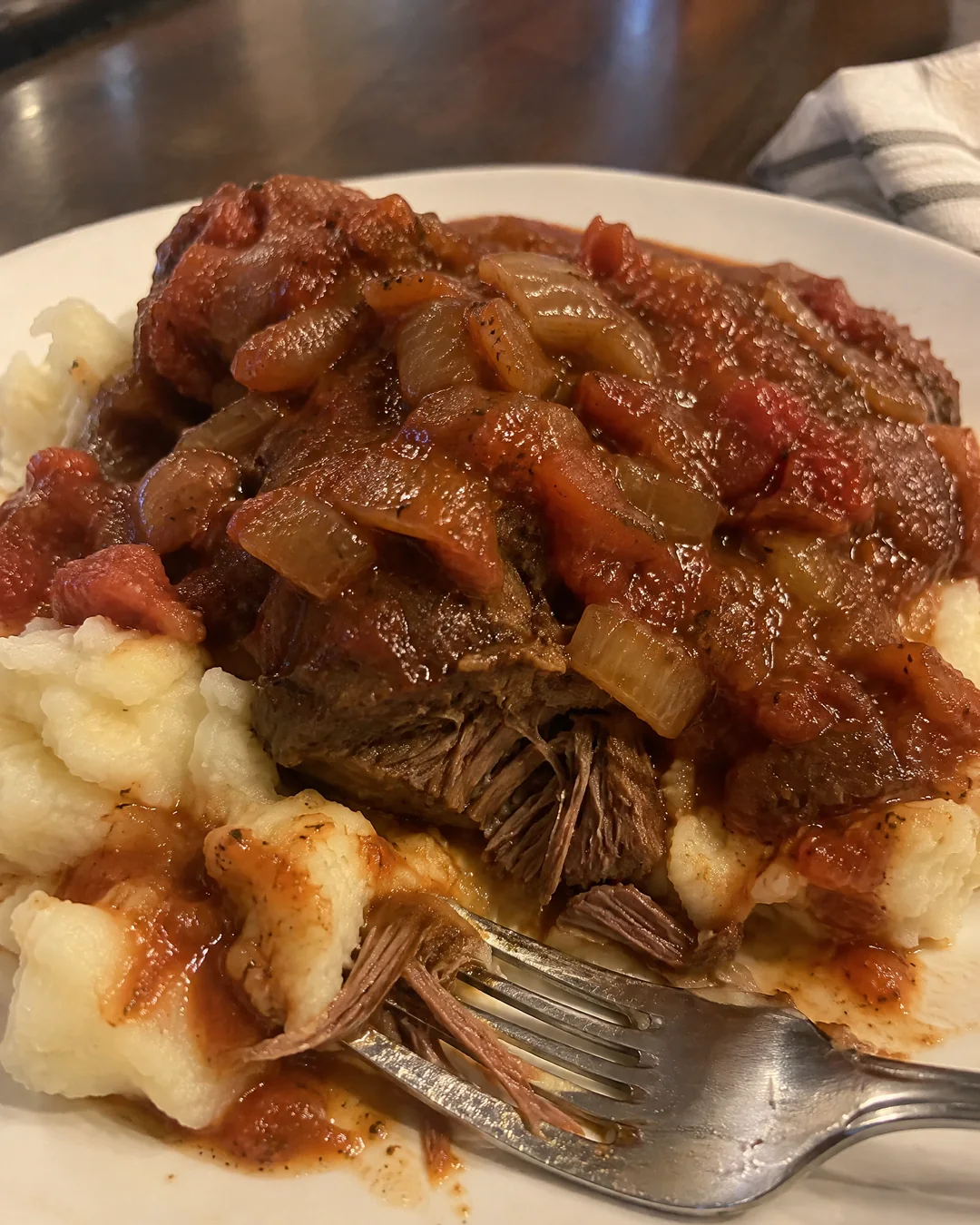
- Bake at 300°F for 2 hours 30 minutes, and do not lift the lid before 2 hours. The steak is done when a fork pushed into the thickest piece meets no resistance and the meat pulls apart along its grain. If it still fights the fork, cover it again and give it 20 to 30 minutes more.
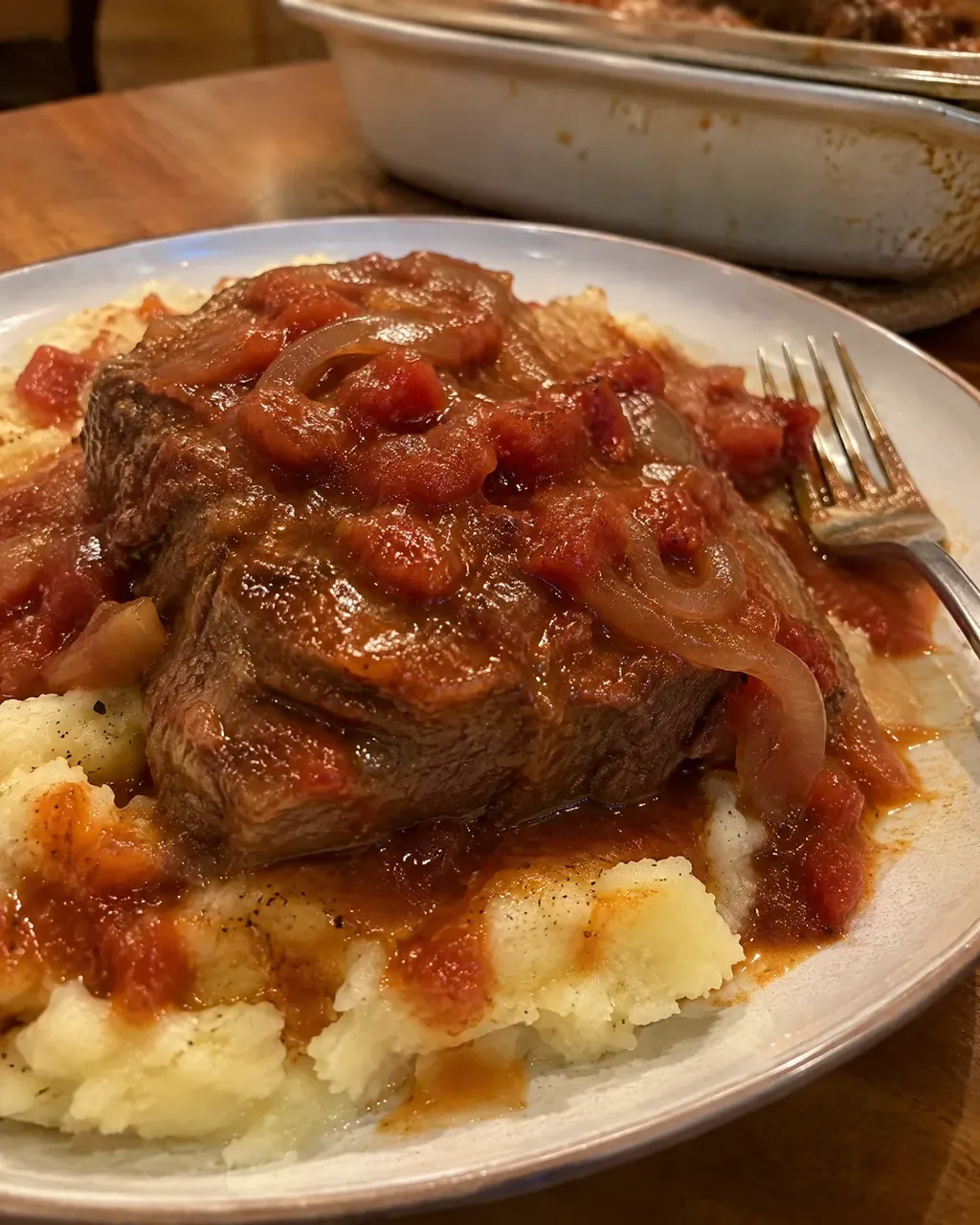
- Let it rest for 10 minutes, uncovered, so the gravy thickens a little. Taste for salt. Serve the steak over mashed potatoes with plenty of the tomato and onion gravy, because the gravy is the point of the potatoes.
Tips that make the difference
- Pound it more than you think. A steak that is truly half as thick is tender at two and a half hours. One that was tapped a few times is not.
- The lid has to be tight. If the foil lifts, the liquid cooks away and the top dries out. Check once at 2 hours and add 1/2 cup water if the dish looks dry.
- Round steak has a grain like a board. Cut and serve it across the grain and it eats even more tender.
- Brown it hard. The color you build in the skillet is the color of the gravy.
Variations
- With peppers. Add 1 sliced green bell pepper with the onions, the way many Midwestern families did.
- With carrots and celery. Tuck 2 sliced carrots and 2 sliced celery stalks around the steak before the tomatoes go on.
- On the stove. Do the whole thing in a Dutch oven on the lowest burner, covered, for the same 2 1/2 hours, scraping the bottom once an hour so it does not catch.
- Slow cooker. Brown the steak and onions as written, then put everything in a slow cooker on low for 7 to 8 hours.
Storage and make-ahead
Swiss steak is better the next day. Refrigerate it in its gravy, covered, for up to 4 days and reheat it gently in a covered dish at 325°F (165°C) for 25 minutes, or on the stove over low heat.
It freezes well for up to 3 months. Freeze the meat and gravy together and thaw overnight in the refrigerator.
Leftover gravy with a few shreds of meat in it, over toast or noodles, was Wednesday lunch in our house.
Frequently asked questions
Why is it called Swiss steak?
Not because of Switzerland. Swissing is an old term for running tough meat through rollers, or pounding it, to break the fibers down. Swiss steak is simply steak that has been swissed.
Can I use a different cut?
Round steak is the classic because it is cheap and tough, and the method was invented to fix exactly that. Chuck works too and needs less pounding. Do not use a tender steak; it turns to strings.
Why is my Swiss steak still tough?
Either it was not pounded enough, the oven was too hot, or it came out too soon. Keep the oven at 300°F, keep the lid on, and give it the full time.
Do I need to brown it first?
You will get a cooked steak without browning, but not a good gravy. The browned crust is what gives the tomatoes their deep color and savory taste.
Flour it, beat it flat with whatever is heavy, brown it hard, and leave it under the tomatoes in a low oven all afternoon. By supper it cuts with a fork, and the potatoes are there for the gravy.
Swiss Steak (Round Steak Pounded With Flour, Baked Under Tomatoes)
Old-fashioned Swiss steak: cheap round steak pounded with flour until half as thick, browned, then baked slow under canned tomatoes and onions at 300°F for two and a half hours until it cuts with a fork. Served over mashed potatoes.
Ingredients
- 2 1/2 pounds beef round steak (1.1kg), cut about 3/4 inch thick
- 1/2 cup all-purpose flour (63g), plus a little more if needed
- 1 1/2 teaspoons fine salt
- 1 teaspoon black pepper
- 3 tablespoons vegetable oil
- 2 large yellow onions, sliced into rings
- 2 cloves garlic, finely chopped
- 1 large can whole or diced tomatoes with their juice
- 1 can tomato sauce
- 1/2 teaspoon dried thyme, or 1 bay leaf
- Mashed potatoes, for serving
Instructions
- Trim any thick fat from the edges of the steak and cut it into 6 pieces. Mix the flour, salt and pepper on a large plate and lay the pieces out on a cutting board.
- Dust both sides of each piece heavily with the seasoned flour. Now swiss it: bring the edge of a heavy saucer, or a meat mallet, down across the meat in rows, then turn it and go the other way, flour it again, and keep going until each piece is about half its original thickness and noticeably wider. Work in more flour whenever the surface looks wet. This takes about 10 minutes and it is the whole recipe.
- Heat the oven to 300°F (150°C). Heat the oil in a large heavy skillet over medium-high until it shimmers. Brown the steak in two batches, 3 to 4 minutes a side, until deep brown, and move the pieces to a 9 by 13 inch baking dish or a Dutch oven, overlapping them a little.
- Turn the heat down to medium, add the sliced onions to the skillet and cook them for 5 minutes in the drippings, scraping up the browned bits, until they soften. Add the garlic for the last minute.
- Add the tomatoes with their juice, breaking whole ones up with the spoon, then the tomato sauce and the thyme or bay leaf. Bring it to a bubble and let it cook for 2 minutes.
- Pour the onions and tomatoes over the steak so every piece is covered. Cover the dish tightly with a lid or a double layer of foil.
- Bake at 300°F for 2 hours 30 minutes, and do not lift the lid before 2 hours. The steak is done when a fork pushed into the thickest piece meets no resistance and the meat pulls apart along its grain. If it still fights the fork, cover it again and give it 20 to 30 minutes more.
- Let it rest for 10 minutes, uncovered, so the gravy thickens a little. Taste for salt. Serve the steak over mashed potatoes with plenty of the tomato and onion gravy, because the gravy is the point of the potatoes.