In this article
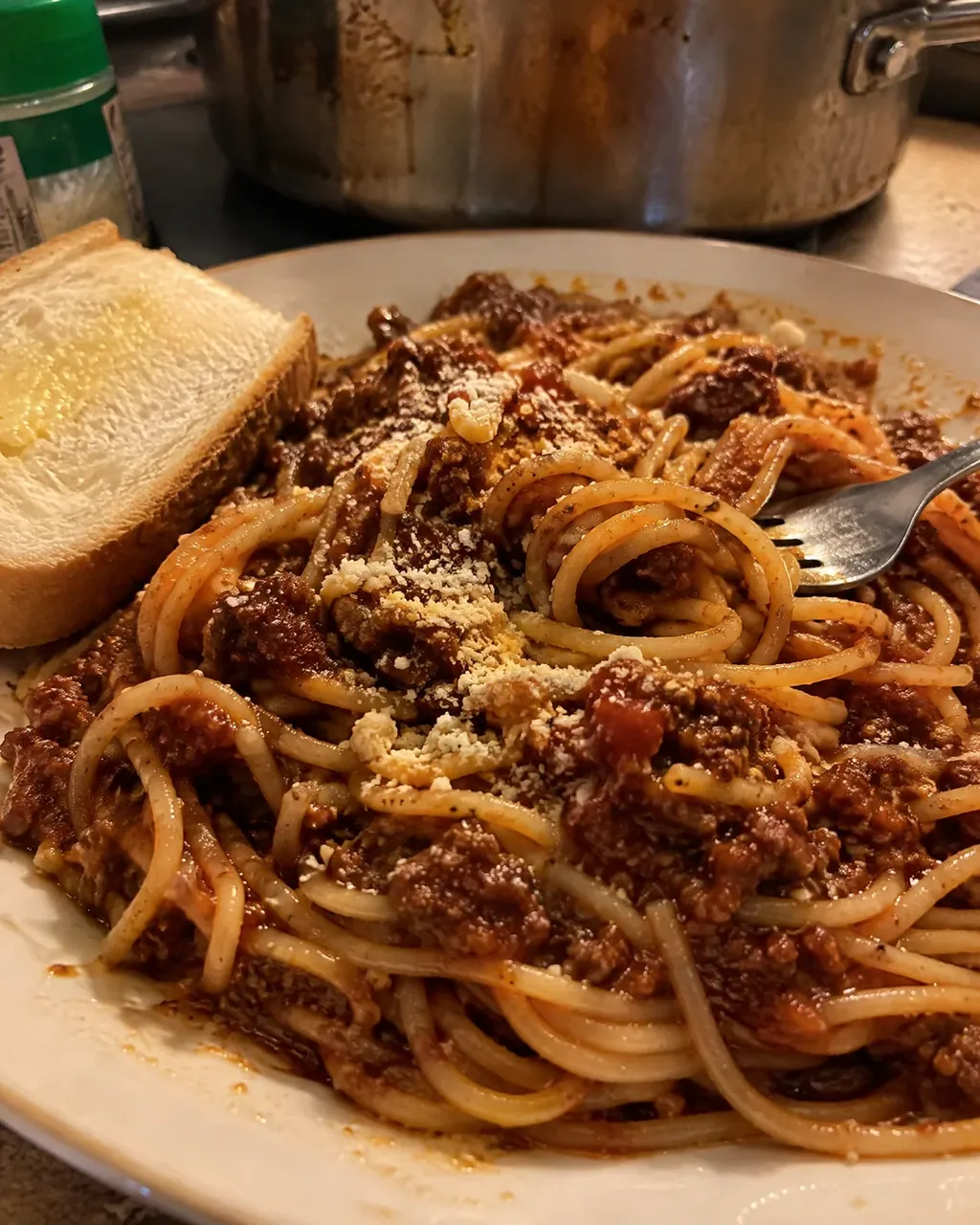
In a great many American houses where nobody was Italian and nobody within forty miles was either, there was spaghetti on Sunday night. The sauce was started right after lunch, in the biggest pot in the kitchen, and it was done when somebody walked through and said it smelled done. It was thick, dark red and full of ground beef.
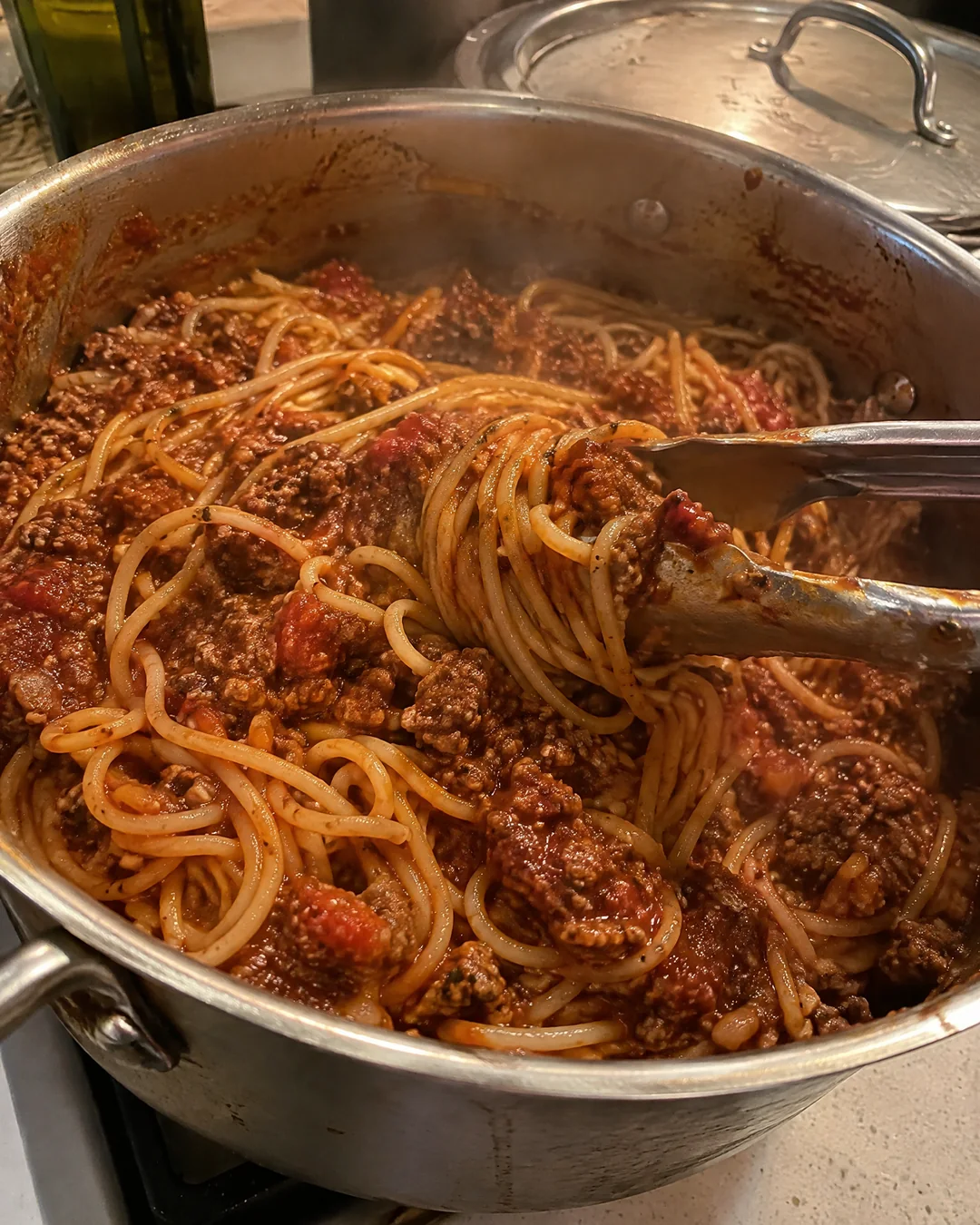
Two habits define this style, and both will get you an argument from people with opinions. The first is a teaspoon of sugar in the sauce. It does not make the sauce sweet. It takes the edge off the canned tomatoes. The second is that the noodles are not served plain with the sauce ladled on top. They are drained and tipped straight into the sauce pot, stirred, covered and left for ten minutes. In that time the spaghetti drinks up some of the sauce and the whole pot becomes one dish.
Why this Sunday spaghetti works
- Beef browned hard. Two pounds of ground beef cooked until truly brown, not grey, puts a deep, savory base under the tomatoes. Draining it keeps the sauce from turning greasy.
- Three kinds of canned tomato. Crushed tomatoes for body, tomato sauce for smoothness, tomato paste for depth.
- The teaspoon of sugar. Just enough to round off the sharp edge of canned tomatoes. You will not taste sweetness, only a mellower sauce.
- Noodles mixed in the pot. Ten minutes under the lid lets the spaghetti absorb the sauce, so every forkful is seasoned all the way through.
Ingredients
Serves 8, with leftovers if you are lucky. The measurements are in US cups with grams in brackets.
For the meat sauce
- 2 pounds ground beef (900g), 80 to 85 percent lean
- 1 large yellow onion, chopped
- 3 cloves garlic, finely chopped
- 1 large can crushed tomatoes (28 ounces, 794g)
- 1 can tomato sauce (15 ounces, 425g)
- 1 small can tomato paste (6 ounces, 170g)
- 1 cup water (240ml)
- 2 teaspoons dried Italian seasoning
- 1 bay leaf
- 1 teaspoon fine salt, plus more to taste
- 1 teaspoon granulated sugar
For the pot and the table
- 1 pound dried spaghetti (450g)
- Salt for the pasta water
- Grated Parmesan cheese, for serving
- Sliced white bread and soft butter, for serving
Use a pot that looks too big. It has to hold all of the sauce and a full pound of cooked spaghetti with room to stir.
How to make Sunday spaghetti
The sauce
- Set a large heavy pot (6 to 8 quarts) over medium-high heat. Add the ground beef, the chopped onion and the garlic, and break the meat up with a wooden spoon. Cook for 12 to 15 minutes, stirring only now and then, until the liquid has cooked off and the beef is well browned. Brown it hard.
- Drain it. Tip the pot and spoon off the fat, or pour the beef into a colander set over a bowl and return it to the pot.
- Add the crushed tomatoes, tomato sauce, tomato paste and the cup of water. Stir well, scraping up the browned bits from the bottom, until the paste has dissolved into the sauce.
- Stir in the Italian seasoning, bay leaf, 1 teaspoon salt and the teaspoon of sugar. Bring the sauce just to a bubble.
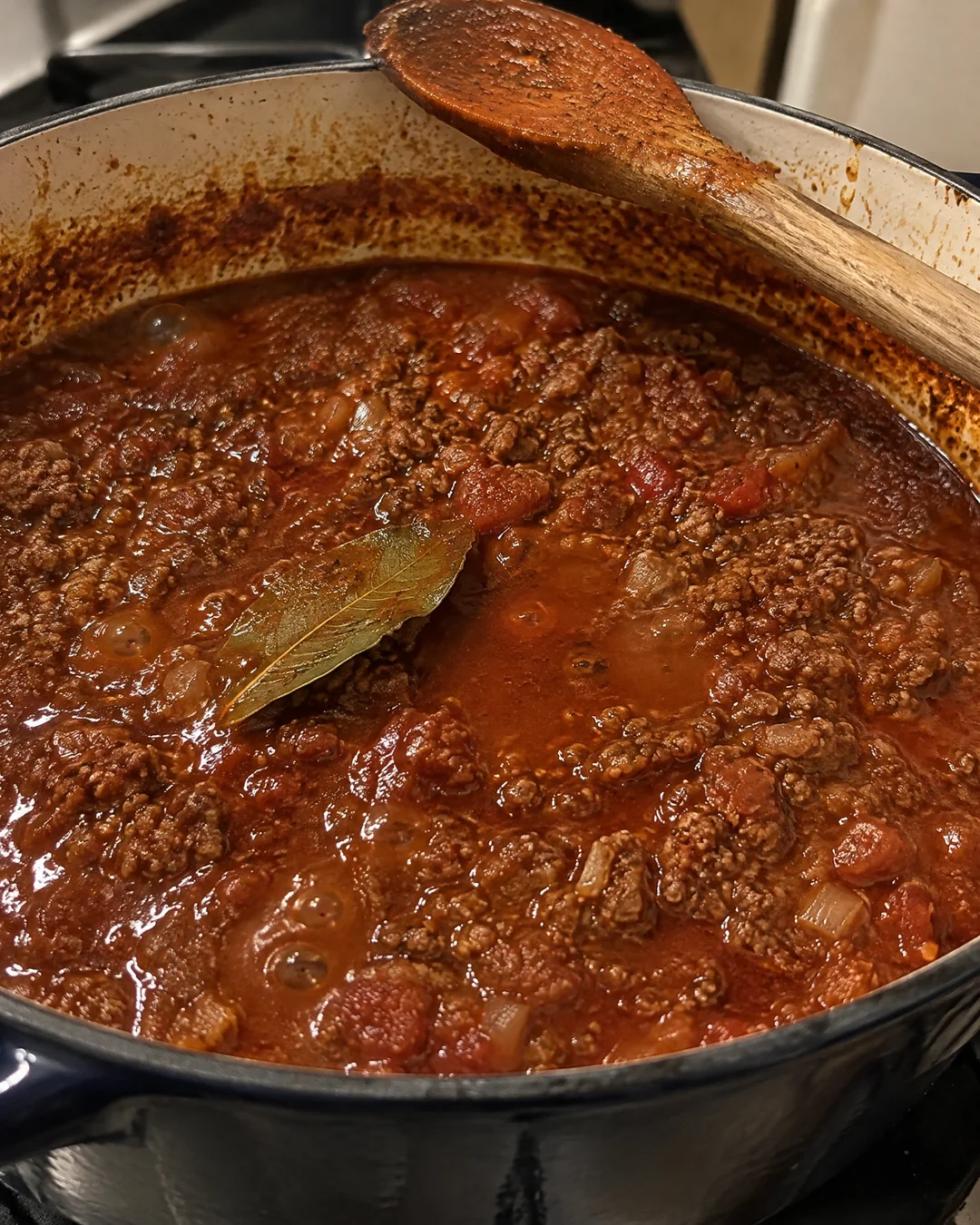
- Turn the heat to low and set the lid half on, so steam can escape. Simmer for 1 hour 30 minutes at least, stirring when you walk past and scraping the bottom each time. The sauce is ready when it is thick, dark brick red and a spoon dragged across the bottom leaves a trail. Taste and add salt if it needs it.
The noodles
- About 20 minutes before the sauce is done, bring a large pot of well salted water to a boil. Cook the spaghetti according to the package, until just tender. Drain it well and do not rinse it.
- Fish the bay leaf out of the sauce. Tip the drained spaghetti straight into the sauce pot and stir with tongs or two forks until every strand is coated and no plain noodles are left. Take the pot off the heat, put the lid on, and leave it for ten minutes.
- Stir once more and serve from the pot, with grated Parmesan shaken over the top and white bread and butter on the side.
Tips that make the difference
- Do not rush the browning. Grey, steamed beef gives a flat sauce. Let the meat sit against the hot pot between stirs.
- Keep the simmer low, with only a lazy bubble now and then. A hard boil scorches the bottom.
- Cook the spaghetti just to tender, not soft. It keeps cooking during its ten minutes in the hot sauce.
- If the pot looks tight after the rest, loosen it with a few spoonfuls of hot water.
Variations
- Green pepper. Add 1 chopped green bell pepper with the onion, a very common touch in Midwestern and Southern kitchens.
- Mushroom. Stir in 8 ounces (225g) sliced mushrooms for the last 30 minutes of simmering.
- A little heat. Add 1/2 teaspoon red pepper flakes with the Italian seasoning.
- Baked spaghetti. Spread the mixed spaghetti in a buttered 9 by 13 inch dish, cover with 2 cups grated mozzarella (225g) and bake at 350°F for 25 minutes.
Storage and make-ahead
Leftover spaghetti keeps in a covered container in the refrigerator for 4 days.
It’s better on Monday. Melt a little butter in a skillet over medium-high heat, add the cold leftover spaghetti in an even layer and leave it alone for 3 or 4 minutes, until the edges go crisp. Turn it once and do the other side. In plenty of families this is fought over more than the Sunday plate.
The sauce on its own, without noodles, freezes very well for up to 3 months.
Frequently asked questions
Why put sugar in spaghetti sauce?
Canned tomatoes can taste sharp, especially after a long simmer with tomato paste. One teaspoon of sugar in a pot this size balances that acidity without making the sauce taste sweet.
Why mix the noodles into the sauce instead of serving it on top?
Because the spaghetti absorbs sauce while it rests, so the flavor goes into the noodle instead of sitting on it. It also keeps the pasta from clumping on the plate, and it makes serving a crowd much easier.
Can I make the sauce ahead of time?
Yes, and it improves. Make it up to 3 days ahead and refrigerate it. Reheat until bubbling, then cook the spaghetti fresh and mix it in.
What kind of ground beef is best?
Ground chuck, around 80 to 85 percent lean, has enough fat to brown properly and stay tender through the long simmer. Since the fat is drained off, there is no reason to buy very lean beef, which turns dry and grainy.
Brown the beef hard, remember the teaspoon of sugar, give the sauce its hour and a half, and mix it all in the pot. Then save a little for the skillet on Monday.
Sunday Spaghetti with Meat Sauce (Noodles Mixed in the Pot)
Old-fashioned American Sunday spaghetti: a thick ground beef meat sauce simmered an hour and a half with a teaspoon of sugar, then the noodles stirred right into the pot and left ten minutes with the lid on.
Ingredients
- 2 pounds ground beef (900g), 80 to 85 percent lean
- 1 large yellow onion, chopped
- 3 cloves garlic, finely chopped
- 1 large can crushed tomatoes
- 1 can tomato sauce
- 1 small can tomato paste
- 1 cup water
- 2 teaspoons dried Italian seasoning
- 1 bay leaf
- 1 teaspoon fine salt, plus more to taste
- 1 teaspoon granulated sugar
- 1 pound dried spaghetti
- Salt for the pasta water
- Grated Parmesan cheese, for serving
- Sliced white bread and soft butter, for serving
Instructions
- Set a large heavy pot (6 to 8 quarts) over medium-high heat. Add the ground beef, the chopped onion and the garlic, and break the meat up with a wooden spoon. Cook for 12 to 15 minutes, stirring only now and then, until the liquid has cooked off and the beef is well browned. Brown it hard.
- Drain it. Tip the pot and spoon off the fat, or pour the beef into a colander set over a bowl and return it to the pot.
- Add the crushed tomatoes, tomato sauce, tomato paste and the cup of water. Stir well, scraping up the browned bits from the bottom, until the paste has dissolved into the sauce.
- Stir in the Italian seasoning, bay leaf, 1 teaspoon salt and the teaspoon of sugar. Bring the sauce just to a bubble.
- Turn the heat to low and set the lid half on, so steam can escape. Simmer for 1 hour 30 minutes at least, stirring when you walk past and scraping the bottom each time. The sauce is ready when it is thick, dark brick red and a spoon dragged across the bottom leaves a trail. Taste and add salt if it needs it.
- About 20 minutes before the sauce is done, bring a large pot of well salted water to a boil. Cook the spaghetti according to the package, until just tender. Drain it well and do not rinse it.
- Fish the bay leaf out of the sauce. Tip the drained spaghetti straight into the sauce pot and stir with tongs or two forks until every strand is coated and no plain noodles are left. Take the pot off the heat, put the lid on, and leave it for ten minutes.
- Stir once more and serve from the pot, with grated Parmesan shaken over the top and white bread and butter on the side.