In this article
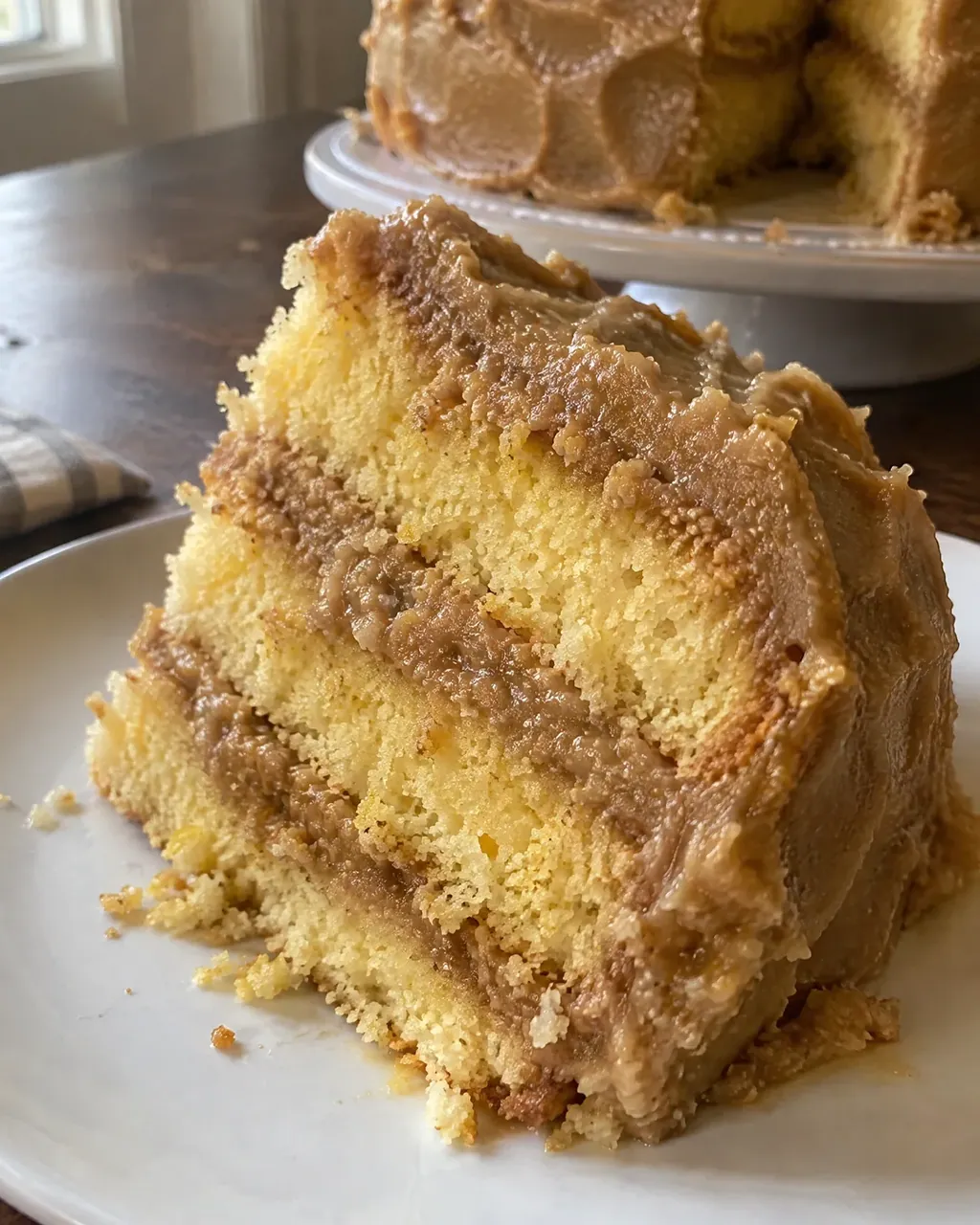
In most Southern towns there were cooks who could make caramel icing and cooks who could not, and everybody knew which was which. The cake underneath was never the point. Yellow layers, the plain 1-2-3-4 kind, nothing special. The icing was the entire test: real caramel, cooked in a pot, beaten by hand and spread in the two minutes between too soft and too late.
This page gives you both halves. The layers are the old 1-2-3-4 cake, baked in three 9-inch pans. The icing is the cooked kind, with part of the sugar melted alone in a cast iron skillet until it is amber, then poured into the boiling pot. That is where the color and the real caramel flavor come from. The icing is not difficult, but it does not wait, so read the method through once and set everything out before you light the stove.
Why this Southern caramel cake works
- Two pots of sugar. Most of the sugar boils with the butter and evaporated milk. The rest melts alone to amber, which gives true caramel flavor without any risk of burning the whole batch.
- 238°F, soft ball. Under that temperature the icing runs off the cake. Over it, the icing sets in the pot.
- Beating by hand. Five to eight minutes with a wooden spoon cools the icing and makes it set matte and fudge-like instead of sticky.
- Plain, sturdy layers. A 1-2-3-4 yellow cake takes a heavy warm icing without tearing, and lets the caramel do the talking.
Ingredients
Makes one three-layer 9-inch cake, about 16 slices. The measurements are in US cups with grams in brackets.
For the yellow layers
- 1 cup unsalted butter (2 sticks, 226g), softened
- 2 cups granulated sugar (400g)
- 4 large eggs, at room temperature
- 3 cups all-purpose flour (375g)
- 1 tablespoon baking powder
- 1/2 teaspoon fine salt
- 1 cup whole milk (240ml), at room temperature
- 2 teaspoons vanilla extract
- Butter, flour and parchment for the pans
For the caramel icing
- 2 1/2 cups granulated sugar (500g)
- 3/4 cup unsalted butter (1 1/2 sticks, 170g)
- 1 cup evaporated milk (240ml)
- 1/2 cup granulated sugar (100g), melted separately
- 1 teaspoon vanilla extract
- A cup of very hot water kept nearby, for rescue
Evaporated milk, not sweetened condensed. They sit side by side on the shelf and they are not the same thing.
How to make Southern caramel cake
The yellow layers
- Heat the oven to 350°F (175°C). Butter three 9-inch round cake pans, line the bottoms with parchment and dust the pans with flour.
- Beat the softened butter and the 2 cups of sugar on medium-high for 4 to 5 minutes, until pale and fluffy. Add the eggs one at a time, beating well after each one.
- Whisk the flour, baking powder and salt together. With the mixer on low, add the flour in three additions, alternating with the milk in two. Stir in the vanilla and stop as soon as the batter is smooth.
- Divide the batter evenly between the three pans (about 485g each) and level the tops. Bake for 22 to 26 minutes, until golden and a toothpick comes out clean. Cool in the pans for 10 minutes, turn out onto racks and cool completely. Set the first layer on the cake stand before you start the icing.
The caramel icing
- In a heavy 4-quart pot, combine the 2 1/2 cups of sugar, the butter and the evaporated milk. Set it over medium-low heat and bring it to a slow boil, stirring now and then so the sugar dissolves.
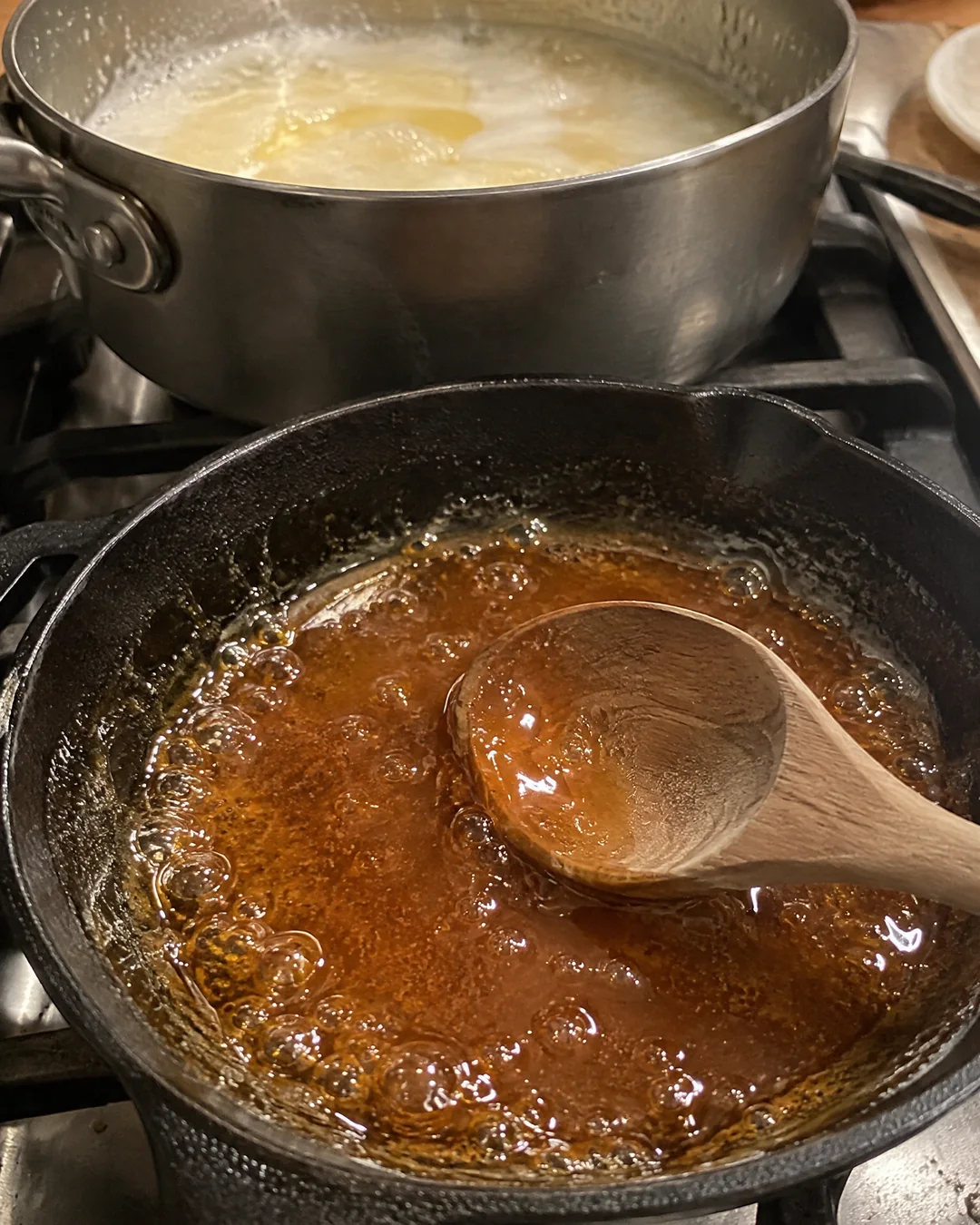
- At the same time, put the 1/2 cup of sugar alone in a cast iron skillet over medium heat. Stir as it melts, until it is amber. Not dark. Amber, the color of honey.
- Pour the amber sugar into the boiling pot. It will spit and rage. Stand back and keep stirring until the pot settles down.
- Clip on a candy thermometer and cook, stirring often, to 238°F (114°C), or until a drop of the mixture forms a soft ball in a cup of cold water. Take the pot off the heat and stir in the vanilla.
- Now beat it with a wooden spoon, steadily, for 5 to 8 minutes. The moment it thickens and starts to lose its shine, move.
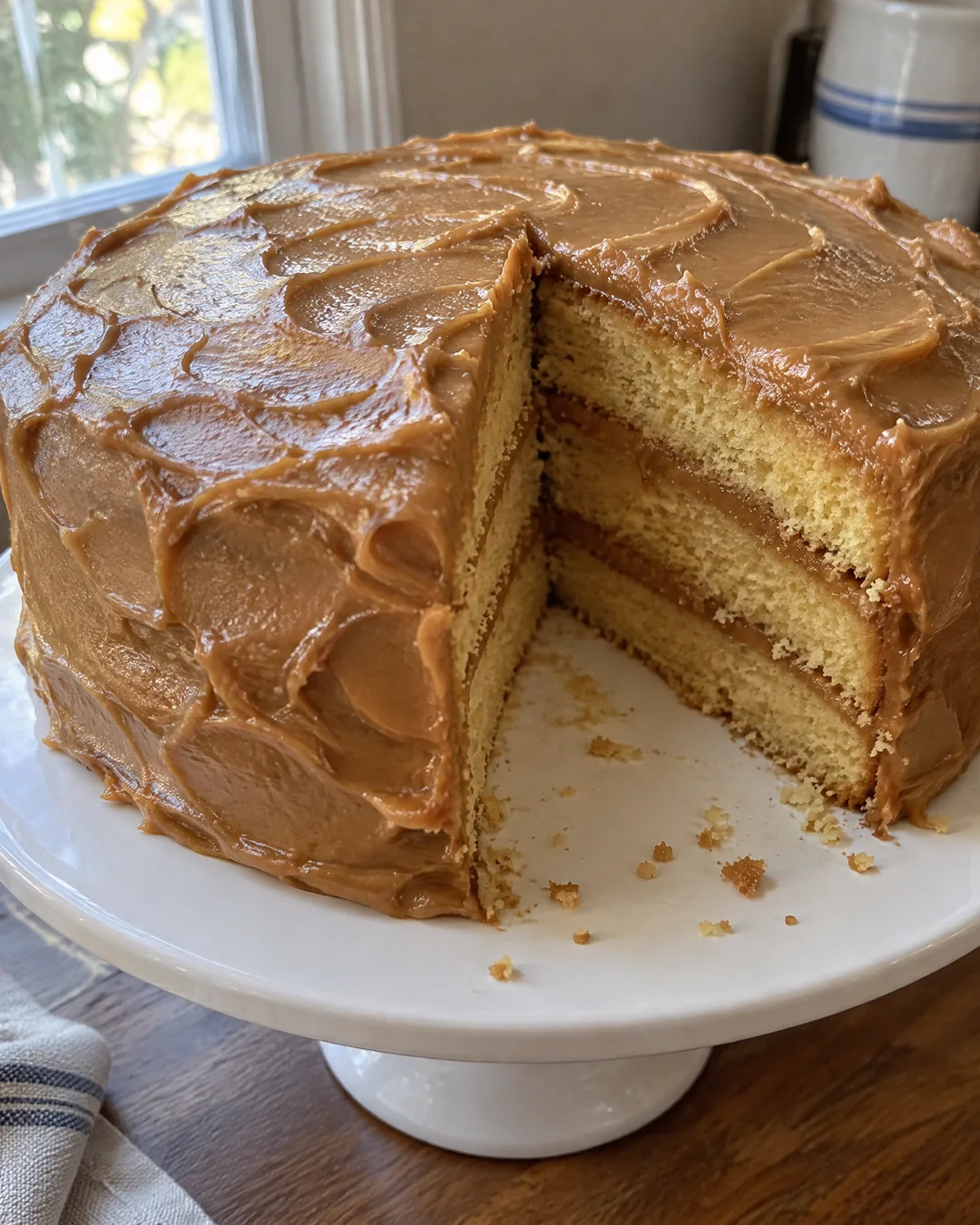
- Ice the cake fast. You have about two minutes. Spread a generous cup over the first layer, set the second on top and repeat, then add the third layer, pour the rest over the top and push it down the sides with an offset spatula. If it sets up on you, a spoonful of the hot water stirred in loosens it. Once. Let the iced cake stand for 1 hour before slicing.
Tips that make the difference
- Never make it on a rainy day. The icing pulls water out of the air and will not set. The cooks who could do it all checked the sky first.
- Use a pot bigger than you think you need. When the amber sugar goes in, the mixture boils up to double its height.
- Test your thermometer in boiling water first. If it reads 210°F instead of 212°F, cook the icing to 236°F.
- Do not chase a smooth finish. A caramel cake is supposed to show the swirls of the spatula.
Variations
- Sheet cake. Bake the batter in a 9x13 inch pan for 35 to 40 minutes and pour the icing straight over the cake in the pan. The forgiving way to learn the icing.
- Pecan. Press 1 cup of toasted pecan halves onto the top while the icing is still soft.
- Salted. Stir 1/2 teaspoon of flaky salt into the icing with the vanilla, and scatter a pinch over the finished cake.
- Two layers. Bake the batter in two 9-inch pans for 30 to 35 minutes. Same icing, thicker coat.
Storage and make-ahead
Keep the cake under a dome at room temperature for 4 to 5 days. The icing seals the layers like a shell, so the crumb stays soft. Do not refrigerate it; the icing sweats when it comes back out.
The layers can be baked ahead. Wrap each cooled layer in plastic wrap and keep for a day, or freeze for up to 1 month. The icing cannot be made ahead.
Iced slices freeze well for 2 months, wrapped in plastic and then foil.
Frequently asked questions
Why did my caramel icing turn out runny?
It did not reach 238°F, or the day was humid. Undercooked icing never sets, however long you beat it. Scrape it back into the pot, cook it to temperature and beat again.
Why did my icing turn grainy or set in the pot?
It was cooked past soft ball, or beaten a minute too long. A spoonful of very hot water loosens it, one time only. Next batch, start icing the second the shine begins to fade.
Can I use sweetened condensed milk instead of evaporated milk?
No. Condensed milk is already loaded with sugar, and the icing will scorch and never set properly.
Can I beat the icing with a mixer?
A hand mixer on low does it in 2 to 4 minutes, but it is easy to overshoot. The wooden spoon lets you feel the icing thicken.
If somebody in your family could make this icing, you already know what it meant when the caramel cake showed up. Pick a dry day, set everything out first, and be the one who brings it to the next reunion.
Southern Caramel Cake (Three Yellow Layers, Real Cooked Caramel Icing)
An old-fashioned Southern caramel cake: three 9-inch yellow layers and a real cooked caramel icing, taken to 238°F and beaten by hand until it starts to lose its shine. Cups and grams, and the two-minute rule for icing it.
Ingredients
- 1 cup unsalted butter (2 sticks, 226g), softened
- 2 cups granulated sugar
- 4 large eggs, at room temperature
- 3 cups all-purpose flour
- 1 tablespoon baking powder
- 1/2 teaspoon fine salt
- 1 cup whole milk (240ml), at room temperature
- 2 teaspoons vanilla extract
- Butter, flour and parchment for the pans
- 2 1/2 cups granulated sugar
- 3/4 cup unsalted butter
- 1 cup evaporated milk
- 1/2 cup granulated sugar (100g), melted separately
- 1 teaspoon vanilla extract
- A cup of very hot water kept nearby, for rescue
Instructions
- Heat the oven to 350°F (175°C). Butter three 9-inch round cake pans, line the bottoms with parchment and dust the pans with flour.
- Beat the softened butter and the 2 cups of sugar on medium-high for 4 to 5 minutes, until pale and fluffy. Add the eggs one at a time, beating well after each one.
- Whisk the flour, baking powder and salt together. With the mixer on low, add the flour in three additions, alternating with the milk in two. Stir in the vanilla and stop as soon as the batter is smooth.
- Divide the batter evenly between the three pans (about 485g each) and level the tops. Bake for 22 to 26 minutes, until golden and a toothpick comes out clean. Cool in the pans for 10 minutes, turn out onto racks and cool completely. Set the first layer on the cake stand before you start the icing.
- In a heavy 4-quart pot, combine the 2 1/2 cups of sugar, the butter and the evaporated milk. Set it over medium-low heat and bring it to a slow boil, stirring now and then so the sugar dissolves.
- At the same time, put the 1/2 cup of sugar alone in a cast iron skillet over medium heat. Stir as it melts, until it is amber. Not dark. Amber, the color of honey.
- Pour the amber sugar into the boiling pot. It will spit and rage. Stand back and keep stirring until the pot settles down.
- Clip on a candy thermometer and cook, stirring often, to 238°F (114°C), or until a drop of the mixture forms a soft ball in a cup of cold water. Take the pot off the heat and stir in the vanilla.
- Now beat it with a wooden spoon, steadily, for 5 to 8 minutes. The moment it thickens and starts to lose its shine, move.
- Ice the cake fast. You have about two minutes. Spread a generous cup over the first layer, set the second on top and repeat, then add the third layer, pour the rest over the top and push it down the sides with an offset spatula. If it sets up on you, a spoonful of the hot water stirred in loosens it. Once. Let the iced cake stand for 1 hour before slicing.