Roasted Butternut Squash with Goat Cheese, Pomegranates, and Rosemary is a vibrant, flavorful side dish that perfectly captures the essence of fall and winter. With its warm, roasted notes and colorful presentation, this recipe is both comforting and elegant—ideal for holiday gatherings or cozy weeknight dinners. The natural sweetness of butternut squash is beautifully balanced by the tangy creaminess of goat cheese, while bursts of juicy pomegranate arils add a fresh, tart contrast. A sprinkle of rosemary ties everything together with an earthy, aromatic finish that feels both rustic and refined. This dish doesn’t just taste great—it looks stunning on the table, making it a seasonal showstopper. Whether you’re serving it alongside roasted meats, hearty grains, or as part of a festive vegetarian spread, it’s sure to impress guests and satisfy taste buds. Simple to prepare, yet rich in flavor and texture, this is fall comfort food at its finest.
Why You’ll Love This Recipe
This roasted butternut squash dish is the perfect balance of simplicity and sophistication. It’s easy enough to make on a busy weeknight, yet impressive enough to serve at a holiday gathering. The creamy goat cheese melts slightly on the warm squash, creating a luxurious texture that contrasts beautifully with the crunch and tartness of fresh pomegranate seeds. Rosemary adds a fragrant, earthy element that brings everything together. Not only is this dish bursting with flavor, but it’s also naturally vegetarian and gluten-free, making it a crowd-pleasing option for a variety of dietary preferences. It pairs well with a wide range of mains—from roasted poultry to grain-based dishes—making it versatile and easy to incorporate into any meal plan. Plus, it’s visually stunning, with rich golden tones, bright red pops of pomegranate, and flecks of green rosemary. If you’re looking for a seasonal side dish that’s as beautiful as it is delicious, this recipe delivers.
Ingredient Breakdown
Butternut Squash:
This is the star of the dish. Butternut squash has a natural sweetness and smooth texture that deepens when roasted. Choose a squash that feels heavy for its size with a matte skin. Avoid any with soft spots or shiny surfaces, which can be signs of age or spoilage.
Goat Cheese:
Goat cheese provides a creamy, tangy counterpoint to the sweet squash. You can use a softer, spreadable type or a firmer, crumbly variety depending on your preference. It’s lower in lactose than other cheeses and adds richness without overpowering the dish.
Pomegranate Arils:
These ruby red seeds bring tartness, crunch, and a burst of freshness. You can buy a whole pomegranate and remove the seeds yourself, or opt for pre-packaged arils for convenience. They also add visual contrast that makes the dish pop.
Fresh Rosemary:
Rosemary adds an aromatic, pine-like flavor that pairs beautifully with both squash and goat cheese. Use fresh rosemary whenever possible for maximum fragrance. Dried rosemary can be substituted, but it should be used sparingly as it has a more concentrated flavor.
Olive Oil, Salt, and Pepper:
Olive oil helps the squash caramelize in the oven. Salt enhances natural flavors, and black pepper adds a mild heat. A drizzle of honey or maple syrup is optional, especially if you prefer a slightly sweeter profile.
Step-by-Step Instructions
1. Prep the Butternut Squash:
Begin by peeling the squash using a vegetable peeler. Cut off the top and bottom, then slice it in half lengthwise. Scoop out the seeds and stringy pulp with a spoon. Cut the squash into 1-inch cubes for even roasting.
2. Season and Toss:
Place the cubes on a large baking sheet lined with parchment paper. Drizzle with olive oil and sprinkle with salt and pepper. Toss until the pieces are evenly coated. Spread them in a single layer to ensure they roast evenly.
3. Roast the Squash:
Preheat your oven to 400°F (200°C). Roast the squash for 25 to 35 minutes, turning the pieces halfway through. You’re looking for lightly browned edges and fork-tender centers. If you want crispier edges, roast for an extra 5 minutes or broil briefly at the end.
4. Prepare the Toppings:
While the squash is roasting, crumble the goat cheese and prepare the pomegranate arils if needed. Finely chop fresh rosemary. Set everything aside so you’re ready to assemble as soon as the squash comes out of the oven.
5. Assemble the Dish:
Once the squash is roasted, transfer it to a serving platter or bowl. Sprinkle the crumbled goat cheese evenly over the warm squash so it softens slightly. Follow with pomegranate arils and a light sprinkle of chopped rosemary.
6. Final Touch:
Optional: add a drizzle of honey or maple syrup over the top for extra sweetness, or a dash of balsamic glaze for tang. Serve warm or at room temperature.
Tips for Perfect Roasting
Achieving perfectly roasted butternut squash is all about technique. First, make sure your squash pieces are uniform in size. This ensures even cooking and prevents some from becoming mushy while others remain undercooked. Always roast in a single layer with space between the cubes—overcrowding the pan will cause the squash to steam instead of roast. Use parchment paper or a silicone baking mat to prevent sticking and promote browning.
Roast at a high temperature, ideally 400°F (200°C), to allow the squash to caramelize without drying out. Flip the pieces halfway through to get a nice golden crust on multiple sides. Don’t skimp on the olive oil—it helps with caramelization and flavor. If your squash isn’t browning to your liking, finish with a brief broil, watching closely to avoid burning. Finally, season generously with salt and pepper to bring out the natural sweetness and enhance all the flavors.
Common Variations & Substitutions
This dish is incredibly versatile and can be adapted based on what you have on hand or your dietary needs. If you’re not a fan of goat cheese, try crumbled feta for a saltier, tangier flavor, or use ricotta for a milder, creamier option. For a nutty crunch, add toasted walnuts, pecans, or pine nuts. If pomegranates aren’t in season, dried cranberries or chopped dates can offer a similar sweetness and texture.
For a vegan version, simply omit the cheese or use a plant-based alternative. You can also experiment with different types of squash—acorn squash, delicata, or kabocha all roast beautifully and offer slightly different flavors and textures. Fresh thyme or sage can replace rosemary for a different herbal note. Adding a drizzle of balsamic glaze or a squeeze of lemon before serving can enhance brightness and complexity, giving the dish a gourmet finish with minimal effort.
What to Serve With Roasted Butternut Squash
Roasted Butternut Squash with Goat Cheese, Pomegranates, and Rosemary is a versatile side dish that complements a wide variety of main courses. Its balance of sweet, savory, tangy, and herby flavors makes it suitable for everything from casual dinners to holiday feasts.
For holiday meals such as Thanksgiving or Christmas, this dish pairs wonderfully with roasted turkey, glazed ham, or herb-crusted chicken. The natural sweetness of the squash and pomegranate provides a contrast to savory meats, while the goat cheese adds a touch of creaminess.
If you’re serving a vegetarian or lighter meal, this dish goes well with hearty grain bowls made with farro, quinoa, or wild rice. Toss it into a kale or arugula salad to create a warm, seasonal salad that’s both filling and nutritious.
It also works as a beautiful topping for crostini or as part of a warm mezze-style platter alongside hummus, roasted vegetables, and pita bread. For a Mediterranean twist, serve it with grilled halloumi or lamb skewers.
You can even turn this side into a main by adding lentils or chickpeas, or serve it over polenta or mashed cauliflower for a cozy, comforting plate. Whether you’re planning a formal dinner or a weeknight meal, this dish adapts easily and brings a sophisticated flair to any table.
Nutritional Information & Health Benefits
This dish is not only flavorful but also rich in nutrients. Butternut squash is a powerhouse of vitamins and minerals. It’s particularly high in vitamin A, which supports immune health and vision, as well as vitamin C and potassium. It’s also a good source of dietary fiber, which helps support digestion and can contribute to satiety.
Goat cheese is a great source of protein and calcium. It contains less lactose than cow’s milk cheeses, making it easier to digest for some individuals. It also provides healthy fats, which can help with nutrient absorption and keep you feeling full longer.
Pomegranate arils are loaded with antioxidants, particularly punicalagins and anthocyanins, which help combat oxidative stress. They also contain vitamin K, vitamin C, and folate, offering a range of anti-inflammatory and heart-supporting benefits.
Olive oil, used to roast the squash, is a heart-healthy fat that’s rich in monounsaturated fats and polyphenols. When used in moderation, it supports cardiovascular health and adds depth to the flavor of the dish.
Rosemary brings more than just fragrance—it contains compounds like rosmarinic acid and carnosic acid, which have antioxidant and anti-inflammatory properties. It may also aid digestion and cognitive function.
Overall, this dish delivers a well-rounded mix of complex carbohydrates, healthy fats, and protein, along with plenty of vitamins and antioxidants. It’s an ideal option for those looking to eat seasonally and healthfully without sacrificing flavor or satisfaction.

Storage & Reheating Tips
This dish stores well and can be enjoyed as leftovers. Once cooled, place any remaining squash in an airtight container and refrigerate for up to 4 days. It’s best to store the goat cheese and pomegranate seeds separately, if possible, to maintain their texture and freshness.
When reheating, use an oven or toaster oven set to 350°F (175°C) for about 10–15 minutes to retain the roasted texture. Reheating in the microwave is quicker but may soften the squash too much, resulting in a less desirable texture.
If you’ve already assembled the toppings, the goat cheese will melt slightly during reheating, which still tastes great but changes the presentation. For best results, add fresh pomegranate arils and a sprinkle of rosemary just before serving to restore color and contrast. Avoid freezing this dish, as the texture of both the squash and cheese can deteriorate after thawing.
Make-Ahead Instructions
This recipe is easy to prepare in advance, making it perfect for holiday meals or meal prepping. You can roast the butternut squash up to 2 days ahead of time. After roasting, let the squash cool completely before storing it in an airtight container in the refrigerator.
You can also prep the other ingredients in advance. Crumble the goat cheese and store it in a sealed container. If you’re using fresh pomegranate, remove the arils and keep them in a separate container. Chop the rosemary just before serving for maximum flavor, or store it wrapped in a damp paper towel inside a plastic bag.
When ready to serve, simply reheat the squash in the oven at 350°F (175°C) for 10–15 minutes. Once warmed through, assemble with the cheese, pomegranate, and rosemary. This allows you to serve a fresh-tasting, visually appealing dish without last-minute stress.
FAQs Section
Can you make roasted butternut squash ahead of time?
Yes. You can roast the squash up to 2 days in advance and store it in the refrigerator. Assemble with goat cheese, pomegranate, and rosemary just before serving for the best texture and presentation.
What flavors pair well with butternut squash?
Butternut squash pairs well with earthy herbs like rosemary, sage, and thyme. It also works beautifully with tangy cheeses (goat, feta), tart fruits (pomegranate, cranberries), nuts, and rich flavors like balsamic vinegar or brown butter.
Can you eat the skin of roasted butternut squash?
Technically yes, but the skin of butternut squash is quite tough even after roasting. For most dishes, it’s recommended to peel the squash for a smoother, more pleasant texture.
What cheese goes best with butternut squash?
Goat cheese is a popular pairing due to its tangy contrast to the squash’s sweetness. Feta, blue cheese, or even Parmesan can also be delicious alternatives depending on the flavor profile you’re going for.
How do you remove pomegranate seeds easily?
Cut the pomegranate in half and submerge it in a bowl of water. Gently break it apart and remove the seeds under water—the seeds will sink while the pith floats. This method keeps things clean and reduces staining.
Final Thoughts & Recipe Recap
Roasted Butternut Squash with Goat Cheese, Pomegranates, and Rosemary is more than just a seasonal side dish—it’s a flavorful, elegant option that’s as nutritious as it is beautiful. Whether you’re making it for a special occasion or a simple dinner at home, this recipe delivers a balanced mix of textures and flavors that appeal to a wide range of palates.
It’s easy to prepare, can be made in advance, and is endlessly adaptable with different cheeses, herbs, and garnishes. Plus, it fits well into a variety of meal plans, from holiday spreads to vegetarian dinners and everything in between.
With just a few ingredients and simple techniques, you can create a dish that feels elevated without being complicated. Try it once, and it may just become a staple in your fall and winter recipe rotation. Don’t forget to pair it with your favorite main and share it with friends and family.
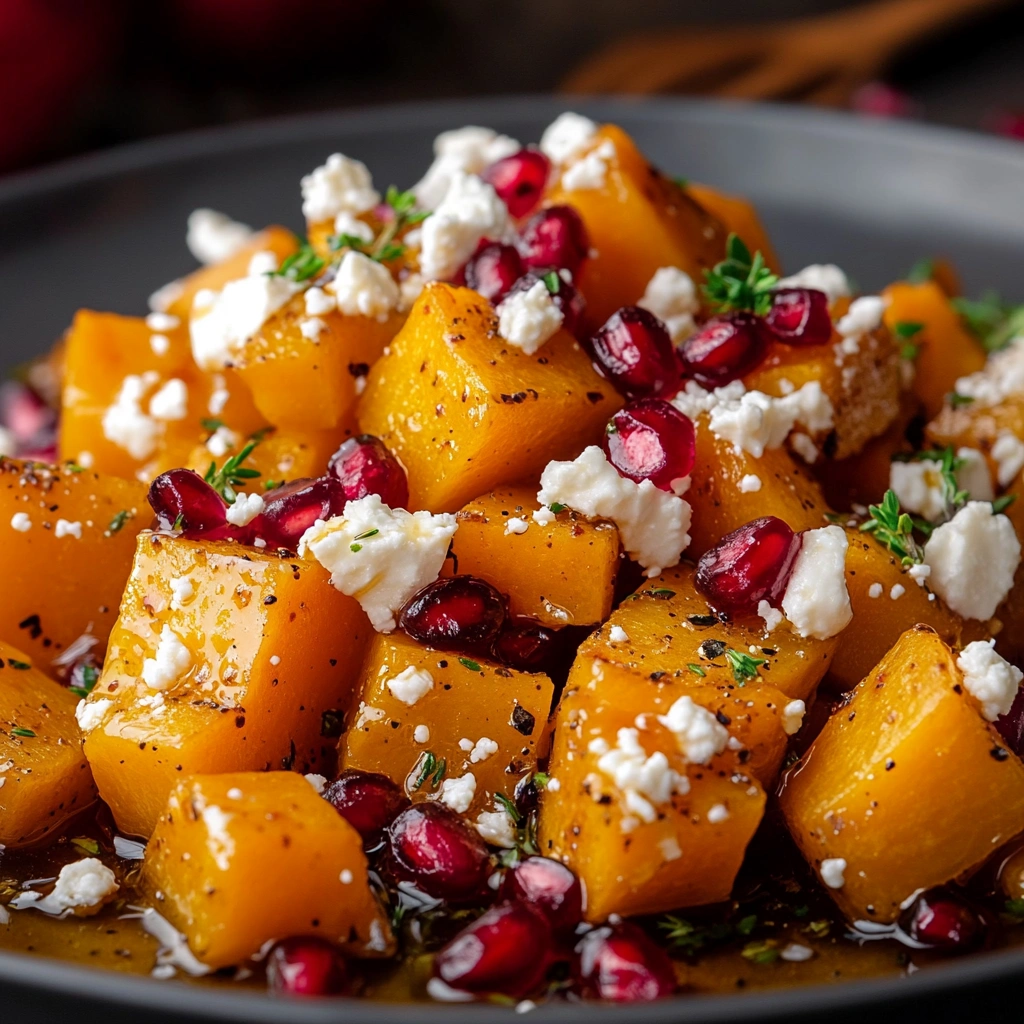
Roasted Butternut Squash with Goat Cheese, Pomegranates, and Rosemary
Roasted Butternut Squash with Goat Cheese, Pomegranates, and Rosemary is a vibrant, flavor-packed side dish perfect for fall and winter gatherings. The caramelized squash brings a natural sweetness that’s balanced by creamy goat cheese and juicy pomegranate seeds. A touch of rosemary adds earthiness and warmth, making this a standout addition to any holiday meal or dinner party. Whether served warm or at room temperature, it’s simple to make, visually stunning, and incredibly satisfying.
Ingredients
- 1 medium butternut squash (peeled and cubed).
- 1 tbsp olive oil.
- 1 tsp salt.
- 1/2 tsp black pepper.
- 1/2 tsp ground cinnamon.
- 1/4 tsp garlic powder.
- 1/4 tsp onion powder.
- 1/2 cup goat cheese (crumbled).
- 1/2 cup pomegranate seeds.
- 2 tbsp fresh rosemary (chopped).
Instructions
- Preheat the oven to 400°F (200°C).
- Toss the butternut squash cubes with olive oil, salt, pepper, cinnamon, garlic powder, and onion powder in a large bowl.
- Spread the squash evenly on a baking sheet and roast for 25-30 minutes, or until tender and lightly browned.
- Remove from the oven and sprinkle with crumbled goat cheese and pomegranate seeds.
- Garnish with chopped rosemary and serve warm. Enjoy!.