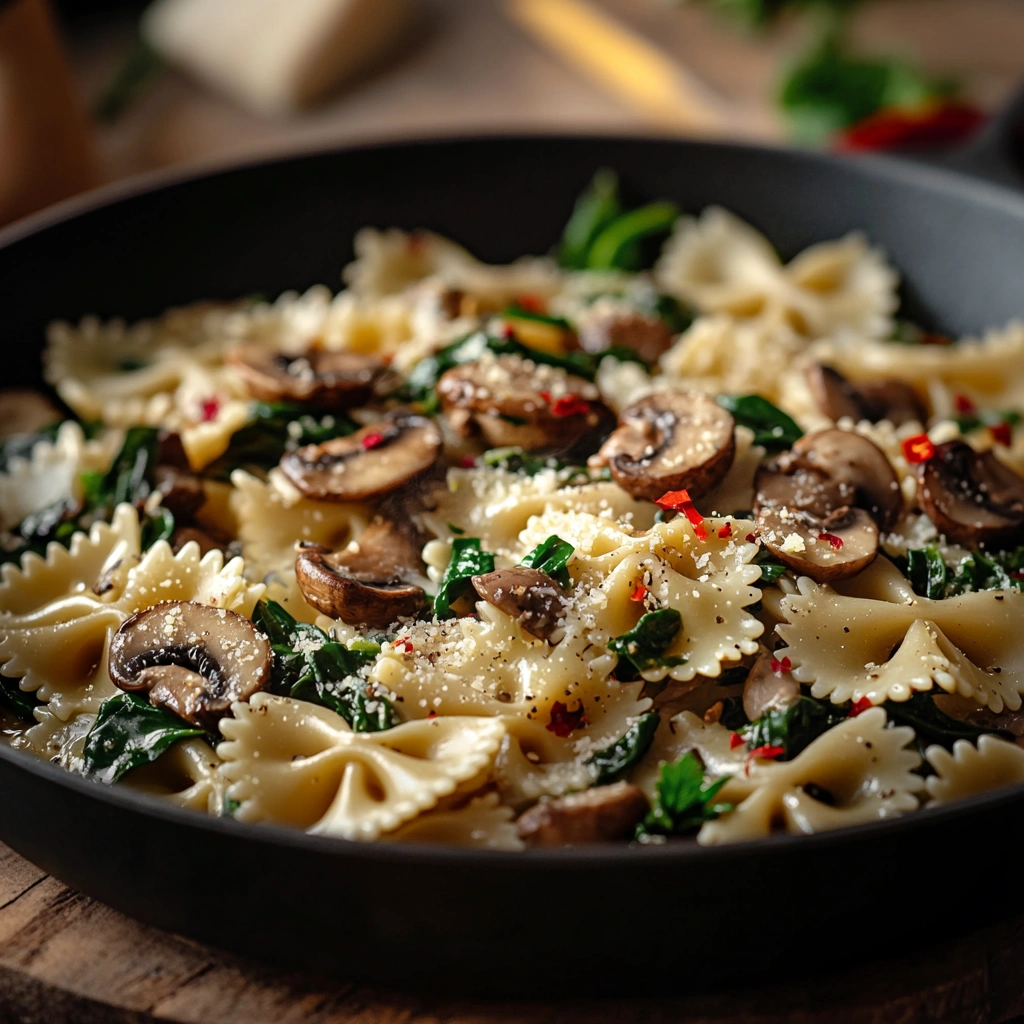
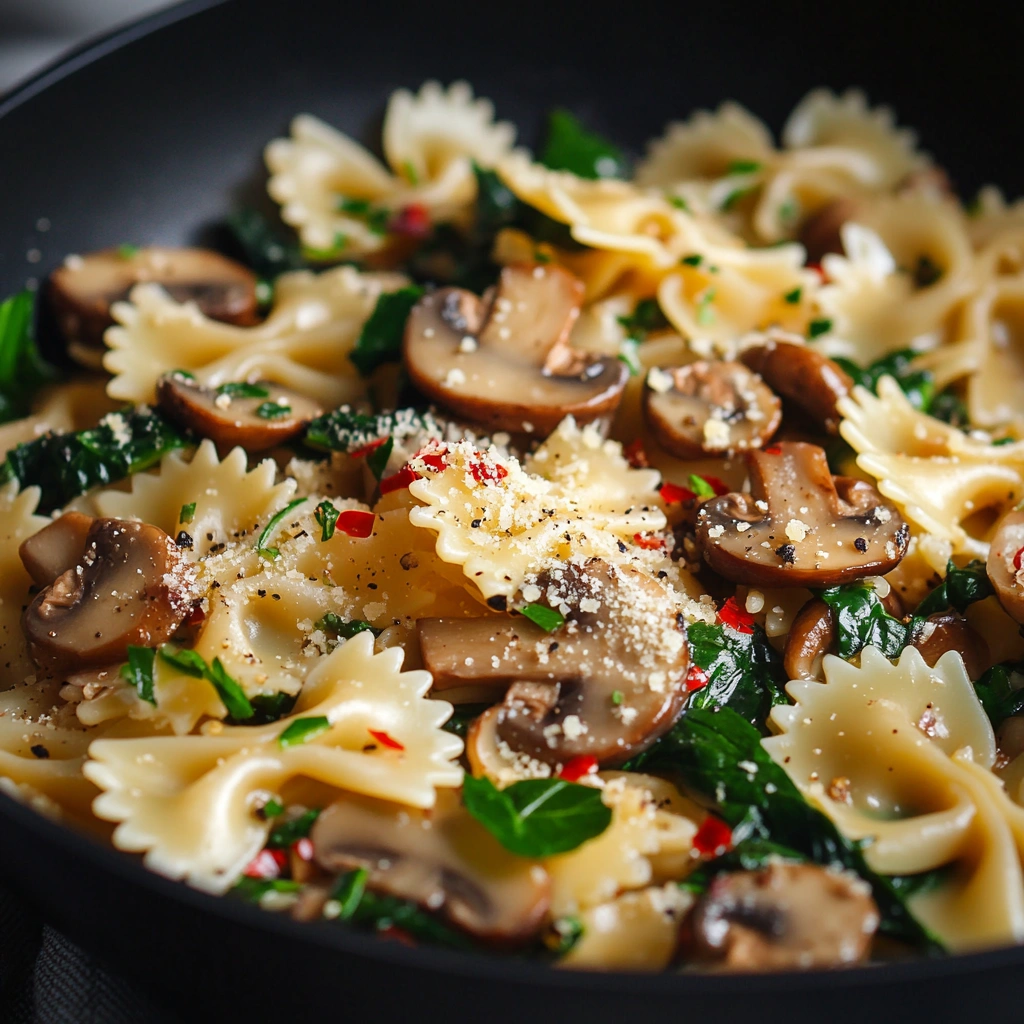
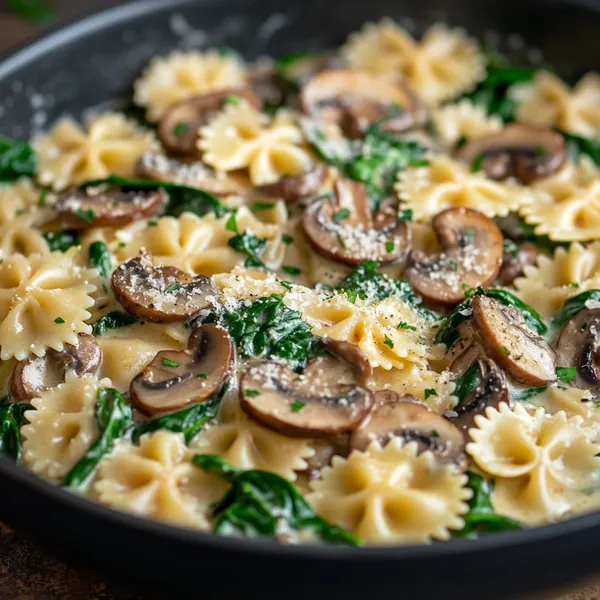
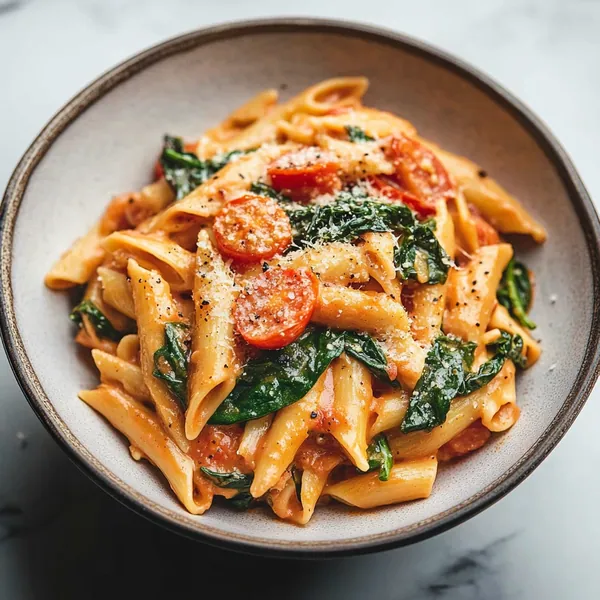
A creamy, one-pan pasta that brings together earthy sautéed mushrooms, tender spinach, and al dente pasta in a luscious Parmesan sauce. Ready in under 30 minutes, this skillet meal minimizes cleanup without skimping on flavor. The mushrooms are caramelized to deepen their umami, garlic and red pepper flakes add…
Transform your weeknight dinner routine with a comforting, flavorful one-pan Parmesan spinach mushroom pasta skillet. This dish unites tender pasta strands with earthy mushrooms, vibrant spinach, and a creamy, cheese-enriched sauce—all cooked in a single skillet to simplify both preparation and cleanup. A harmony of textures and tastes, it offers savory umami from browned mushrooms, subtle garlic warmth, and the bright freshness of spinach, finished with a generous shower of grated Parmesan. Whether you’re seeking a speedy family meal, a dish to impress guests, or something hearty to satisfy comfort-food cravings, this pasta skillet delivers. With pantry-friendly ingredients and minimal hands-on time, it’s an ideal choice for both novice cooks and seasoned home chefs aiming to streamline weeknight cooking without sacrificing flavor.
Why This Dish Works
This Parmesan spinach mushroom pasta skillet excels because it balances flavors, textures, and convenience in one seamless recipe. Earthy mushrooms provide deep umami richness, complemented by nutty, salty Parmesan that melts into a silky sauce. Bright, tender spinach leaves add a pop of color, freshness, and nutritional value, while garlic and a hint of red pepper flakes layer in aromatic complexity and a gentle kick. Cooking everything in a single skillet concentrates flavors and maximizes heat transfer, yielding perfectly al dente pasta and richly caramelized mushrooms without extra pots or pans. The reserved pasta water serves as an emulsifier, binding the sauce and ensuring a luscious, clingy coating on every strand. Versatile and forgiving, this dish adapts easily to dietary preferences, seasonal produce swaps, and protein additions, making it a crowd-pleasing staple.
Ingredients & Nutritional Benefits
Pasta Choose a medium-width variety such as penne, fusilli, or rigatoni, which holds sauce well in its ridges or twists. Pasta provides complex carbohydrates for sustained energy and comfort, making it an ideal base for a hearty skillet.
Mushrooms Button, cremini, or baby bella mushrooms deliver earthy depth and umami–the savory “fifth taste”–while supplying B vitamins, selenium, and vitamin D when exposed to light. Their meaty texture also satisfies the palate and adds visual appeal.
Spinach Fresh baby spinach brings a mild, slightly sweet flavor alongside a wealth of nutrients: iron for blood health, vitamins A and C for immune support, vitamin K for bone health, and dietary fiber to promote digestion. Wilted leaves integrate seamlessly into the sauce without overpowering.
Parmesan Cheese Authentic Parmigiano-Reggiano or a high-quality grated Parmesan offers sharp, nutty complexity, along with calcium and protein. Its crystals dissolve into the sauce, thickening it and imparting signature salty richness.
Aromatics & Liquids
Garlic: Provides pungent warmth and aromatic depth.
Onion (optional): Sweetness and additional texture when finely diced.
Broth or Cream: Low-sodium vegetable or chicken broth deglazes the pan and builds base flavor; a splash of half-and-half or heavy cream enriches the sauce for a silkier mouthfeel.
Olive Oil & Seasonings Extra-virgin olive oil serves as the cooking fat, supplying heart-healthy monounsaturated fats. Season with kosher salt, freshly ground black pepper, and a pinch of red pepper flakes for balanced seasoning and a touch of heat.
By combining these ingredients, this dish delivers balanced macronutrients—carbohydrates, healthy fats, and protein from cheese—alongside vitamins and minerals from vegetables and mushrooms, making it both indulgent and nourishing.
Large Deep Skillet or Sauté Pan (10–12″): Ensures even heat distribution and room to toss pasta and vegetables.
Wooden Spoon or Heat-Proof Spatula: For stirring and scraping up flavorful browned bits.
Measuring Cups & Spoons: Precision for consistent seasoning and sauce texture.
Cheese Grater: Freshly grated Parmesan integrates more smoothly than pre-grated.
Colander (if cooking pasta separately): For draining pasta while reserving cooking water.
These basic tools are likely already in your kitchen, making the recipe highly accessible.
Step-by-Step Instructions
Prep Work Begin by gathering and measuring all ingredients. Rinse and pat mushrooms dry before slicing into ¼-inch pieces. Rinse spinach leaves and shake off excess water. Peel and mince garlic cloves; if using onion, dice finely. Grate Parmesan and set aside. If you plan to cook pasta separately, bring a large pot of salted water to a rolling boil.
Cook the Pasta Once the water boils, add pasta and cook until just al dente (usually one minute less than package instructions). Reserve at least one cup of pasta cooking water before draining. This starchy liquid will help bind and thicken the sauce without extra cream.
Sauté the Mushrooms Heat two tablespoons of olive oil in the skillet over medium-high heat. Add sliced mushrooms in a single layer—avoid overcrowding to ensure browning. Season lightly with salt and pepper. Cook without stirring for two to three minutes, allowing the undersides to caramelize. Stir and continue cooking until mushrooms are golden brown and any released liquid has evaporated, about another three minutes.
Build the Sauce Reduce heat to medium. Add another tablespoon of olive oil, then toss in minced garlic (and onion, if using). Sauté for 30–45 seconds until fragrant, careful not to let garlic burn. Pour in ¾ cup of broth (or heavy cream, if preferred) and bring to a gentle simmer. Add spinach in batches, stirring until each batch wilts and reduces in volume. Season with salt, pepper, and red pepper flakes to taste.
Combine & Finish Return drained pasta to the skillet. Add grated Parmesan and toss vigorously, adding reserved pasta water a little at a time to achieve a creamy consistency that clings to noodles. Continue tossing until sauce coats the pasta evenly and cheese has melted completely. Taste and adjust seasoning, adding more salt or pepper if needed. Remove from heat and let sit for one minute to thicken slightly.
Garnish & Serve Sprinkle extra Parmesan, a drizzle of olive oil, and chopped fresh parsley or basil on top. Serve immediately while hot, pairing with crusty bread or a crisp green salad to round out the meal.
Tips & Variations
Transform this skillet into a personalized masterpiece by experimenting with proteins, vegetables, cheeses, and spices. For extra heft, stir in cooked chicken breast, sautéed shrimp, or pan-fried tofu just before adding the pasta—each option melds beautifully with the creamy sauce. Swap baby spinach for kale or Swiss chard for a heartier green; if using kale, remove thick ribs and massage leaves with a drizzle of oil to soften. Vegetables such as sun-dried tomatoes, roasted red peppers, or blanched asparagus tips bring pops of color and complementary flavors. For a dairy-free version, replace Parmesan with a plant-based “Parmesan” alternative or nutritional yeast and use full-fat coconut milk in place of cream. Shake up the spice profile by adding smoked paprika, curry powder, or Italian seasoning to the mushrooms while they cook. If you’re short on time, skip pre-cooking the pasta: pour broth directly into the skillet, nestle in the uncooked pasta, cover, and simmer—stirring occasionally—until noodles are tender and the liquid has reduced. A final flourish of lemon zest or a handful of toasted pine nuts adds brightness and texture, ensuring every bite stays exciting.
Serving Suggestions & Pairings
This pasta skillet shines alongside simple sides and a glass of something crisp. A lightly dressed arugula or mixed-green salad with lemon-garlic vinaigrette cuts through the richness, while warm garlic bread or herbed focaccia invites dipping into any leftover sauce. For wine, choose a Pinot Grigio or Sauvignon Blanc—both offer bright acidity that complements the cheese and balances earthiness from mushrooms. If you prefer red, a light-bodied Chianti or Beaujolais pairs without overpowering delicate spinach notes. Garnish with fresh basil or chopped parsley, and serve family-style straight from the skillet to highlight its communal appeal.
Storage & Make-Ahead
To store leftovers, transfer cooled pasta to an airtight container and refrigerate for up to three days. When reheating, add a splash of water or broth to restore creaminess and warm gently over low heat, stirring until heated through. Microwave reheating also works—cover the dish, heat in 30-second intervals, and stir between cycles. For freezing, portion into meal-sized freezer bags or containers; squeeze out excess air, seal, and freeze for up to two months. Thaw overnight in the refrigerator, then reheat as above. For make-ahead convenience, slice mushrooms, grate cheese, and wash spinach up to one day in advance. Store prepped ingredients separately—this minimizes moisture and maintains freshness—then assemble and cook just before serving for maximum flavor and texture.
FAQs
Can I use fresh pasta instead of dried? Absolutely. Fresh pasta cooks more quickly—usually in 2–3 minutes—so add it during the sauce-building stage with extra liquid. Reduce broth or cream by about ¼ cup to prevent the sauce from becoming too thin, and watch closely to avoid overcooking.
How do I prevent the spinach from getting soggy? Wilt spinach in batches, stirring only until each batch collapses. Remove the pan from direct heat briefly between additions to avoid steaming the leaves too aggressively. If excess moisture accumulates, increase heat for a minute to evaporate liquid before combining with pasta.
Is there a dairy-free or vegan alternative? Yes. Swap Parmesan for nutritional yeast or a vegan Parmesan substitute, and replace cream with full-fat coconut milk or cashew cream. Use olive oil generously to mimic the mouthfeel of dairy fats, and season with a touch of mustard powder or miso for extra depth.
What’s the best way to reheat leftovers? Reheat gently over low heat on the stovetop, adding a splash of broth or water to re-emulsify the sauce. Stir constantly to prevent sticking. In the microwave, cover the dish and heat in short intervals, stirring between each to ensure even warming.
Can I double the recipe for a crowd? Yes—just use a larger skillet or divide ingredients between two pans. Ensure there’s enough surface area so mushrooms can brown properly and pasta has room to absorb liquid. You may need to adjust cooking time by a few minutes to account for the increased volume.
Conclusion
This Parmesan spinach mushroom pasta skillet epitomizes effortless comfort cooking: minimal prep, one-pan efficiency, and a medley of flavors that never disappoint. From its earthy mushroom base and tender spinach to its creamy, cheese-infused sauce, every element works in harmony. Feel free to adapt proteins, swap vegetables, or tweak seasonings to suit your taste or dietary needs—this recipe is as flexible as it is delicious. Whether you’re feeding a family on a busy weeknight or entertaining friends, this skillet delivers a satisfyingly rich meal with almost no cleanup. Give it a try, make it your own, and enjoy a restaurant-worthy dish in the comfort of your kitchen.
Recipe
Parmesan Spinach Mushroom Pasta Skillet
A creamy, one-pan pasta that brings together earthy sautéed mushrooms, tender spinach, and al dente pasta in a luscious Parmesan sauce. Ready in under 30 minutes, this skillet meal minimizes cleanup without skimping on flavor. The mushrooms are caramelized to deepen their umami, garlic and red pepper flakes add aromatic warmth, and a splash of pasta water helps the grated Parmesan bind into a silky coating. It’s a versatile crowd-pleaser you can customize with proteins, swap in your favorite greens, or turn into a dairy-free version in just a few simple steps. Perfect for busy weeknights or casual dinner parties.
1/2 cup (125ml) low-sodium vegetable broth (we don’t necessarily need all of it)
Fresh cracked pepper, to taste
1 teaspoon Italian seasoning
1/2 cup parmesan cheese, grated
1 teaspoon red chili pepper flakes, optional
Instructions
To make the parmesan spinach mushroom pasta skillet, Cook the pasta in salted water until al dente, according to the package instructions.
Heat 2 tablespoons of olive oil in a large skillet. Add the mushrooms and sauté for about 3 minutes until lightly browned.
Add the chopped garlic and cook for about 30 seconds longer. Then deglaze with a bit of vegetable broth. Reduce the heat and cook for about 1-2 minutes longer. Remove mushrooms to a plate and set aside.
In the same skillet, add the spinach and cook for 2 minutes until wilted. Adjust seasoning with salt and pepper.
Once the pasta is ready, pour off the cooking water. Push spinach on the side in the skillet and add mushroom back, then put drained pasta in the pan and toss to combine. Add parmesan, the last tablespoon of olive oil, and Italian seasoning, and give a quick stir. Serve the parmesan spinach mushroom pasta with red chili pepper flakes and more parmesan, if you like. Enjoy!
Did you make this recipe? Share a photo and tag us — we can't wait to see what you've made!