Introduction & Beginning of the Recipe
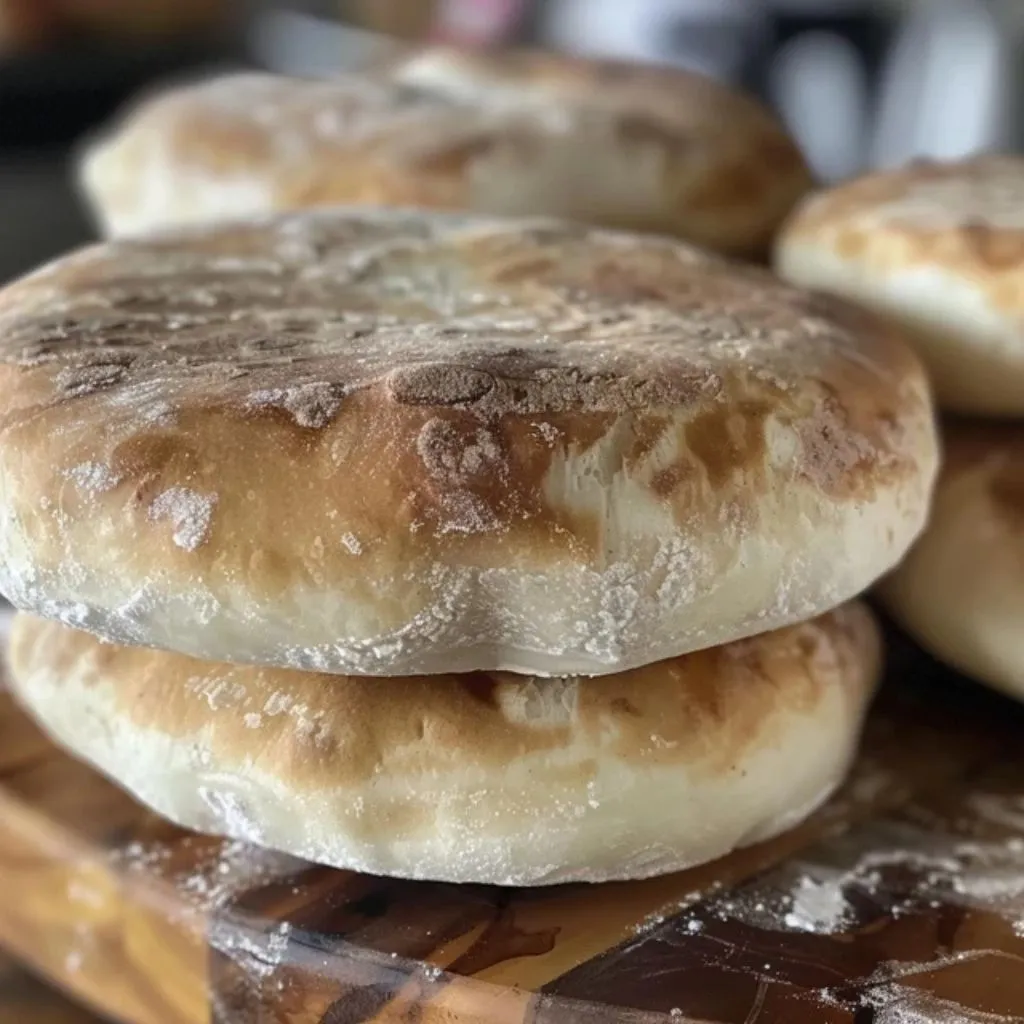
Every region has its “food heroes,” the kind of recipes that people grow up with, pass down through generations, and get a little nostalgic about every time they make them. For the North East of England, one of those legends is the Stottie Cake. Don’t be fooled by the name — this isn’t a cake in the sweet sense at all. It’s actually a hearty, chewy bread with a rustic charm that’s loved for its soft interior, slightly crusty edges, and iconic dip in the middle.
When I first came across stotties, I thought they were just another flatbread. Oh, how wrong I was! Once you tear into one that’s still slightly warm from the oven and fill it with ham and pease pudding, you immediately get it — this is comfort food at its best. If you’re a fan of homemade bread recipes that feel approachable and forgiving, the stottie might just become your new kitchen favorite.
What makes this bread so special is its simplicity. No fancy ingredients, no long-winded process, and no complicated shaping skills required. In fact, the “dip” in the middle isn’t just tradition; it actually helps the bread bake evenly. Stotties were traditionally cooked right on the bottom of a coal-fired oven, which gave them that unmistakable chewy base. And while most of us don’t have coal ovens at home anymore, you can still get pretty close to that authentic texture by following a few simple tricks.
So, if you’re curious to try your hand at a regional classic that’s as humble as it is delicious, let’s dive right into the recipe. Trust me, once you’ve made your first stottie, you’ll understand why the people of Newcastle are so proud of this bread.
Ingredients You’ll Need
Here’s the beauty of it — everything you need for a stottie is likely already in your pantry:
-
500g strong white bread flour
-
1 tsp fine sea salt
-
1 tsp caster sugar
-
7g sachet dried active yeast
-
300ml warm water (approx.)
-
1 tbsp vegetable oil (plus extra for greasing)
That’s it! Six simple ingredients, nothing fancy or expensive, and you’re on your way to making a true North East classic.
Step 1: Preheat the Oven
Before you even get your hands in the dough, preheat your oven to 220°C (200°C fan) / Gas Mark 7. Pop a baking tray in there as well — you want it nice and hot when your stottie is ready to bake. This helps recreate that “bottom of the oven” effect that traditional stotties are known for.
Step 2: Mix Your Dry Ingredients
In a large mixing bowl, combine the flour, salt, and sugar. Give it a quick stir to make sure everything is evenly distributed.
Step 3: Add the Yeast and Liquids
Next, stir in the dried yeast, then slowly pour in your warm water and vegetable oil. You want to add the water gradually, mixing as you go, until the dough starts to come together. Depending on your flour and environment, you may need a touch more or a touch less water, so keep an eye on the texture — it should feel soft but not sticky.
Step 4: Knead the Dough
Now comes the fun part — kneading! Lightly flour your countertop and turn the dough out. Knead for about 10 minutes until it becomes smooth and elastic. This step builds up the gluten, giving your stottie its signature chewy bite.
At this point, your kitchen is already starting to feel like a bakery, and you’ll see the dough transforming under your hands. Trust the process — those 10 minutes are worth it.
Recipe Continuation & Tips
Step 5: First Rise
Once your dough feels silky and elastic, place it into a lightly oiled bowl. Cover it with a clean tea towel (or clingfilm if you prefer) and let it rise in a warm spot for about 1 hour, or until it has doubled in size.
If your kitchen tends to be on the cooler side, don’t worry — you can always pop the bowl near a slightly warm oven or even let it rise a little longer. Patience is key here, and watching that dough puff up is so satisfying.
Step 6: Knock Back & Shape
After the first rise, give the dough a gentle punch to release the air. Turn it out onto your counter and shape it into a large round, about 4–5cm thick. Don’t worry about making it picture-perfect — stotties are meant to be rustic and a bit rough around the edges. That’s part of their charm.
Step 7: Create the Signature Indent
Here’s the part you absolutely can’t skip: use your fingertips to press down into the center of the dough, creating that classic stottie dip. This isn’t just decorative — it actually helps the bread bake evenly and prevents it from ballooning up too much in the oven.
Step 8: Prepare for Baking
Lightly dust a baking sheet with flour (or semolina, if you have some on hand — it adds a lovely texture). Place your dough onto the sheet, then transfer it to your preheated tray. That hot surface will help give the stottie its authentic chewy bottom.
Step 9: Bake to Golden Perfection
Bake for 15–20 minutes, until the stottie turns a gorgeous golden brown and sounds hollow when you tap the underside. The smell alone will make you want to tear into it straight away, but hold back — it needs to cool just a little.
Step 10: Cool & Serve
Transfer your baked stottie to a wire rack and let it cool. It’s best eaten while still slightly warm but not piping hot. Once cooled, slice it open and get ready to stuff it with your favorite fillings.
Tips for the Best Homemade Stottie

-
For authentic texture: Place the bread on the lowest shelf of your oven or even directly on the oven floor if safe to do so.
-
Traditional fillings: Ham and pease pudding is the classic Geordie combo, but it also makes an amazing breakfast bap with bacon and eggs.
-
Make-ahead magic: Stotties freeze really well. Slice them into portions, wrap tightly, and freeze for quick snacks later.
-
Keep it rustic: Don’t stress about shaping your stottie into a perfect circle. The charm lies in its homemade look.
FAQ & Conclusion
Frequently Asked Questions
1. Why is it called a “Stottie Cake” if it isn’t a cake?
Great question! The word “stot” comes from the Geordie dialect meaning “to bounce.” Because the dough was knocked back (or “stotted”) before baking, the bread took on the name “stottie.” And in Northern England, “cake” can just mean a baked item — not always something sweet.
2. Can I use all-purpose flour instead of strong bread flour?
You can, but the texture won’t be quite the same. Bread flour has a higher protein content, which helps develop that chewy bite that makes stotties so unique.
3. How do I know when my stottie is baked through?
The best way is the tap test — if the bottom sounds hollow when tapped, it’s ready. It should also be golden brown all over.
4. Can I make smaller stotties instead of one big one?
Absolutely! Divide the dough into 2–4 portions, shape, indent, and bake. Just reduce the baking time slightly since smaller stotties will cook faster.
5. How long does a homemade stottie keep?
Fresh stotties are best eaten the same day, but they’ll keep for up to 2 days in an airtight container. For longer storage, freeze in portions.
6. Do I need a stand mixer to make this?
Nope! A stand mixer with a dough hook makes kneading easier, but it’s not essential. This bread is rustic and forgiving — your hands are the only tool you really need.
7. What fillings go best with stotties?
The most traditional choice is ham and pease pudding, but stotties are versatile. Try stuffing them with bacon and eggs, chips for a “chip butty,” or even roast beef and gravy for something indulgent.
Conclusion
There’s something so satisfying about baking bread that connects you to tradition, and the Newcastle stottie is the perfect example. It’s not fancy or delicate; it’s simple, hearty, and made to be enjoyed with generous fillings. From the rustic shape to the chewy bite, every part of it feels like a nod to its North East roots.
If you’ve never tried making your own bread before, this is a fantastic place to start. With just six ingredients and a straightforward process, it’s nearly impossible to go wrong — and even if your stottie isn’t perfectly round or evenly browned, that’s part of its charm.
So, go ahead and give this recipe a try. Whether you serve it up with a proper Geordie lunch of ham and pease pudding, a bacon-and-egg breakfast, or simply with butter while it’s still warm, you’re in for a treat. And who knows? You might just find yourself baking this humble hero of Northern England again and again.
Now I’m curious — what would you fill your stottie with first?
Old-School Newcastle Stottie Cake: A North East Classic You’ll Want to Bake Again and Again
The Newcastle Stottie Cake is a true North East classic — a rustic, chewy flatbread with its signature dip in the middle. Simple to bake with just six everyday ingredients, this bread is perfect for stuffing with ham and pease pudding, a chip butty, or a big breakfast sandwich. Soft, hearty, and freezer-friendly, it’s the kind of recipe you’ll make again and again.
Ingredients
- 500g strong white bread flour
- 1 tsp fine sea salt
- 1 tsp caster sugar
- 7g dried active yeast (1 sachet)
- 300ml warm water (approx.)
- 1 tbsp vegetable oil (plus a little for greasing)
Instructions
- Preheat oven: Heat oven to 220°C (200°C fan) / Gas Mark 7. Place a baking tray inside to heat.
- Mix dry ingredients: In a large bowl, combine flour, salt, and sugar.
- Add yeast and liquids: Stir in yeast. Gradually add warm water and oil, mixing to form a soft dough.
- Knead: On a lightly floured surface, knead for 10 minutes until smooth and elastic.
- First rise: Place dough in a lightly oiled bowl, cover, and leave in a warm place for about 1 hour or until doubled in size.
- Shape: Knock back dough, then shape into a large round about 4–5cm thick.
- Indent: Press fingertips into the center to make the classic stottie dip.
- Prepare for baking: Lightly dust a baking sheet with flour or semolina, then transfer the dough.
- Bake: Place on the hot tray and bake for 15–20 minutes until golden brown and sounds hollow when tapped.
- Cool: Transfer to a wire rack and allow to cool slightly before slicing.