In this article
My mother said there were two things that ruined mashed potatoes, and she saw both of them done in my own kitchen, and she said so at the table. She was right, and I have made them her way ever since.
The first thing was the electric mixer. A potato beaten with a machine turns to glue. The starch cells burst, the starch leaks out and goes stretchy and grey, and the potatoes stick to the spoon like paste. Hers were mashed by hand with an old wire masher, and they were fluffy with a few small lumps, and the lumps were how you knew they were real. The second thing was cold milk straight from the refrigerator, which makes a cold, heavy potato. Hers was warmed in a little pan on the back of the stove while the potatoes boiled.
And there was an order. Starchy potatoes, salted water, drained and put back in the hot pot for a minute with the lid off so they dried out. Then the butter first, all of it, mashed in while they were steaming. Then the hot milk, a little at a time, until they were right. Milk before butter, she said, and the butter never gets in.
Why this mashed potatoes works
- Russet potatoes. High in starch and low in water, they cook up dry and floury and fall apart under the masher into a light, fluffy mash. Waxy potatoes turn dense and pasty.
- Dried in the hot pot. A minute over the heat after draining steams off the water clinging to the potatoes. Wet potatoes make a wet, heavy mash.
- Butter first, then hot milk. Fat coats the starch and keeps it tender before any liquid arrives. Hot milk is absorbed evenly and keeps the potatoes hot; cold milk chills them and sits on top.
- Mashed by hand. A masher or a ricer breaks the potatoes without tearing the starch cells open. A mixer or a food processor overworks the starch and turns the whole pot to glue.
Ingredients
Serves 6 as a side dish. The measurements are in US cups with grams in brackets.
- 3 pounds russet potatoes (1.35kg), about 6 medium
- 1 tablespoon fine salt for the cooking water, plus more to taste
- 1/2 cup unsalted butter (1 stick, 113g), cut into pieces
- 1 to 1 1/4 cups whole milk (240 to 300ml)
- Black pepper, to taste
- A little more butter for the top
Russets, sometimes sold as baking potatoes, are the right kind. Yukon Golds make a good, denser mash. Do not use red or new potatoes for this. Whole milk, or half milk and half cream if it is a special supper.
How to make mashed potatoes
- Peel the potatoes and cut them into even chunks about 2 inches across, so there are no hard centers and no mushy edges. Rinse them in cold water to wash off the loose starch.
- Put the potatoes in a large pot, cover them with cold water by an inch, and add the tablespoon of salt. Bring to a boil over high heat, then turn the heat down and cook at a steady simmer for 15 to 20 minutes, until a fork slides into the biggest piece with no resistance. Do not boil them hard; it knocks the outsides to pieces before the middles are done.
- While the potatoes cook, warm the milk in a small saucepan over low heat until it steams. Keep it hot on the back of the stove. Have the butter cut and waiting.
- Drain the potatoes well, then put them back in the empty pot over low heat for about 1 minute with the lid off, shaking it now and then. The last of the water steams away and the potatoes look dry and floury at the edges. This is the step nobody tells you.
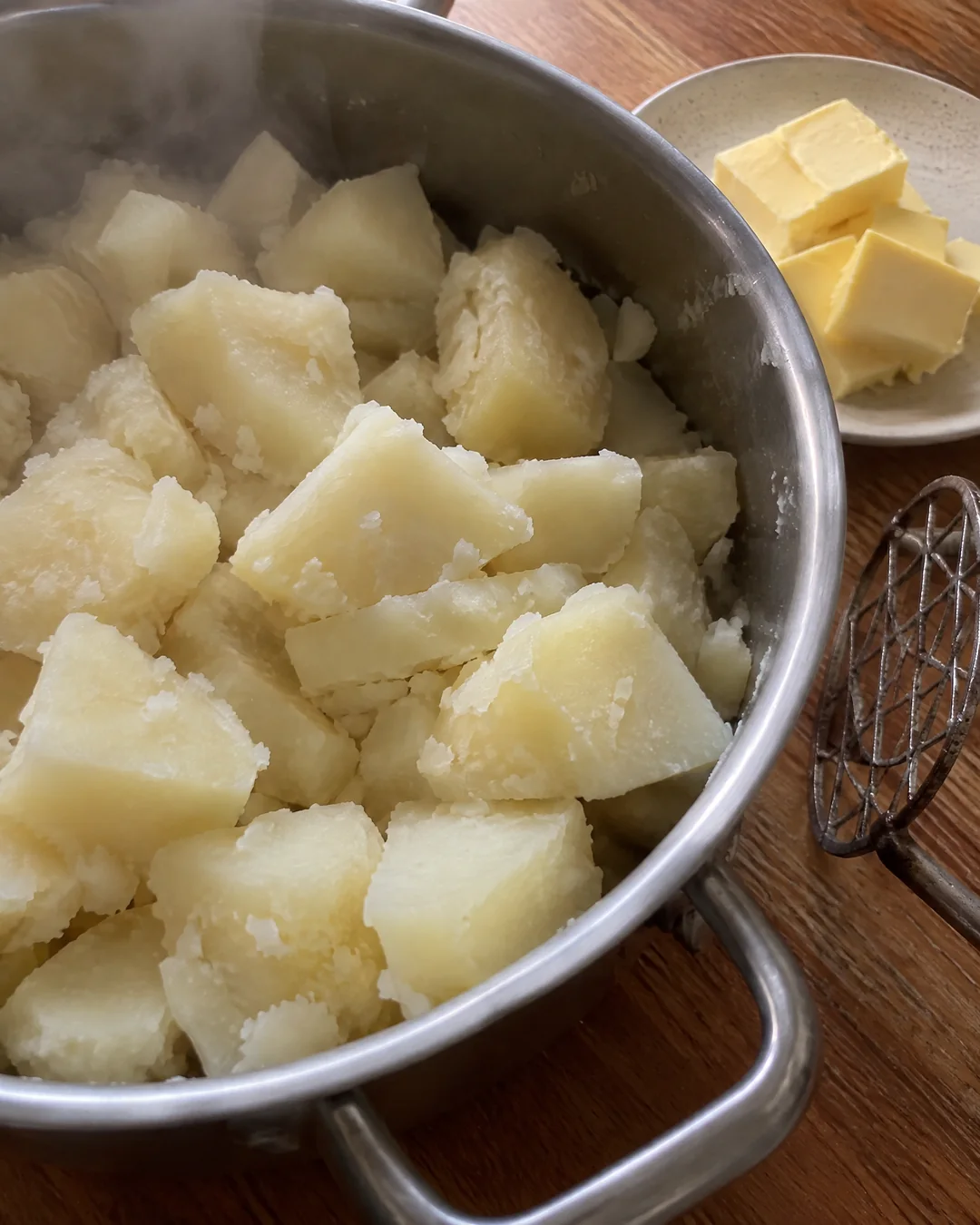
- Take the pot off the heat. Add all of the butter and mash by hand with a wire masher, or push the potatoes through a ricer and then fold the butter in, until the butter has melted in and the potatoes are broken up. Do not use an electric mixer.
- Pour in about half of the hot milk and mash it in. Add the rest a little at a time, mashing between additions, until the potatoes are as soft as you like them. You may not need all of the milk. Stop while they still hold a soft peak on the masher; fluffy with a few small lumps, not smooth like a sauce.
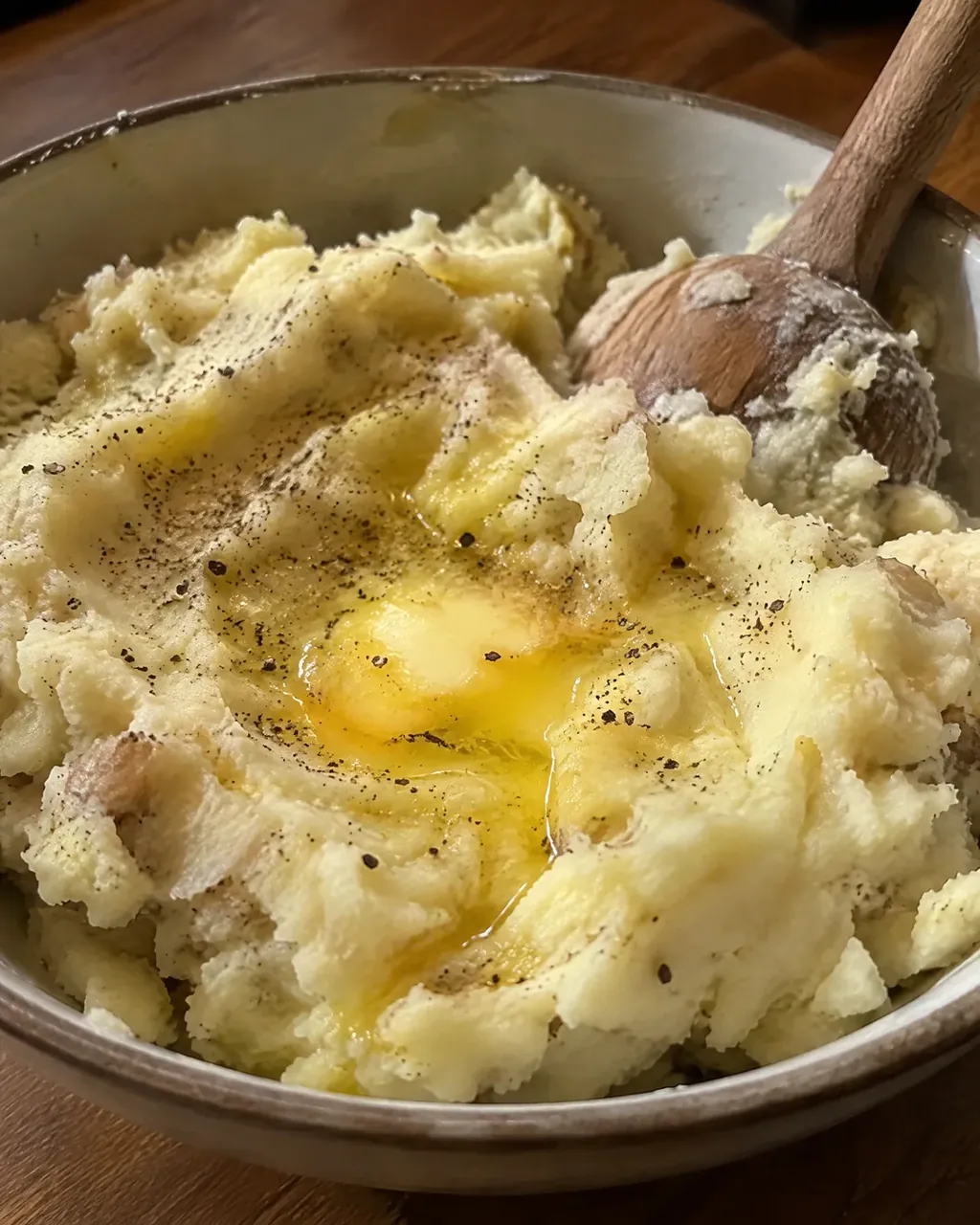
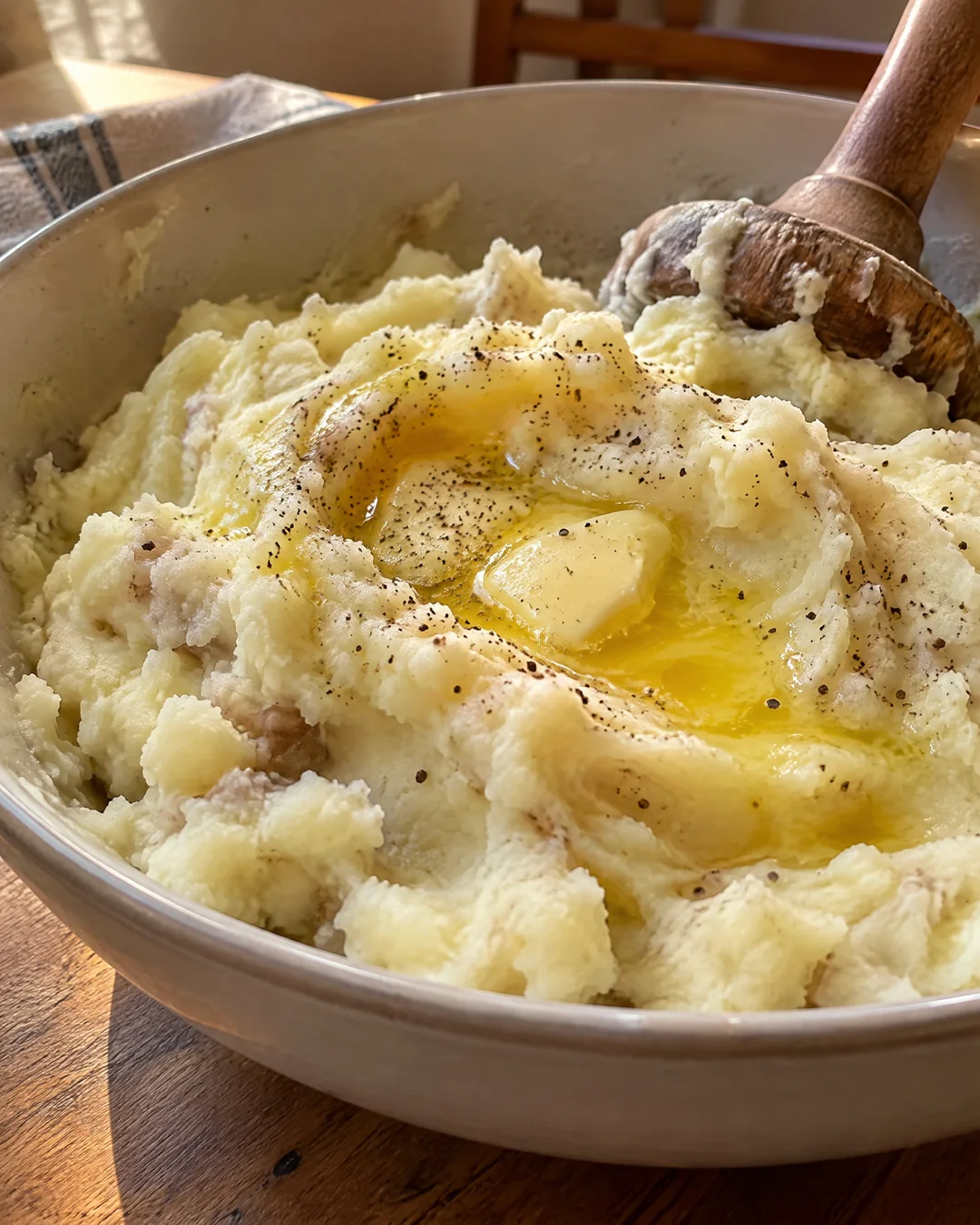
- Taste and add salt, more than you think, and a little pepper. Pile them into a warm bowl, make a well in the middle with the back of a spoon, and put a piece of butter in it to melt. Serve hot.
Tips that make the difference
- Salt the water well. A potato only takes in salt while it cooks; salting a finished mash never tastes the same.
- Start the potatoes in cold water, not boiling. They cook evenly from the outside in and do not fall apart.
- Butter first, always. Fat before liquid keeps the starch tender. Milk first and the butter never gets in.
- Keep the milk hot and add it slowly. Once the potatoes are too thin there is no going back.
Variations
- Sour cream mashed potatoes. Replace 1/2 cup of the milk with 1/2 cup sour cream (120g), added after the butter.
- Skins on. Scrub the russets well, leave the skins on, and mash them in. Rougher, and some families like it better.
- Garlic. Simmer 4 peeled garlic cloves in the water with the potatoes and mash them in.
- Make-ahead casserole. Spread the finished potatoes in a buttered 9 by 13 inch dish, dot with butter, cover with foil and refrigerate for up to 2 days. Reheat covered at 350°F (175°C) for 35 to 40 minutes.
Storage and make-ahead
To hold them for an hour before supper, set the pot in a larger pot of barely simmering water, cover, and stir once or twice. They stay hot without sticking or drying.
Leftovers keep, covered, in the refrigerator for 3 days. Reheat them in a saucepan over low heat with a splash of hot milk, stirring, or in a covered dish in the oven. The microwave works if you stir them every minute.
Cold leftover mashed potatoes make potato cakes: mix them with an egg, shape into patties, coat in flour and fry in butter until brown on both sides. In our town this was called using them up.
Frequently asked questions
Why are my mashed potatoes gluey?
They were beaten with an electric mixer or a food processor, or the wrong potato was used. Overworking bursts the starch cells and the starch turns stretchy and pasty. Mash by hand, stop when they come together, and use russets.
Why does the milk have to be hot?
Hot milk is absorbed evenly and keeps the potatoes hot and light. Cold milk chills them, makes them heavy, and you end up adding more of it trying to get the texture right.
Which potato is best for mashing?
Russets give the lightest, fluffiest mash because they are high in starch and low in water. Yukon Golds are the next choice, buttery and a little denser. Waxy red or new potatoes turn gummy.
Can I make mashed potatoes ahead?
Yes. Hold them over hot water for up to an hour, or spread them in a buttered dish, refrigerate up to 2 days, and reheat covered at 350°F for 35 to 40 minutes with a little more butter on top.
Russets, salted water, dried in the pot, butter first, hot milk slowly, and a masher in your hand instead of a plug in the wall. That is all my mother asked, and she was right at the table.
Old-Fashioned Mashed Potatoes (Butter First, Hot Milk, No Mixer)
Plain old-fashioned mashed potatoes done right: russets in salted water, drained and dried in the hot pot, mashed by hand with butter first and then hot milk a little at a time. Why cold milk and an electric mixer turn them to glue.
Ingredients
- 3 pounds russet potatoes (1.35kg), about 6 medium
- 1 tablespoon fine salt for the cooking water, plus more to taste
- 1/2 cup unsalted butter (1 stick, 113g), cut into pieces
- 1 to 1 1/4 cups whole milk
- Black pepper, to taste
- A little more butter for the top
Instructions
- Peel the potatoes and cut them into even chunks about 2 inches across, so there are no hard centers and no mushy edges. Rinse them in cold water to wash off the loose starch.
- Put the potatoes in a large pot, cover them with cold water by an inch, and add the tablespoon of salt. Bring to a boil over high heat, then turn the heat down and cook at a steady simmer for 15 to 20 minutes, until a fork slides into the biggest piece with no resistance. Do not boil them hard; it knocks the outsides to pieces before the middles are done.
- While the potatoes cook, warm the milk in a small saucepan over low heat until it steams. Keep it hot on the back of the stove. Have the butter cut and waiting.
- Drain the potatoes well, then put them back in the empty pot over low heat for about 1 minute with the lid off, shaking it now and then. The last of the water steams away and the potatoes look dry and floury at the edges. This is the step nobody tells you.
- Take the pot off the heat. Add all of the butter and mash by hand with a wire masher, or push the potatoes through a ricer and then fold the butter in, until the butter has melted in and the potatoes are broken up. Do not use an electric mixer.
- Pour in about half of the hot milk and mash it in. Add the rest a little at a time, mashing between additions, until the potatoes are as soft as you like them. You may not need all of the milk. Stop while they still hold a soft peak on the masher; fluffy with a few small lumps, not smooth like a sauce.
- Taste and add salt, more than you think, and a little pepper. Pile them into a warm bowl, make a well in the middle with the back of a spoon, and put a piece of butter in it to melt. Serve hot.