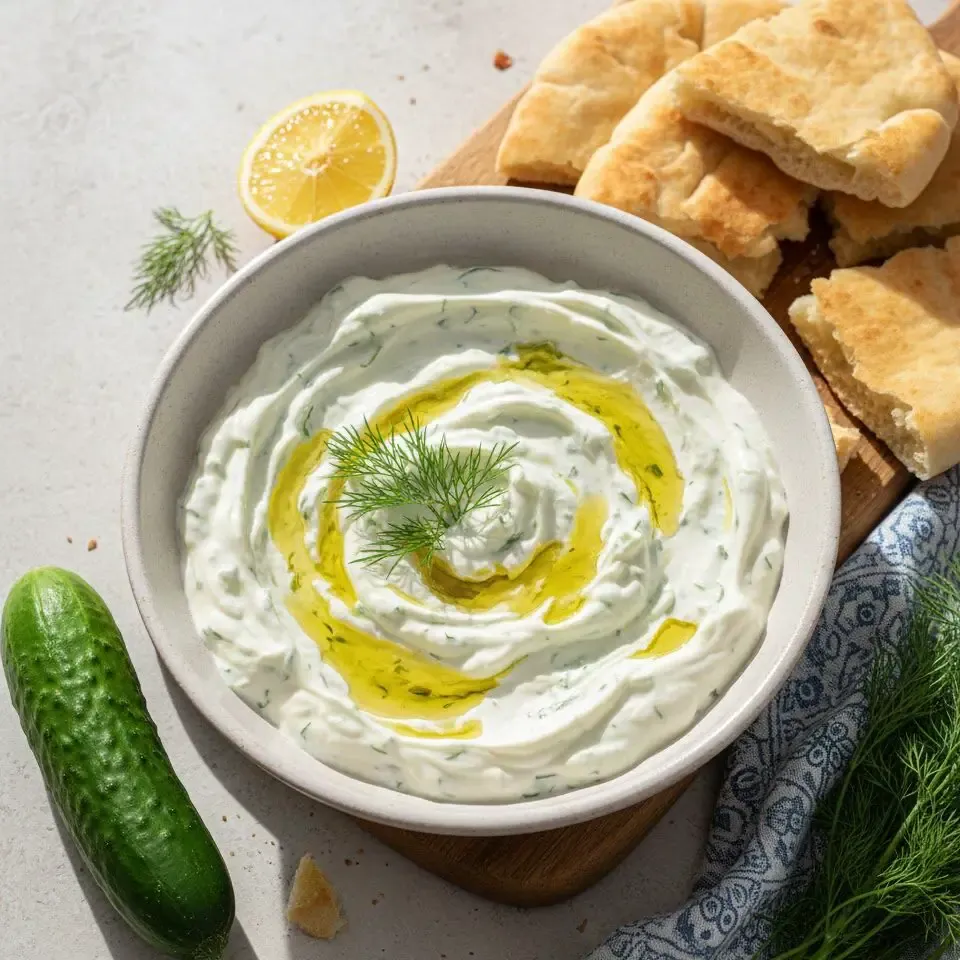
What Is Tzatziki?
Tzatziki is a traditional Greek dip and sauce made from strained yoghurt, grated cucumber, garlic, olive oil, and fresh herbs. The name entered English from the Modern Greek word “tzatziki,” which itself derives from the Turkish “cacik,” reflecting centuries of culinary exchange between Greece and the Ottoman Empire.
The roots of yoghurt-and-cucumber combinations stretch back over a thousand years. A 10th-century Arabic cookbook by the Abbasid author Ibn Sayyar al-Warraq described a yoghurt salad called “jajaq” that closely resembled the tzatziki we know today. Cucumbers, which originated in India and were cultivated across the Middle East for over 3,000 years, combined naturally with the fermented milk products that Central Asian and Turkic cultures had been making for millennia. By the time of the Ottoman Empire, yoghurt-and-garlic condiments had become an essential part of the meze tradition, with the 17th-century Ottoman traveller Evliya Celebi documenting dishes featuring yoghurt and garlic in his writings.
The Greek version of tzatziki is characterised by its use of thick, strained Greek yoghurt, bold garlic, olive oil, and fresh dill. Across the border in Turkey, cacik often uses diluted yoghurt with mint and can serve as a cold soup. In Persia, a similar dish called mast-o-khiar adds walnuts and sometimes raisins. In Cyprus, the related “talatouri” uses mint rather than dill. All share the same brilliant concept: cool, tangy yoghurt enlivened by fresh cucumber and aromatics.
If you enjoy fresh, vibrant dips and sauces, this homemade tzatziki pairs beautifully with our ultimate Mexican wrap, our chicken gyros recipe, and our grilled halloumi salad. All share that same spirit of fresh, bold flavours with minimal effort.
Ingredients for Homemade Tzatziki
Every ingredient earns its place. Read through the list before you begin.
| Ingredient | Quantity | Notes |
|---|---|---|
| Cucumber | 1/2, coarsely grated | Excess liquid squeezed out thoroughly |
| Greek yoghurt | 250 g | Full-fat for best creaminess |
| Garlic | 1 clove, minced | Fresh, finely minced or grated |
| Lemon juice | 1 tbsp | Freshly squeezed for the brightest flavour |
| Fresh dill | 1 tbsp, finely chopped | Fresh only; dried dill lacks the same brightness |
| Sea salt | Pinch | Fine sea salt dissolves evenly |
| Black pepper | Pinch | Freshly ground |
| Olive oil | 1 tbsp, plus extra for drizzling | Extra virgin for the best flavour |
Why Full-Fat Greek Yoghurt Matters
Full-fat Greek yoghurt provides the thick, creamy base that defines excellent tzatziki. Low-fat varieties contain more water and less richness, producing a thinner, less satisfying dip. Greek yoghurt is already strained once during production, which removes excess whey and concentrates the proteins and fats. This natural thickness means you do not need to add cream cheese, sour cream, or any thickening agents. For an even more authentic result, look for yoghurt made from sheep’s or goat’s milk, which delivers a tangier, more complex flavour.
The Secret: Squeezing the Cucumber Dry
Cucumber is mostly water. If you skip squeezing out the excess liquid, your tzatziki turns thin and watery within an hour as the cucumber continues to release moisture. Grate the cucumber coarsely, then place the gratings in a clean tea towel or double layer of kitchen paper. Squeeze firmly over the sink until very little liquid drips out. This single step is the difference between thick, scoopable tzatziki and a runny, disappointing puddle.
Fresh Dill vs Fresh Mint
This recipe uses fresh dill, which delivers a distinctive herby, slightly aniseed flavour that most people associate with Greek tzatziki. However, in Cyprus, the related dip “talatouri” uses fresh mint instead, which adds a cooler, more refreshing note. You can use either herb, or combine both for a more complex flavour. Whichever you choose, always use fresh herbs rather than dried; dried dill and mint lose most of their aromatic brightness and taste flat in a cold dip.
Equipment You Need
Tzatziki requires almost nothing:
- A box grater (coarse side)
- A clean tea towel or kitchen paper for squeezing
- A mixing bowl
- A spoon for stirring
- A serving bowl
No cooking equipment, no heat source, no timing. This is one of the simplest and most rewarding recipes you can make.
How to Make Homemade Tzatziki (Step-by-Step)
Follow these four simple steps for perfect tzatziki every time.
Step 1: Prepare the Cucumber
Cut the cucumber in half lengthways. If the seeds are large and watery, scrape them out with a teaspoon ahead of grating. Coarsely grate the cucumber using the large holes of a box grater. Transfer the gratings to a clean tea towel or a double layer of kitchen paper. Gather the edges together and squeeze firmly over the sink, wringing out as much liquid as possible. Continue squeezing until very little drips out. You will be surprised how much water comes out. Set the dry, squeezed cucumber aside.
[!TIP] For extra insurance against wateriness, sprinkle the grated cucumber with a pinch of salt and let it sit in a sieve for 15 minutes before squeezing. The salt draws out additional moisture through osmosis, giving you an even thicker tzatziki.
Step 2: Combine the Yoghurt Base
In a mixing bowl, combine the Greek yoghurt, minced garlic, lemon juice, chopped dill, olive oil, salt, and black pepper. Stir until everything is evenly distributed and the yoghurt looks smooth and creamy.
Step 3: Add the Cucumber
Add the squeezed, dry cucumber to the yoghurt mixture. Stir gently until the cucumber is evenly distributed throughout. Taste and adjust the seasoning, adding more salt, lemon juice, or garlic to suit your preference.
Step 4: Finish and Serve
Transfer the tzatziki to a serving bowl. Drizzle extra virgin olive oil over the top and garnish with a few extra sprigs of fresh dill. For the best flavour, cover and refrigerate for at least 30 minutes before serving. Chilling allows the garlic and lemon to mellow slightly and the flavours to meld together into a harmonious, cohesive dip.
Troubleshooting Your Tzatziki
The Tzatziki Is Too Watery
The most common problem, and it almost always means the cucumber was not squeezed dry enough. Next time, squeeze harder and longer. If the tzatziki is already made and too thin, stir in a tablespoon of extra Greek yoghurt to thicken it. You can also place the finished tzatziki in a sieve lined with kitchen paper set over a bowl, and refrigerate for an hour to drain off excess liquid.
The Garlic Is Too Strong
Raw garlic intensity varies greatly between cloves. If your tzatziki tastes aggressively garlicky, add another tablespoon of yoghurt and a squeeze of lemon juice to balance the flavour. The garlic also mellows significantly after 30 minutes in the fridge, which is why chilling before serving is recommended. For a milder garlic flavour from the start, grate the clove on a microplane rather than mincing; the finer texture distributes the garlic more evenly.
The Tzatziki Tastes Bland
Bland tzatziki usually needs more salt, more lemon juice, or more garlic. Season boldly. Also check that you used full-fat Greek yoghurt; low-fat versions taste less rich and carry flavour less effectively. A splash of extra virgin olive oil stirred through also adds body and roundness.
The Texture Is Too Thick
If the tzatziki is thicker than you prefer, thin it with a teaspoon of cold water or a splash of lemon juice, stirring gently until you reach the desired consistency. This is more common when using sheep’s milk yoghurt, which tends to be very thick.
The Dill Turned Brown
Fresh dill turns brown quickly once chopped, especially in contact with acid (lemon juice). For the greenest, freshest-looking tzatziki, add the chopped dill last and serve promptly. If making ahead, reserve the dill garnish and add it just before serving.
Recipe Variations
Tzatziki adapts beautifully to different herbs and flavours. Here are four variations to experiment with.
Minted Tzatziki
Replace the fresh dill with one tablespoon of finely chopped fresh mint. This creates a cooler, more refreshing version reminiscent of the Cypriot talatouri. Mint tzatziki pairs especially well with lamb dishes and spiced grilled meats.
Herby Tzatziki
Use a combination of half a tablespoon each of fresh dill and fresh mint, and add one teaspoon of finely chopped fresh flat-leaf parsley. The combination of three herbs creates a more complex, layered flavour that works with almost anything.
Spicy Tzatziki
Add half a teaspoon of ground cumin and a pinch of dried chilli flakes to the yoghurt base. The warmth of cumin and the gentle heat of chilli transform the flavour profile and make this version ideal for serving alongside kebabs and spiced grilled meats. Our black pepper chicken recipe pairs brilliantly with this spicier version.
Lemon and Garlic Tzatziki (Extra Zingy)
Double the lemon juice to two tablespoons and add a teaspoon of white wine vinegar for maximum zing. This sharp, punchy version cuts through rich, fatty dishes beautifully and works as a salad dressing when thinned with a little olive oil.
Serving and Storage
How to Serve Homemade Tzatziki
Serve tzatziki cold or at cool room temperature. Drizzle with extra virgin olive oil and garnish with fresh dill just before serving. Tzatziki works in dozens of ways:
- As a dip with warm pitta bread, flatbreads, or crudites
- Alongside grilled chicken, lamb, or beef
- Spooned over roasted vegetables, baked potatoes, or rice bowls
- As a spread inside wraps, burgers, and sandwiches
- As a cool accompaniment to spicy dishes, curries, and flavoured rice
- Served alongside falafel, stuffed vine leaves, or a full meze spread
For a stunning meze platter, serve tzatziki alongside our mango chutney and our red onion marmalade for a spread that covers every flavour from cool and creamy to sweet and tangy.
Storage Guidelines
Store homemade tzatziki in a sealed container in the fridge for up to three days. The flavours actually improve after a few hours of chilling, making it an ideal make-ahead dip. However, the cucumber may release a small amount of additional water over time, so give it a quick stir before serving. If water has pooled on the surface, simply drain it off.
Can You Freeze Tzatziki?
Freezing is not recommended. The cucumber breaks down on thawing and releases large amounts of water, turning the tzatziki thin and grainy. The yoghurt can also separate and develop a gritty texture after freezing. For the best results, always make tzatziki fresh and consume within three days.
Frequently Asked Questions (FAQ)
Is tzatziki Greek or Turkish?
Both cultures have strong claims. The word “tzatziki” derives from the Turkish “cacik,” and yoghurt-cucumber-garlic combinations appear in Ottoman, Persian, and Arab cooking traditions stretching back over a thousand years. The Greek version, made with thick strained yoghurt, garlic, dill, and olive oil, is the most widely recognised internationally. The Turkish cacik often uses diluted yoghurt and mint, and can serve as a cold soup. Both dishes celebrate the same brilliant combination of cool yoghurt and fresh cucumber.
What is the difference between tzatziki and raita?
Both are yoghurt-based condiments served alongside main dishes, but they come from different culinary traditions. Tzatziki is Greek, uses strained yoghurt, cucumber, garlic, lemon, and dill, and has a thick, scoopable consistency. Raita is Indian, typically uses unstrained yoghurt, and can include a variety of vegetables (cucumber, onion, tomato) plus spices like cumin and coriander. Raita is generally thinner and more lightly seasoned than tzatziki.
Why does my tzatziki turn watery after sitting?
Cucumber releases water over time, especially when salt is present. Squeezing the grated cucumber thoroughly before adding it minimises this, but some water release is natural during storage. Give the tzatziki a quick stir before serving, or drain off any pooled liquid.
Can I use regular yoghurt instead of Greek yoghurt?
You can, but the result will be much thinner. Regular yoghurt has not been strained and contains significantly more whey. If you only have regular yoghurt, strain it through a cheesecloth or fine-mesh sieve set over a bowl in the fridge for two to three hours first to remove excess liquid.
How far ahead can I make tzatziki?
Tzatziki benefits from resting in the fridge for at least 30 minutes to let the flavours meld. You can make it up to 24 hours ahead with excellent results. Beyond that, the garlic flavour intensifies and the cucumber may release more water. For a gathering, prepare the base (yoghurt, garlic, lemon, dill) up to a day ahead, and add the squeezed cucumber and olive oil just before serving for the freshest result.
Should I peel the cucumber before grating?
Peeling is optional. English cucumbers (the long, thin-skinned variety) have a mild, tender skin that grates nicely and adds flecks of green colour. Regular cucumbers may have thicker, waxy skin that is better peeled. If in doubt, peel half the cucumber for a compromise between colour and smoothness.
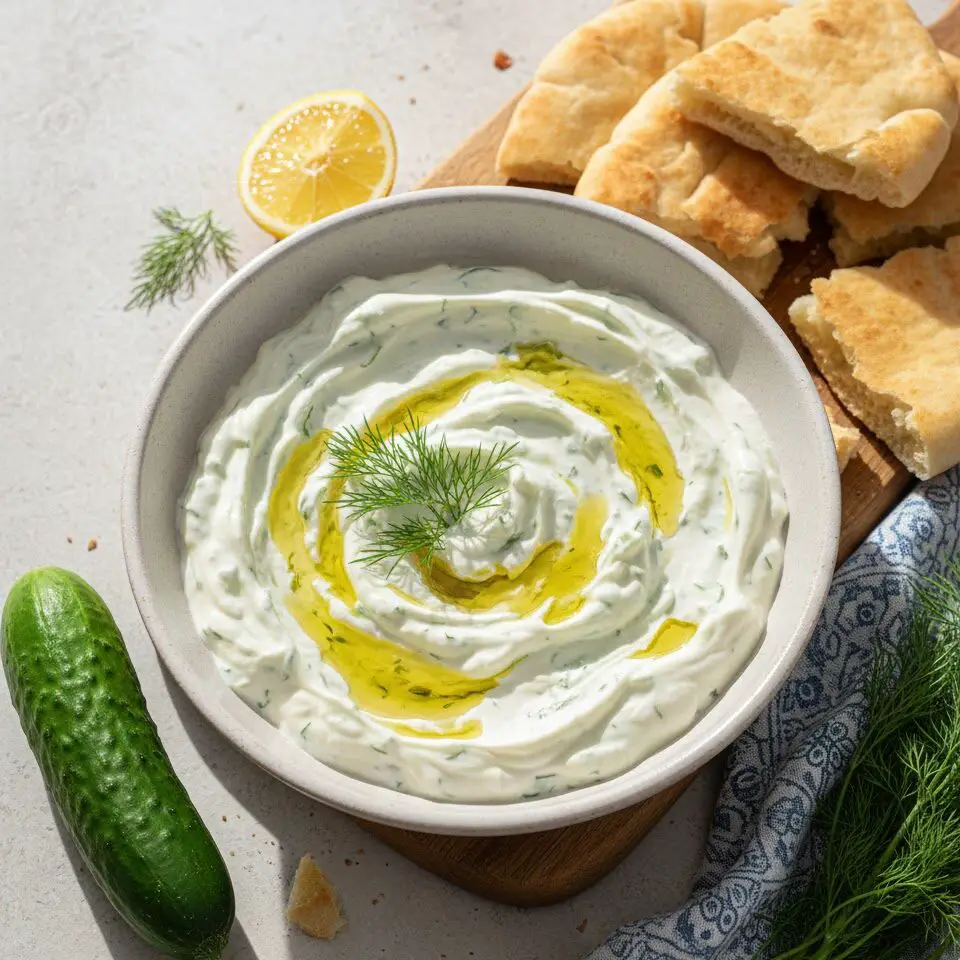
Homemade Tzatziki Recipe: Cool, Creamy Greek Yoghurt and Cucumber Dip
Cool, creamy homemade tzatziki with Greek yoghurt, cucumber, garlic, lemon, and fresh dill. Ready in 10 minutes with zero cooking. Serves 4.
Ingredients
- 1/2 cucumber, coarsely grated, excess liquid squeezed out
- 250 g Greek yoghurt (full-fat for best creaminess)
- 1 clove garlic, minced
- 1 tbsp lemon juice, freshly squeezed
- 1 tbsp fresh dill, finely chopped
- Pinch of sea salt
- Pinch of freshly ground black pepper
- 1 tbsp olive oil (extra virgin), plus extra for drizzling
Instructions
- Coarsely grate the cucumber and squeeze out as much water as possible using a clean tea towel or kitchen paper. Squeeze firmly until very little liquid drips out.
- In a mixing bowl, combine the Greek yoghurt, minced garlic, lemon juice, chopped dill, olive oil, sea salt, and black pepper. Stir until smooth and evenly combined.
- Add the squeezed cucumber and stir gently until evenly distributed throughout the yoghurt mixture.
- Transfer to a serving bowl. Drizzle with extra virgin olive oil and garnish with extra fresh dill. Chill for at least 30 minutes before serving for the best flavour.
Nutrition
- Serving
- 1 serving (about 80 g)
- Calories
- 80 calories
- Sugar
- 3
- Sodium
- 120
- Fat
- 5
- Saturatedfat
- 2
- Unsaturatedfat
- 3
- Transfat
- 0
- Carbohydrate
- 4
- Fiber
- 0
- Protein
- 5
- Cholesterol
- 8