What Is Derbyshire Pudding?
Derbyshire pudding belongs to a proud family of regional British tarts and puddings that define the baking heritage of the Peak District. The county of Derbyshire sits at the heart of England’s traditional pudding country, home to the most famous accidental bake in British history: the Bakewell Pudding. According to The Old Original Bakewell Pudding Shop, which has operated in the town of Bakewell since 1860, the original pudding was created around 1820 when the cook at the White Horse Inn (now the Rutland Arms Hotel) misunderstood instructions from the landlady, Mrs. Greaves. Instead of mixing an egg and almond paste into the pastry for a jam tart, the cook spread the mixture on top of the jam. The result was so delicious that it became a local institution.
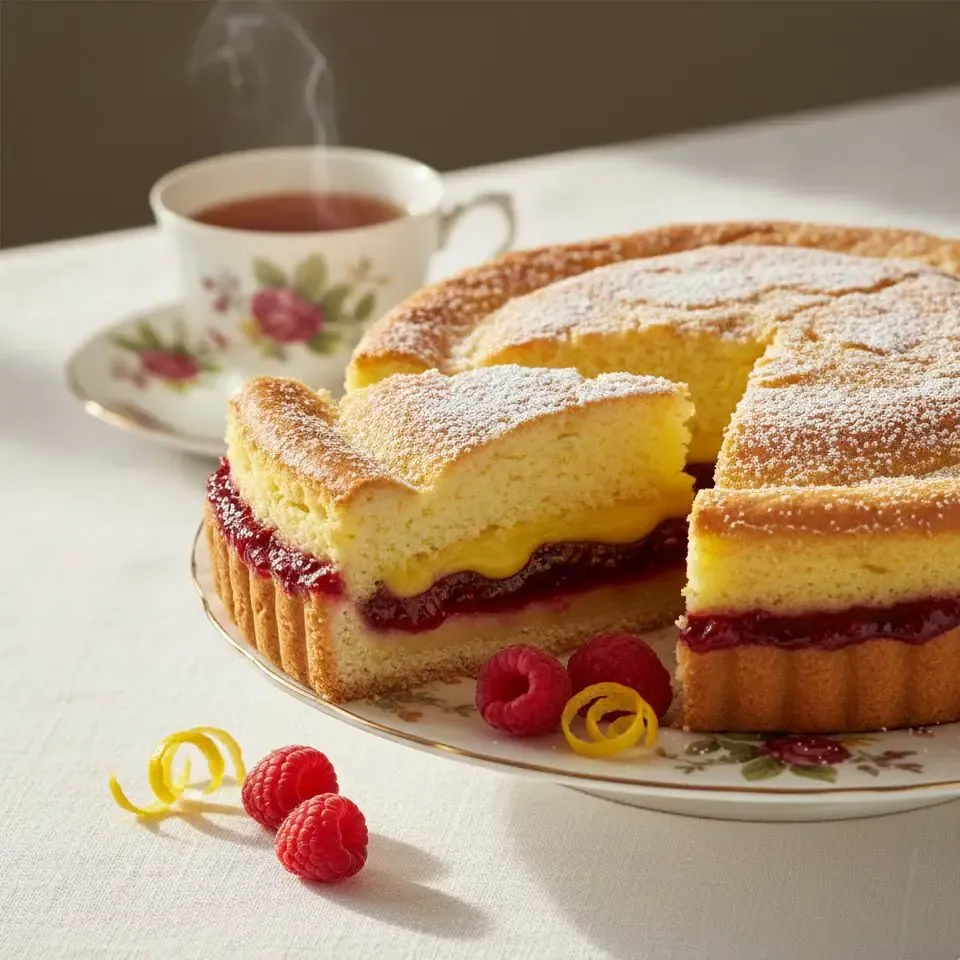
Derbyshire pudding takes inspiration from this tradition but follows its own path. Where a Bakewell Pudding uses puff pastry, egg custard, and almond paste, this Derbyshire pudding uses sweet shortcrust pastry, a double layer of raspberry jam and lemon curd, and a zesty lemon sponge topping. The lemon curd adds a bright, tangy dimension that the original Bakewell never had, and the sponge bakes to a golden, springy finish rather than a dense custard set. Think of it as a cousin of the Bakewell, born in the same beautiful county but with its own identity: brighter, lighter, and with a citrus sparkle that sings against the deep fruitiness of the jam.
The Peak District boasts several other regional bakes worth knowing about. Visit Peak District lists Buxton Pudding (a raspberry preserve tart with buttery pastry), Derbyshire oatcakes, Ashbourne gingerbread, and tharf cakes among the county’s traditional specialities. This Derbyshire pudding sits comfortably in that tradition: honest ingredients, simple technique, and a result that tastes far more impressive than the effort involved.
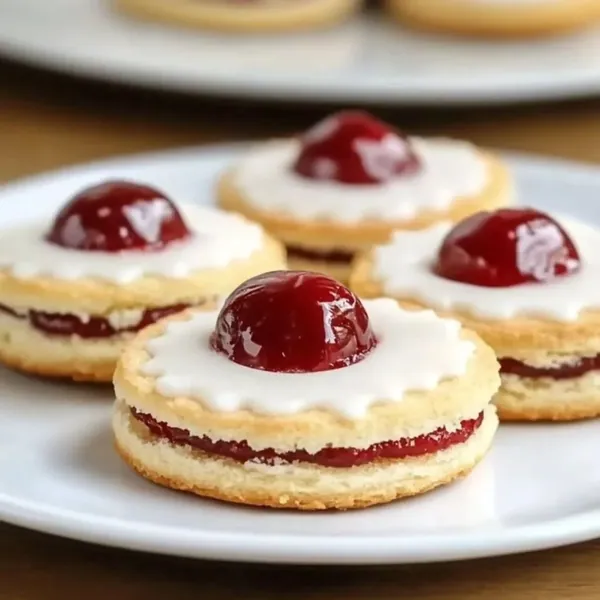
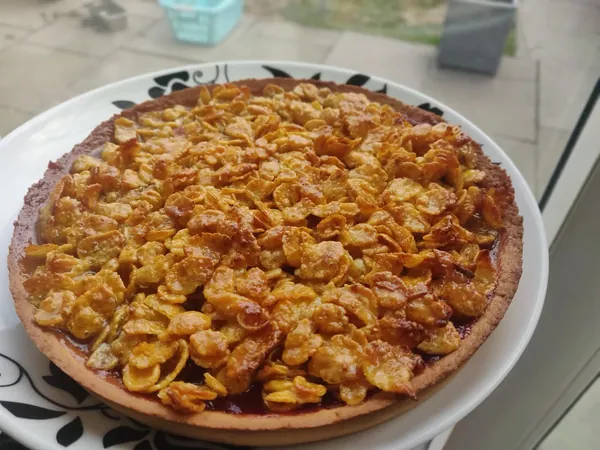
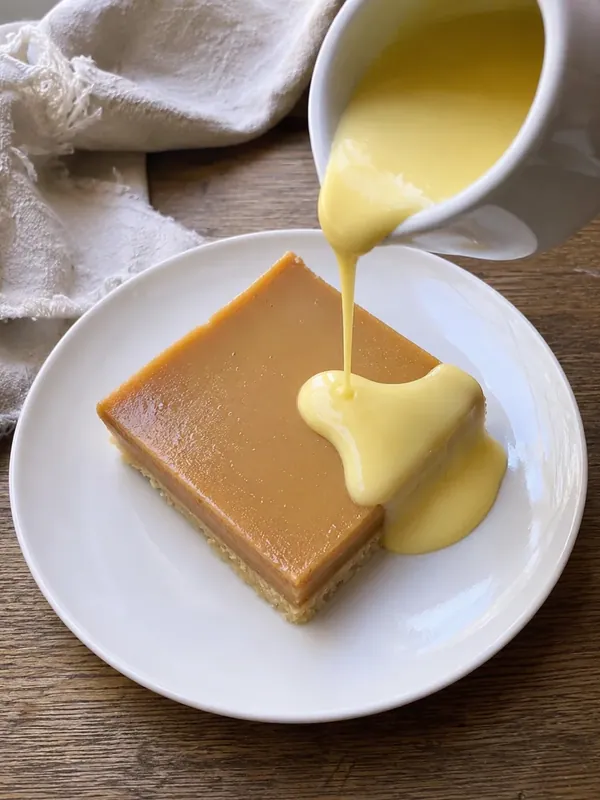
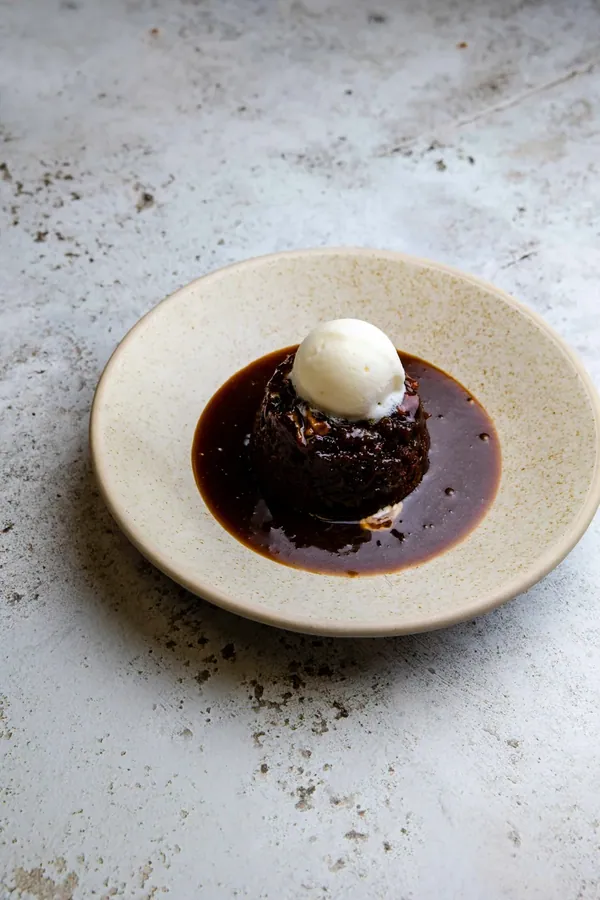
If you enjoy traditional British tarts, you will also find this recipe pairs beautifully with our treacle tart recipe, our cherry Bakewell recipe, and our mini Bakewell tarts. All share that same love of golden pastry, sweet fillings, and the comforting satisfaction of a properly made British pudding.
Ingredients for Derbyshire Pudding
Every ingredient earns its place in this recipe, contributing structure, flavour, or moisture. Read through the complete list before you begin.
Pastry
| Ingredient | Quantity | Notes |
|---|---|---|
| Sweet shortcrust pastry | 1 sheet (about 250 g) | Shop-bought or homemade |
Filling
| Ingredient | Quantity | Notes |
|---|---|---|
| Raspberry jam | 2 tbsp | Good-quality with visible fruit |
| Lemon curd | 2 tbsp | Shop-bought or homemade for best flavour |
Sponge Topping
| Ingredient | Quantity | Notes |
|---|---|---|
| Unsalted butter | 100 g | Softened to room temperature |
| Caster sugar | 100 g | Fine texture dissolves easily into batter |
| Eggs | 2 | At room temperature, beaten |
| Self-raising flour | 100 g | Sifted for a lighter sponge |
| Lemon zest | 1 lemon | Finely grated, unwaxed |
| Salt | Pinch | Enhances all the sweet flavours |
| Icing sugar | For dusting | A fine dusting for the finished tart |
The Jam and Lemon Curd Combination
The double layer of raspberry jam and lemon curd creates the signature flavour of this tart. The raspberry delivers deep, fruity sweetness while the lemon curd adds a bright, tangy contrast. Together they form a jewel-coloured layer beneath the sponge that melts into a glossy, luscious filling during baking. You can swirl the two together gently with the tip of a knife for a marbled effect, or keep them as separate layers for a cleaner visual contrast when you slice the tart. Either way, the flavour combination is gorgeous.
Use the best-quality jam and curd you can find. Cheap jam tastes overly sweet and lacks fruit depth, while quality raspberry jam with visible seeds and fruit pieces adds genuine berry flavour. For the lemon curd, homemade gives the brightest, most citrusy result, but a good shop-bought curd from a brand like Wilkin and Sons works perfectly. Our strawberry jam recipe uses the same principle of quality fruit giving the best results.
Smart Substitutions
Swap the raspberry jam for strawberry, blackcurrant, or apricot jam to change the flavour profile. Replace the lemon curd with orange marmalade for a deeper, more warming version that suits autumn and winter. For a completely lemon-forward tart, use lemon curd in place of both the jam and curd layers and increase to three tablespoons.
Equipment You Need
- A 20 to 23 cm loose-bottomed tart tin
- A rolling pin
- A fork for pricking the pastry
- A large mixing bowl
- An electric hand whisk or wooden spoon
- A spatula or palette knife for spreading
- A fine-mesh sieve for dusting icing sugar
- A wire cooling rack
A loose-bottomed tart tin allows you to remove the finished pudding cleanly without damaging the pastry sides. If you do not own one, a standard pie dish works, but you will need to serve directly from the dish.
How to Make Derbyshire Pudding (Step-by-Step)
Follow these detailed steps for a perfectly crisp pastry base, a beautiful jam-and-curd layer, and a golden sponge topping.
Preparing the Pastry Case
Step 1: Preheat and Grease
Set your oven to 180 degrees Celsius (fan). Lightly grease a 20 to 23 cm loose-bottomed tart tin with butter.
Step 2: Line the Tin
Roll out the shortcrust pastry on a lightly floured surface to a thickness of about 3 mm. Carefully drape the pastry over the tart tin and press it gently into the edges and corners. Trim any excess pastry from the rim using a sharp knife or by rolling the rolling pin across the top of the tin. Prick the base all over with a fork; this prevents the pastry from puffing up during baking. Place the lined tin in the fridge for 10 minutes to firm the butter and help the pastry hold its shape.
[!TIP] Save any pastry trimmings. Re-roll them and use a small cutter to make jam tarts with any leftover filling, so nothing goes to waste.
Building the Filling
Step 3: Spread the Jam and Lemon Curd
Remove the chilled pastry case from the fridge. Spoon the raspberry jam onto the base and spread it evenly across the entire surface using the back of a spoon. Add the lemon curd in small dollops over the jam. You can swirl the two together gently with the tip of a knife for a beautiful marbled effect, or leave them as distinct layers. Either approach works beautifully; the flavour combination remains the same.
Making the Sponge
Step 4: Cream the Butter and Sugar
In a large mixing bowl, beat the softened butter and caster sugar together using an electric hand whisk or a wooden spoon until the mixture turns pale, light, and fluffy. This takes about three to four minutes with an electric whisk or five to six minutes by hand. Proper creaming incorporates air into the mixture, which gives the sponge topping its lift and lightness.
Step 5: Add the Eggs
Beat the eggs together in a small jug. Add them to the creamed butter and sugar gradually, a little at a time, beating well after each addition. Adding the eggs slowly prevents the mixture from curdling. If it does start to split, add a tablespoon of the measured flour and beat vigorously to bring it back together.
Step 6: Fold in the Flour, Zest, and Salt
Sift the self-raising flour into the bowl. Add the finely grated lemon zest and the pinch of salt. Fold everything together gently using a large metal spoon or spatula until the batter is smooth and uniform. Avoid over-mixing at this stage; gentle folding preserves the air you incorporated during creaming and keeps the sponge light.
Assembling and Baking
Step 7: Top the Tart
Carefully spoon the sponge mixture over the jam and curd layer. Use an offset spatula or the back of a spoon to spread it out gently, covering the entire surface as evenly as possible. Take care not to disturb the jam layer underneath; a gentle hand keeps the layers distinct and prevents the jam from mixing into the sponge.
Step 8: Bake Until Golden and Springy
Place the tart on the middle shelf of the oven and bake for 30 to 35 minutes. The pudding is ready when the sponge top turns a warm golden colour and springs back when you press it gently with a fingertip. A skewer inserted into the sponge (not through to the jam layer) should come out clean. The pastry edges should look golden and crisp.
Finishing
Step 9: Cool and Dust
Allow the pudding to cool in the tin for 15 minutes before carefully removing it. Place it on a wire rack and dust the top generously with icing sugar through a fine-mesh sieve. The white icing sugar against the golden sponge creates a beautiful, professional-looking finish.
Troubleshooting Your Derbyshire Pudding
The Pastry Base Is Soggy
A soggy base usually means the pastry was not pricked thoroughly enough, or the filling was too wet. Prick the base generously with a fork before chilling. For extra insurance, blind bake the pastry case before adding the filling: line the pastry with baking parchment, fill with baking beans, and bake for 12 minutes. Remove the beans and paper, then bake for another 3 minutes until the base looks dry and sandy. Then add the jam, curd, and sponge topping.
The Sponge Sank in the Middle
Sinking usually results from opening the oven door during the first 20 minutes of baking, or from under-creaming the butter and sugar. Keep the door closed until the sponge has set its structure. Cream the butter and sugar for at least three minutes with an electric whisk until genuinely pale and fluffy before adding the eggs.
The Jam Bubbled Up Through the Sponge
A little jam bubbling through is normal and even adds to the rustic charm. If you find too much jam breaking through, make sure you spread the sponge mixture gently and evenly, without gaps that allow the liquid jam to push upward. Using slightly thicker, high-fruit-content jam also helps, as it sets more firmly than thin, runny jam.
The Pastry Shrank During Baking
Pastry shrinks when it was not chilled long enough before baking, or when it was stretched during lining. Always press the pastry into the tin gently without pulling it, and chill for a full 10 minutes to let the gluten relax. Trim the edges after chilling, not before. Our old school caramel tart uses the same pastry principles if you want more practice with tart cases.
The Sponge Is Dry
A dry sponge usually means overbaking. Start checking at 28 minutes and remove the tart as soon as the sponge springs back. Also ensure you measured the butter and eggs accurately; too little fat or liquid produces a drier result.
Recipe Variations
Derbyshire pudding adapts beautifully to different flavour combinations while keeping its essential layered character.
Orange Marmalade Derbyshire Pudding
Replace the lemon curd with 2 tablespoons of good-quality orange marmalade and swap the lemon zest in the sponge for orange zest. The marmalade adds a deeper, more bittersweet note that works beautifully in colder months.
Blackcurrant and Lemon Pudding
Swap the raspberry jam for blackcurrant jam. The intense, tart flavour of blackcurrant pairs magnificently with the lemon curd and creates a striking deep purple layer beneath the golden sponge.
Almond Sponge Derbyshire Pudding
Replace 25 g of the self-raising flour with 25 g of ground almonds and add half a teaspoon of almond extract to the batter. This variation nudges the pudding closer to a traditional Bakewell while keeping the lemon curd layer for brightness. Scatter a handful of flaked almonds over the top before baking for a beautiful finish.
Mixed Berry Pudding
Replace the raspberry jam with a mixed berry jam (blueberry, raspberry, and strawberry) and omit the lemon curd. Add the zest of one lemon to the sponge as normal. This produces a simpler, fruit-forward version with a deep berry flavour.
Serving and Storage
How to Serve Derbyshire Pudding
Serve Derbyshire pudding slightly warm or at room temperature. Cut into eight generous wedges and dust each slice with extra icing sugar if you like. A splash of single cream poured over the top, a dollop of Greek yoghurt, or a scoop of vanilla ice cream all complement the tart beautifully. For a proper afternoon tea, serve alongside a pot of strong tea and perhaps a few traditional Welsh cakes or Viennese fingers for a generous spread.
Storage Guidelines
Store any leftover Derbyshire pudding in an airtight tin or container at room temperature for up to two to three days. The sponge stays moist thanks to the jam and curd layer underneath, which continues to release moisture into the crumb as it rests. Refrigerate if the weather is warm, but bring the tart back to room temperature before serving for the best flavour and texture.
Can You Freeze Derbyshire Pudding?
Yes, this pudding freezes well for up to one month. Wrap the whole tart (or individual slices) tightly in cling film and place in a freezer-safe bag. Defrost at room temperature for two to three hours and warm gently in the oven at 150 degrees Celsius for 10 minutes before serving.
Frequently Asked Questions (FAQ)
What is the difference between a Bakewell pudding and a Bakewell tart?
A Bakewell Pudding uses puff pastry, a layer of jam, and a rich egg-and-almond custard filling that sets softly during baking. A Bakewell Tart uses shortcrust pastry, a layer of jam, a frangipane sponge filling, and is usually topped with white icing and a glace cherry. The pudding is the older and more traditional of the two, originating from the town of Bakewell in Derbyshire around 1820.
Is Derbyshire pudding the same as Bakewell pudding?
No, they are different bakes. Both come from the same county and share the tradition of pastry with a jam layer and a topping, but Derbyshire pudding uses a lemon curd layer alongside the jam and a lemon-zested sponge topping, while Bakewell Pudding uses an almond-based egg custard. Derbyshire pudding is brighter and more citrusy; Bakewell Pudding is richer and more almond-heavy.
Can I use shop-bought pastry for Derbyshire pudding?
Yes, a good-quality shop-bought sweet shortcrust pastry works perfectly and saves time. Ready-rolled pastry sheets are especially convenient as they fit standard tart tins with minimal trimming. If you prefer to make your own pastry, use 175 g plain flour, 85 g cold cubed butter, 25 g icing sugar, one egg yolk, and one to two tablespoons of cold water.
Do I need to blind bake the pastry?
Blind baking is optional but recommended if you want an extra-crisp base. The jam and sponge layers add moisture during baking, which can soften the pastry underneath. Blind baking for 12 minutes with beans, followed by 3 minutes without, sets the base firmly and prevents any sogginess. If you are short on time, pricking the base well with a fork and chilling for 10 minutes provides a reasonable alternative.
Can I make Derbyshire pudding ahead of time?
Yes, this pudding keeps well and actually tastes excellent the day after baking, once the flavours have had time to meld. Bake, cool completely, and store in an airtight tin at room temperature. Warm gently in a low oven before serving if you prefer it warm.
What can I serve with Derbyshire pudding?
A splash of single cream, a dollop of creme fraiche, Greek yoghurt, or a scoop of vanilla ice cream all pair beautifully. For a classic British tea-time experience, serve with a pot of strong English breakfast tea or Earl Grey.
Derbyshire Pudding Recipe: Jam and Lemon Curd Tart with Sponge Topping
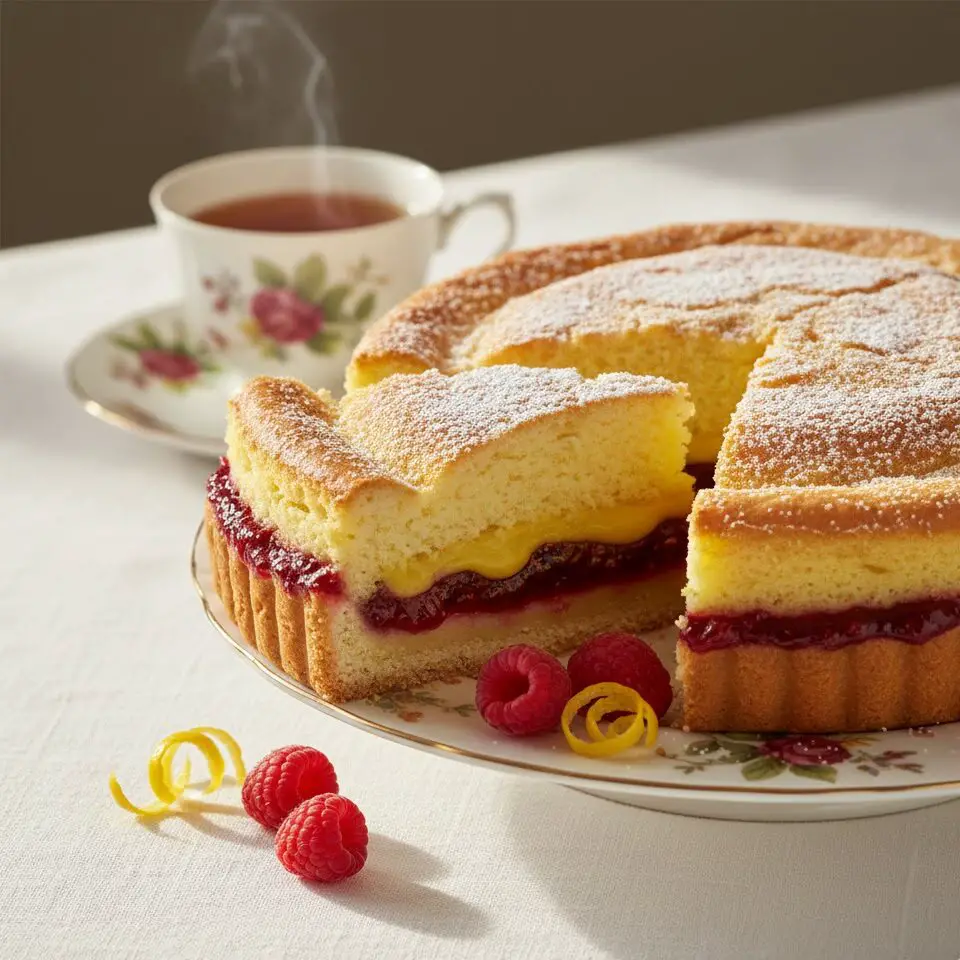
A beautiful Derbyshire pudding with raspberry jam, tangy lemon curd, and a golden lemon sponge topping in crisp sweet shortcrust pastry. Inspired by Peak District baking traditions. Serves 8.
Ingredients
- 1 sheet sweet shortcrust pastry (about 250 g), or homemade
- 2 tbsp raspberry jam (good quality with visible fruit)
- 2 tbsp lemon curd (shop-bought or homemade)
- 100 g unsalted butter, softened
- 100 g caster sugar
- 2 eggs, beaten, at room temperature
- 100 g self-raising flour, sifted
- Zest of 1 lemon, finely grated
- Pinch of fine sea salt
- Icing sugar, for dusting
Instructions
- Preheat the oven to 180 degrees Celsius (fan). Lightly grease a 20 to 23 cm loose-bottomed tart tin.
- Roll out the shortcrust pastry and line the tart tin, pressing gently into the edges. Trim the excess, prick the base all over with a fork, and chill for 10 minutes.
- Spread the raspberry jam evenly over the chilled pastry base. Add the lemon curd in dollops and swirl gently, or keep as separate layers.
- In a large bowl, cream the softened butter and caster sugar until pale, light, and fluffy (3 to 4 minutes with an electric whisk).
- Gradually beat in the eggs, a little at a time, mixing well after each addition.
- Sift in the self-raising flour, add the lemon zest and salt, and fold gently until smooth.
- Carefully spoon the sponge mixture over the jam and curd, spreading evenly to cover the surface.
- Bake on the middle shelf for 30 to 35 minutes until golden and springy to the touch.
- Cool in the tin for 15 minutes, then remove and dust generously with icing sugar.
Nutrition
- Serving
- 1 slice
- Calories
- 320 calories
- Sugar
- 22
- Sodium
- 150
- Fat
- 16
- Saturatedfat
- 9
- Unsaturatedfat
- 5
- Transfat
- 0
- Carbohydrate
- 40
- Fiber
- 1
- Protein
- 4
- Cholesterol
- 85