In this article
My mother made scrambled eggs for my father every morning for forty years, and his were always soft, glossy and yellow, never once dry. When I married, mine came out like little yellow erasers, and she watched me make them exactly once before she told me what I was doing wrong. I was not overcooking them in the pan. I was finishing them on the plate.
Eggs carry their heat with them. Take them off the stove when they look done and they keep cooking on the way to the table, and by the time you sit down they are firm, tight and weeping water. The fix is to stop early, when the eggs still look a little wet and glossy, and let that last bit of heat finish them. The rest is patience: butter, low heat, and a spatula pushed slowly across the pan so the eggs set in big, soft folds instead of crumbs. And the salt goes in at the very end.
Why this creamy scrambled eggs works
- Low heat. Egg proteins tighten and squeeze out water when they cook fast. Gentle heat lets them set soft.
- Big slow folds. Pushing the eggs slowly across the pan makes large curds that stay moist inside. A fast fork makes small dry crumbs.
- Off the heat while still wet. The carryover heat finishes them on the way to the plate.
- Salt at the end. Salting the raw eggs and letting them sit can make them watery. My mother salted them on the plate.
- No milk, no water. Extra liquid separates out and pools. Butter gives all the creaminess you need.
Ingredients
Serves 2. For 6 eggs use a 10 inch skillet and 3 tablespoons of butter, and allow a minute or two longer.
For 2 servings
- 4 large eggs
- 1 1/2 tablespoons unsalted butter (21g)
- Fine salt, to taste
- Freshly ground black pepper, to taste
- Buttered toast, to serve
A nonstick or well-seasoned skillet 8 to 9 inches across is the right size for 4 eggs: the eggs should cover the bottom in a layer about half an inch deep.
How to make creamy scrambled eggs
- Crack the eggs into a bowl and beat them well with a fork until no streaks of white remain and the color is even.
- Set an 8 to 9 inch skillet over low heat and add the butter. Let it melt and foam gently without browning.
- Pour in the eggs and leave them alone for about 20 seconds, until the edges just begin to set.
- With a silicone spatula, push the eggs slowly from the edge to the center, letting the raw egg run into the gaps. Keep making long slow passes across the pan.
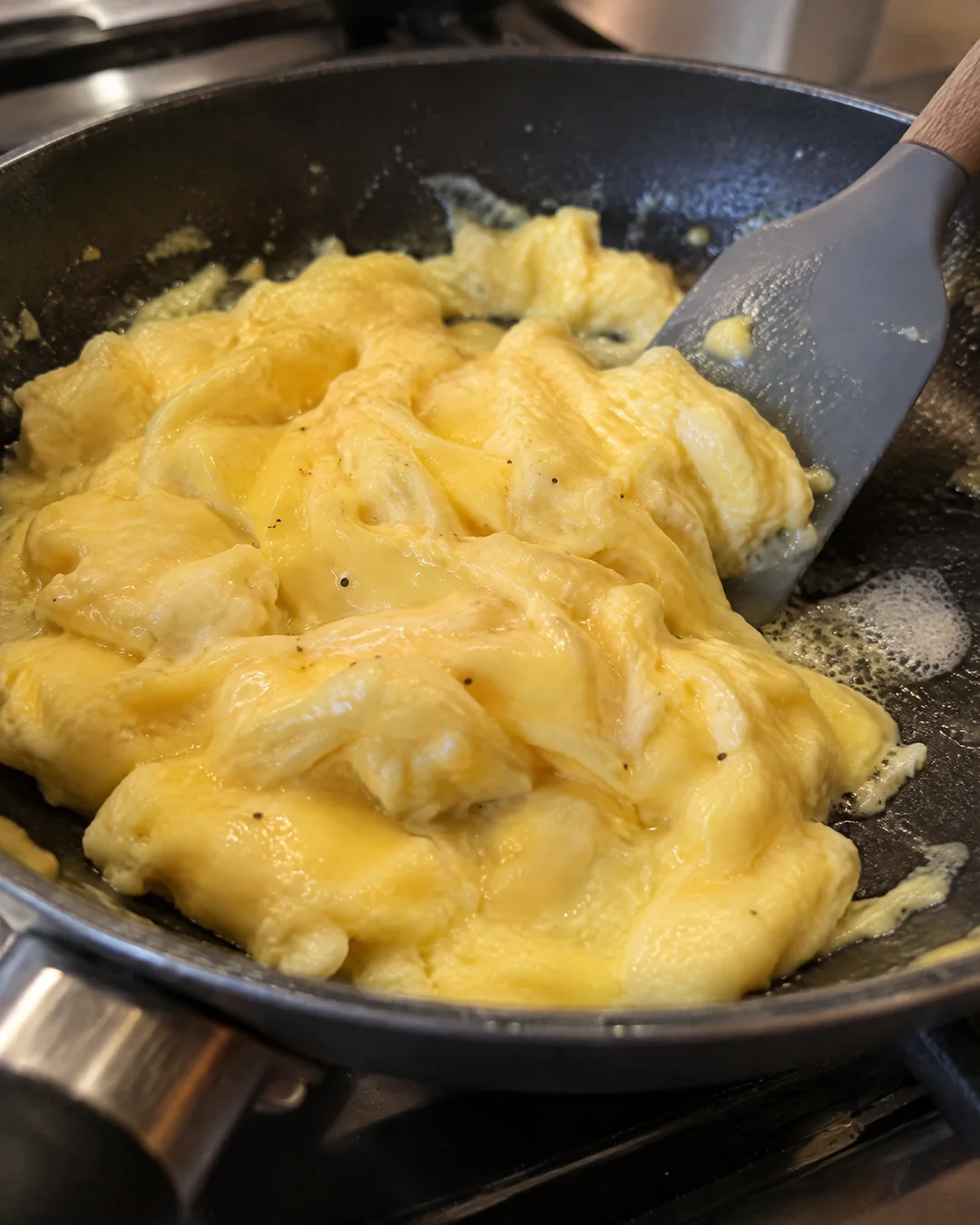
- When the eggs start to thicken, lift the pan off the heat for a few seconds, keep folding, then set it back on. Repeat. This keeps the heat gentle.
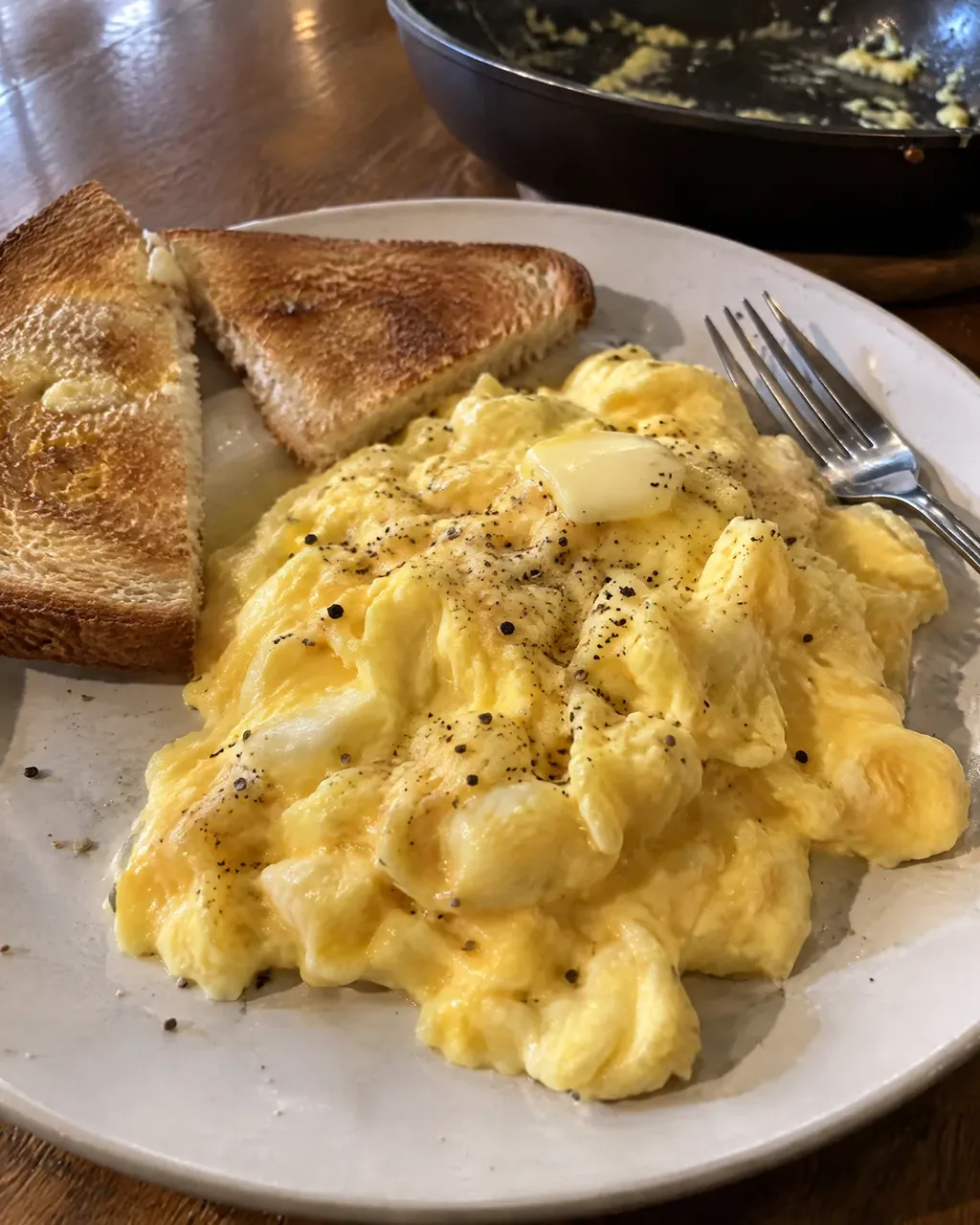
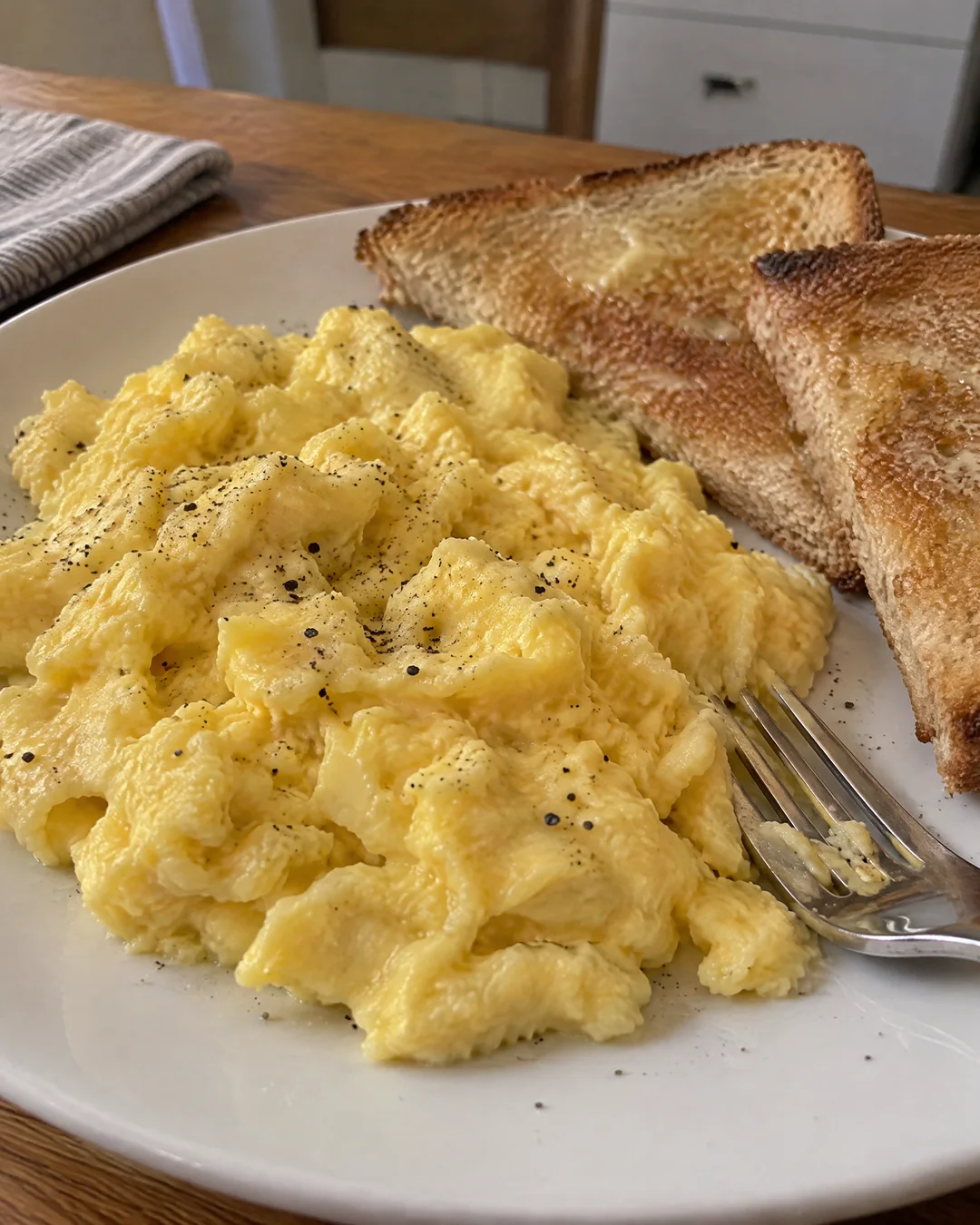
- Take the eggs off the heat when they are in large soft folds but still look glossy and a little wet, like loose custard in places, with no liquid running across the pan. That is the moment.
- Slide them onto warm plates straight away, salt and pepper them, and serve with buttered toast.
Tips that make the difference
- Warm the plates. Cold plates chill the eggs; very hot plates keep cooking them.
- Use a silicone spatula, not a fork, so you make big folds and scrape the pan clean.
- If the eggs set too fast, pull the pan off the heat more often. Slow is the whole trick.
- Make toast before you start the eggs. Eggs wait for nobody.
Variations
- Cheese. Scatter a handful of grated sharp cheddar over the eggs just before you take them off the heat.
- Chives. Fold in snipped chives or green onion tops at the end.
- Extra rich. Add a small knob of cold butter to the pan as you take it off the heat and fold it through.
- For a crowd. Use a wider pan, not higher heat, and work in batches of 6 eggs.
Storage and make-ahead
Scrambled eggs are best eaten the minute they are made.
If you must keep some, refrigerate them in a covered container for up to 1 day and warm gently in a buttered pan over low heat, adding nothing else.
They do not freeze well.
Frequently asked questions
Why are my scrambled eggs rubbery?
They were cooked on high heat or left on the heat until they looked done. Cook them low and slow and take them off while they still look a little wet; they finish on the plate.
How wet should they look when they leave the pan?
Glossy and soft, in big loose folds, with a few places that look like thick custard, but no raw liquid running across the pan.
Should I add milk to scrambled eggs?
My mother never did. Milk or water tends to separate and leave a puddle on the plate. Butter makes them creamy.
When should I salt scrambled eggs?
At the end, on the plate. Salted raw eggs left to sit can turn watery.
Low heat, a slow spatula, and the nerve to stop early. That is all there ever was to it.
Soft Creamy Scrambled Eggs (and Why Yours Come Out Rubbery)
How to make soft, creamy scrambled eggs the old way: butter, low heat, big slow folds, salt at the end, and off the heat while they still look a little wet. Exactly how wet, with measurements for 2 or 6 eggs.
Ingredients
- 4 large eggs
- 1 1/2 tablespoons unsalted butter
- Fine salt, to taste
- Freshly ground black pepper, to taste
- Buttered toast, to serve
Instructions
- Crack the eggs into a bowl and beat them well with a fork until no streaks of white remain and the color is even.
- Set an 8 to 9 inch skillet over low heat and add the butter. Let it melt and foam gently without browning.
- Pour in the eggs and leave them alone for about 20 seconds, until the edges just begin to set.
- With a silicone spatula, push the eggs slowly from the edge to the center, letting the raw egg run into the gaps. Keep making long slow passes across the pan.
- When the eggs start to thicken, lift the pan off the heat for a few seconds, keep folding, then set it back on. Repeat. This keeps the heat gentle.
- Take the eggs off the heat when they are in large soft folds but still look glossy and a little wet, like loose custard in places, with no liquid running across the pan. That is the moment.
- Slide them onto warm plates straight away, salt and pepper them, and serve with buttered toast.