In this article
My mother made real cinnamon rolls on Saturdays, when she had the whole morning and the kitchen was warm enough for the dough to rise. On a Tuesday she made this cake instead, and I stopped apologizing for it years ago, because nobody at my table has ever missed the yeast. My father ate the corner pieces first, because the corners carry the most sugar, and my brothers fought him for them every single time.
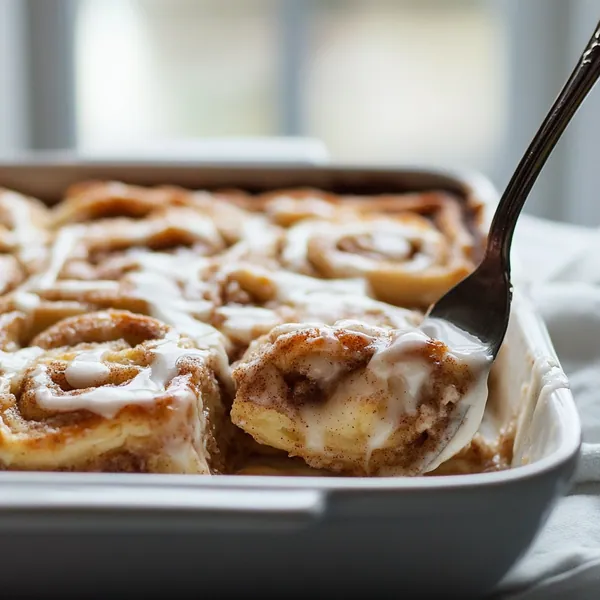
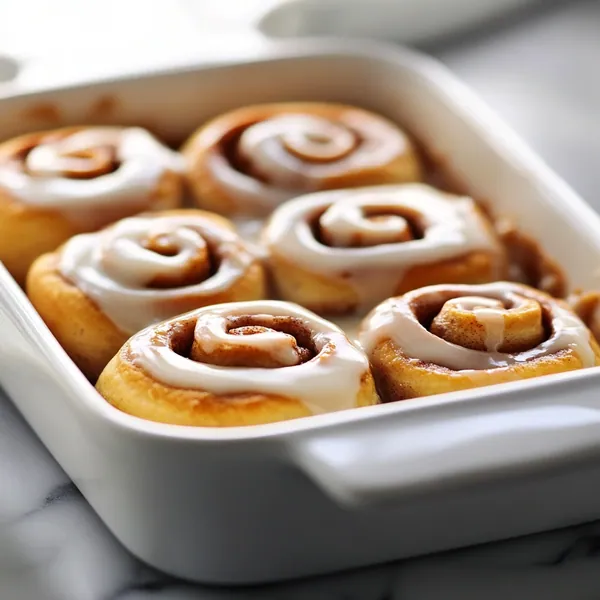
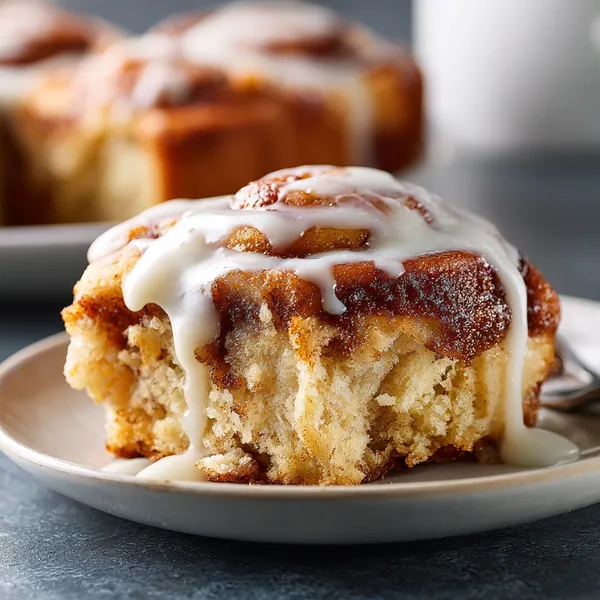
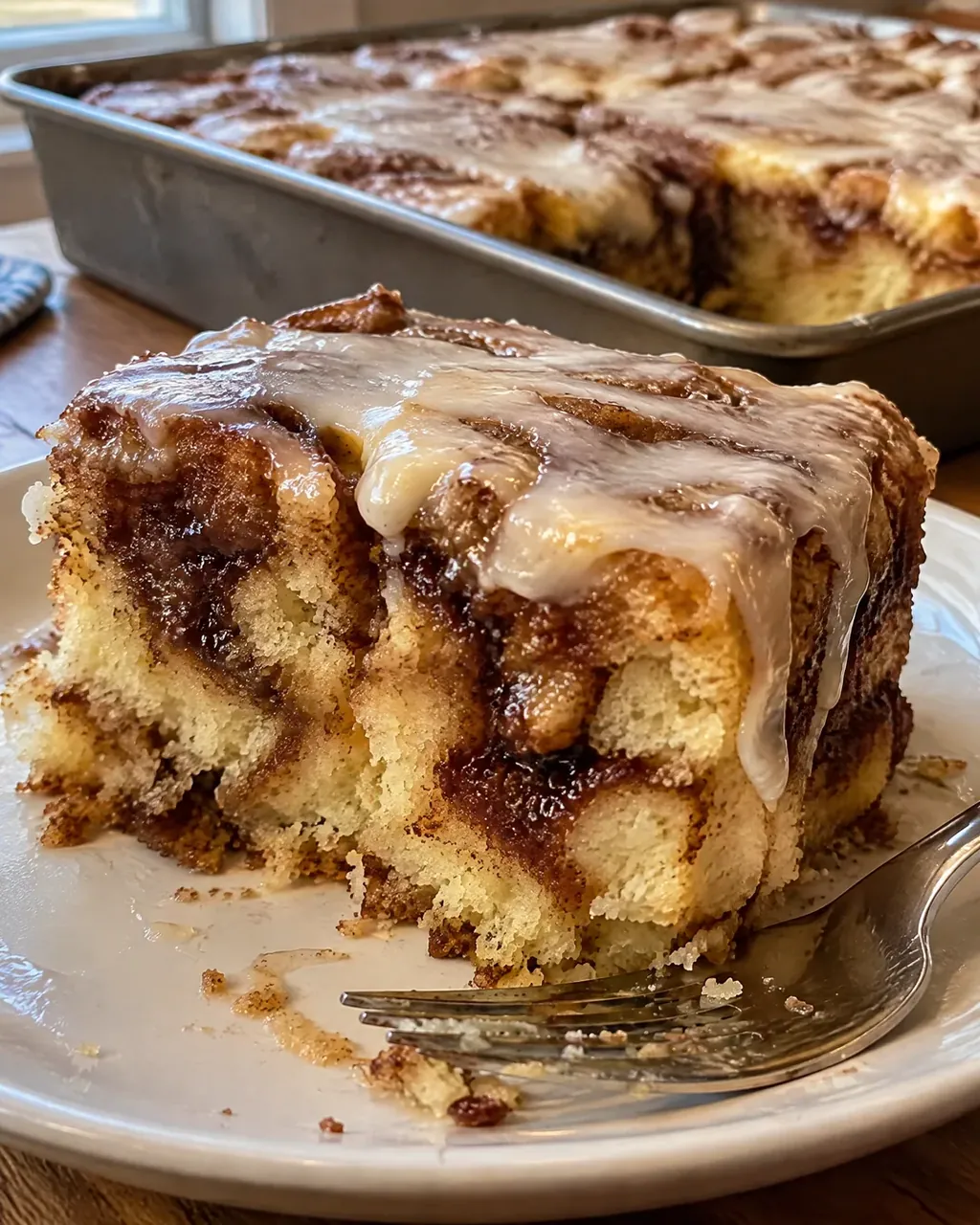
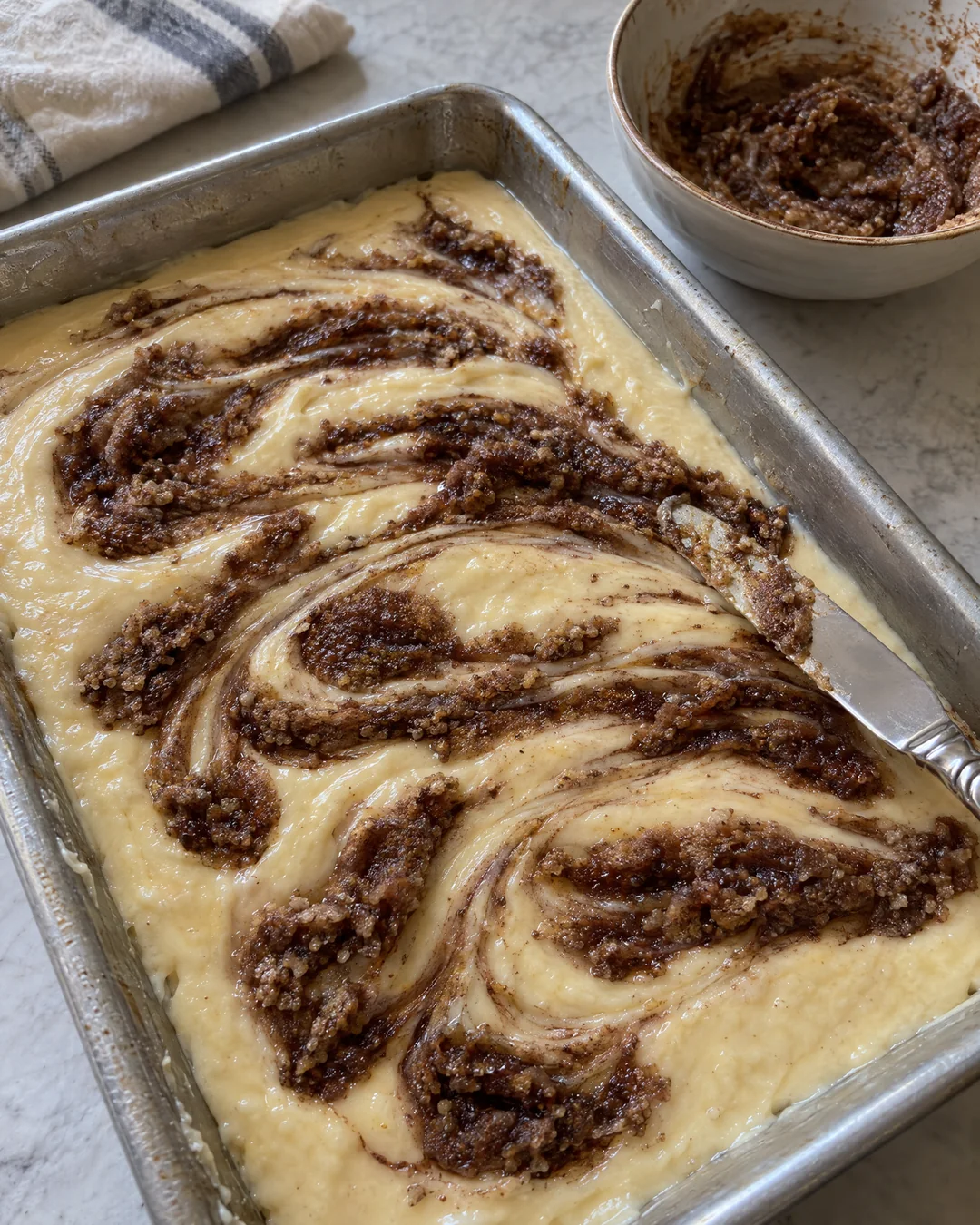
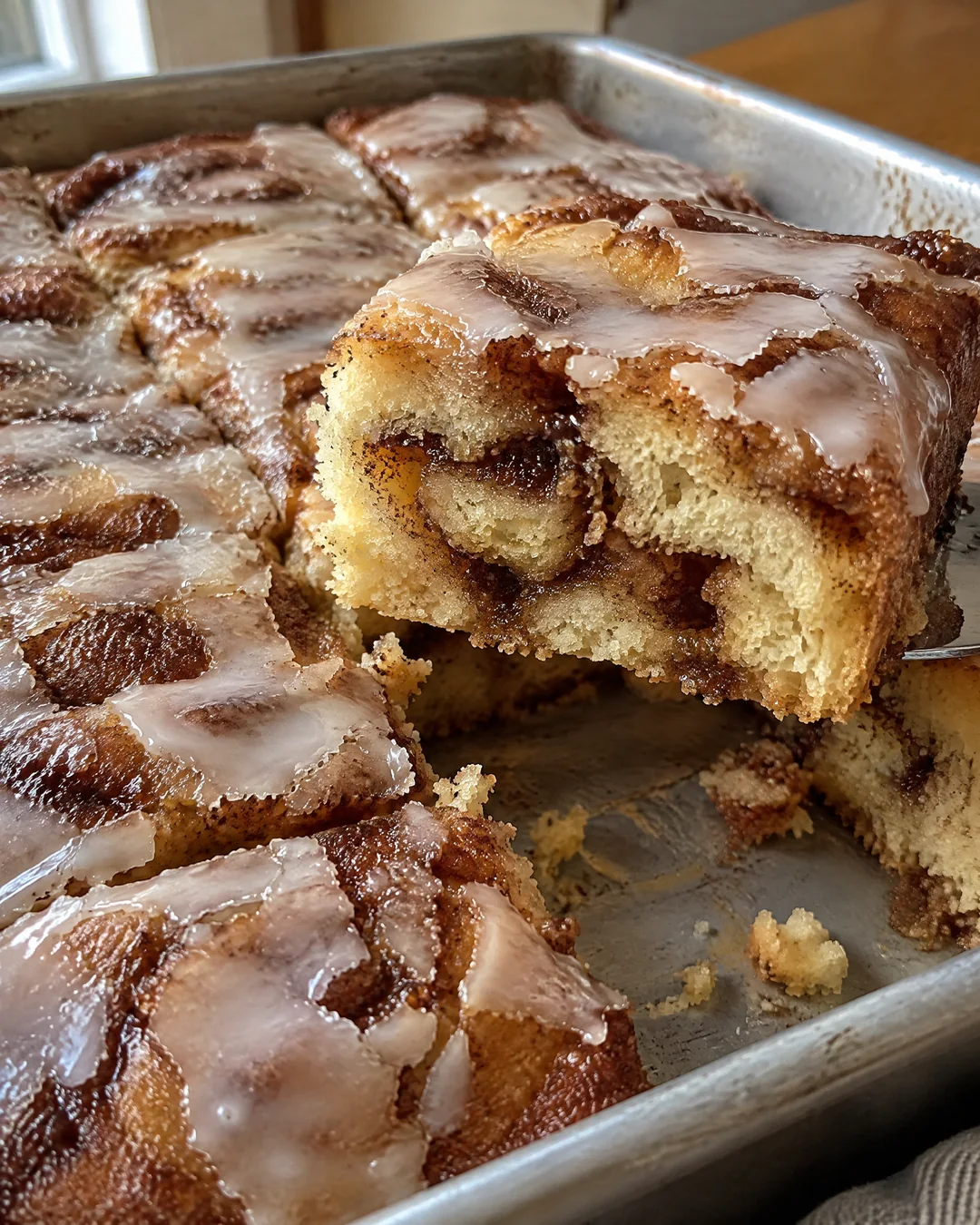
The cake itself is a plain, tender buttermilk batter. The magic is on top. Butter, brown sugar and cinnamon are beaten into a soft paste and dropped over the batter in spoonfuls, then a butter knife is dragged through in long loops so the cinnamon sinks down into the cake in ribbons. In the oven the swirl melts and turns sticky, exactly like the gooey middle of a roll. A thin vanilla glaze goes over the top while the cake is still warm and sets into a fine crackle. The question everybody asks is how thick to make the swirl so it sinks instead of sitting on top, and the answer is below: soft, spreadable, and never melted.
Why this cinnamon roll cake works
- Buttermilk in the batter. It keeps the crumb soft and gives the cake the faint tang of a yeast dough without the waiting.
- Softened butter in the swirl, not melted. Soft butter beaten with brown sugar makes a thick paste that sinks in ribbons. Melted butter runs off and pools at the edges.
- Five or six long loops. Swirling just enough leaves distinct ribbons. Stirring it in turns the whole cake light brown.
- Glaze on a warm cake. The glaze melts into the top layer and then sets thin, the way it does on a fresh roll.
Ingredients
Makes one 9x13 inch cake, about 16 squares. The measurements are in US cups with grams in brackets.
For the cake
- 3 cups all-purpose flour (375g)
- 1 cup granulated sugar (200g)
- 1 tablespoon baking powder
- 1/2 teaspoon baking soda
- 1/2 teaspoon fine salt
- 1 1/2 cups buttermilk (360ml), at room temperature
- 2 large eggs, at room temperature
- 2 teaspoons vanilla extract
- 1/2 cup unsalted butter (113g), melted and slightly cooled
For the cinnamon swirl
- 1 cup unsalted butter (226g), very soft
- 1 cup packed light brown sugar (200g)
- 2 tablespoons all-purpose flour (16g)
- 1 tablespoon ground cinnamon
For the glaze
- 2 cups powdered sugar (240g)
- 4 to 5 tablespoons whole milk (60 to 75ml)
- 1 teaspoon vanilla extract
The swirl butter must be truly soft, like mayonnaise, so it beats into a smooth paste with the sugar. Leave it on the counter for a couple of hours, never soften it in the microwave.
How to make cinnamon roll cake
- Heat the oven to 350 degrees (175°C). Grease a 9x13 inch baking pan.
- In a large bowl, whisk the flour, sugar, baking powder, baking soda and salt.
- In another bowl, whisk the buttermilk, eggs and vanilla, then whisk in the melted butter. Pour into the dry ingredients and stir with a spatula just until no dry flour remains. Spread the batter evenly in the pan.
- Make the swirl: beat the soft butter, brown sugar, flour and cinnamon together with a spoon or a mixer until smooth and spreadable, like a thick frosting.
- Drop the swirl over the batter in small spoonfuls, spaced evenly across the whole pan. Drag a butter knife through in five or six long loops from one end to the other, then across. Stop there.
- Bake for 30 to 35 minutes, until a toothpick in the cake part comes out clean (the swirl will stay sticky).
- While it bakes, whisk the powdered sugar, 4 tablespoons of milk and the vanilla into a smooth glaze that just pours, adding the last spoon of milk if needed.
- Let the cake cool 10 minutes, then pour the glaze over the warm cake and spread it to the edges. Let it set 10 minutes before cutting.
Tips that make the difference
- Have the buttermilk and eggs at room temperature so the melted butter does not seize into lumps.
- Spoon the swirl in many small dollops rather than a few big ones. That spreads the ribbons all over the cake.
- Do not overbake. The cake is done when the batter part tests clean; the sticky swirl will always look wet.
- Cut with a knife dipped in hot water for clean squares through the glaze.
Variations
- Cream cheese glaze. Beat 4 ounces (113g) of soft cream cheese into the glaze for a tangier, roll-shop topping.
- Pecan. Scatter 3/4 cup (85g) chopped pecans over the swirl before baking.
- Apple. Fold 1 cup (125g) finely chopped apple into the batter for an October version.
- Half pan. Halve everything and bake in an 8 inch square pan for 25 to 30 minutes.
Storage and make-ahead
Keep the cake covered at room temperature for up to 3 days. It stays soft because of the buttermilk.
Warm a square for 10 to 15 seconds in the microwave before serving and the swirl turns gooey again, just like a fresh roll.
Freeze unglazed squares wrapped in plastic and foil for up to 2 months; thaw on the counter and glaze before serving.
Frequently asked questions
Why did my cinnamon swirl sit on top instead of sinking?
The butter was too firm or the swirl too thick to spread. It should be a soft paste. Spoon it in small dollops and drag the knife through so it breaks into the batter.
Why did my whole cake turn brown?
It was swirled too much. Five or six long loops are enough. More than that mixes the cinnamon into the batter instead of leaving ribbons.
Can I make it without buttermilk?
Stir 1 1/2 tablespoons of lemon juice or white vinegar into 1 1/2 cups of milk and let it stand 5 minutes. Real buttermilk gives the softer cake.
Can I make it the night before?
Yes. Bake and glaze it in the evening, cover the pan, and it will be just as good at breakfast. Warm each square for a few seconds.
All of the roll, none of the rising. Save the real thing for a Saturday and make this on a Tuesday.
Cinnamon Roll Cake (All the Roll, None of the Rising)
An old-fashioned cinnamon roll cake: a buttermilk sheet cake with a brown sugar and cinnamon butter swirl dragged through it, baked in a 9x13 pan at 350 degrees for 30 to 35 minutes and glazed warm. No yeast, no rolling.
Ingredients
- 3 cups all-purpose flour
- 1 cup granulated sugar
- 1 tablespoon baking powder
- 1/2 teaspoon baking soda
- 1/2 teaspoon fine salt
- 1 1/2 cups buttermilk (360ml), at room temperature
- 2 large eggs, at room temperature
- 2 teaspoons vanilla extract
- 1/2 cup unsalted butter (113g), melted and slightly cooled
- 1 cup unsalted butter (226g), very soft
- 1 cup packed light brown sugar
- 2 tablespoons all-purpose flour
- 1 tablespoon ground cinnamon
- 2 cups powdered sugar
- 4 to 5 tablespoons whole milk
- 1 teaspoon vanilla extract
Instructions
- Heat the oven to 350 degrees (175°C). Grease a 9x13 inch baking pan.
- In a large bowl, whisk the flour, sugar, baking powder, baking soda and salt.
- In another bowl, whisk the buttermilk, eggs and vanilla, then whisk in the melted butter. Pour into the dry ingredients and stir with a spatula just until no dry flour remains. Spread the batter evenly in the pan.
- Make the swirl: beat the soft butter, brown sugar, flour and cinnamon together with a spoon or a mixer until smooth and spreadable, like a thick frosting.
- Drop the swirl over the batter in small spoonfuls, spaced evenly across the whole pan. Drag a butter knife through in five or six long loops from one end to the other, then across. Stop there.
- Bake for 30 to 35 minutes, until a toothpick in the cake part comes out clean (the swirl will stay sticky).
- While it bakes, whisk the powdered sugar, 4 tablespoons of milk and the vanilla into a smooth glaze that just pours, adding the last spoon of milk if needed.
- Let the cake cool 10 minutes, then pour the glaze over the warm cake and spread it to the edges. Let it set 10 minutes before cutting.