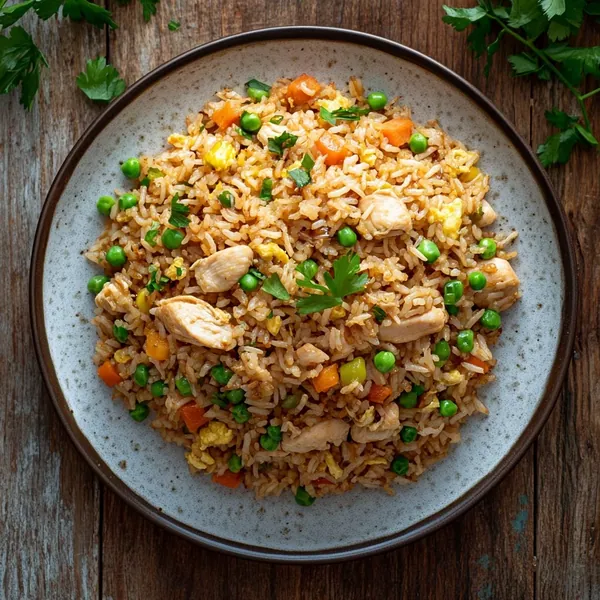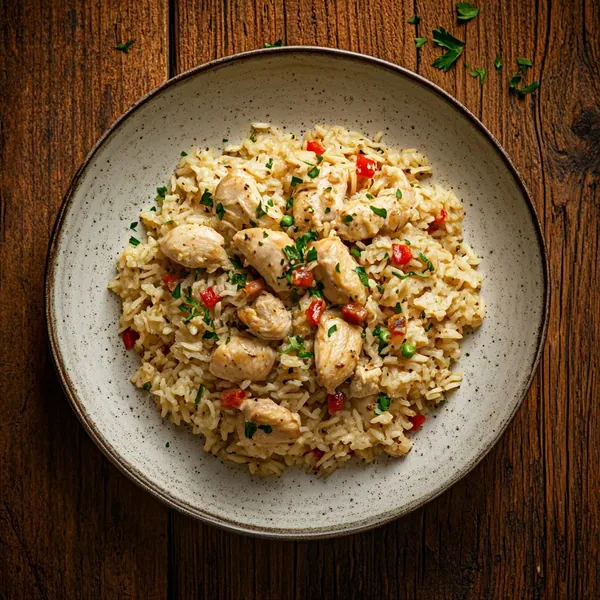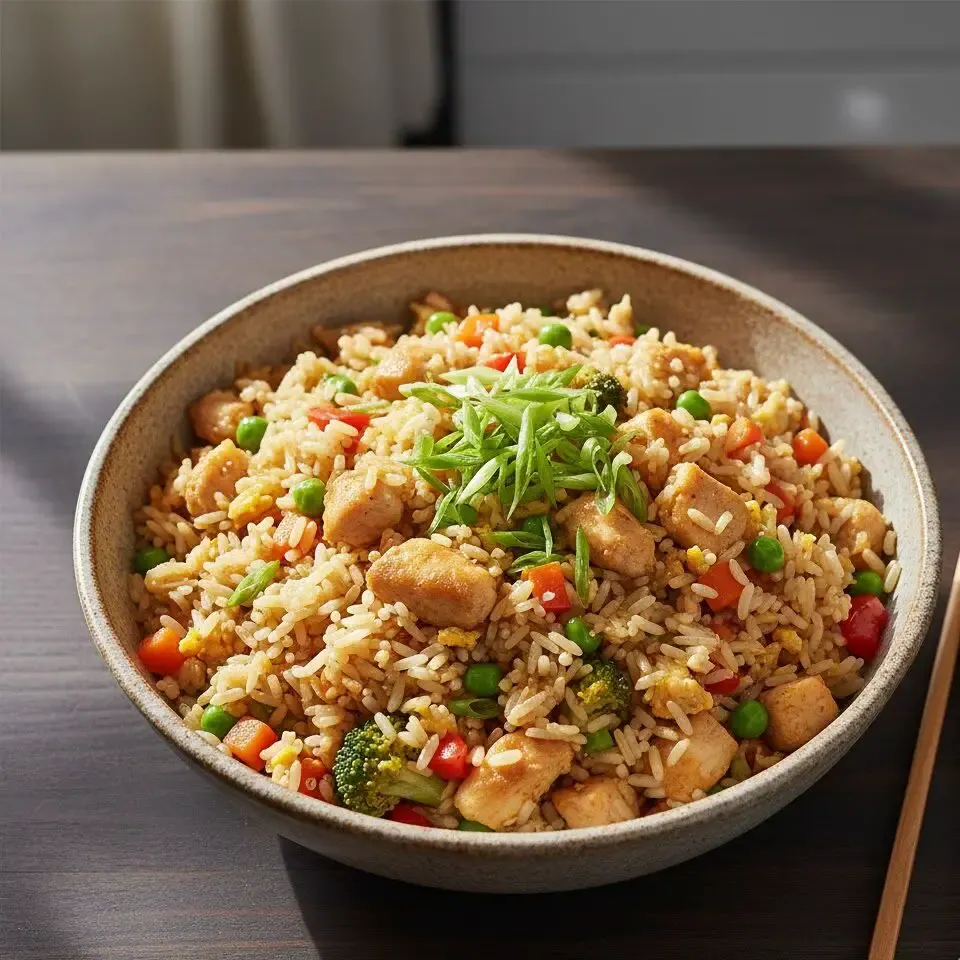
This chicken fried rice recipe turns cold leftover rice and a handful of fresh vegetables into a colourful, satisfying meal in just 25 minutes. I keep this dish on heavy rotation in Evelyn’s kitchen because it works beautifully as a midweek supper when time runs short but appetite runs high. In this guide, you will learn how to achieve perfectly separated, lightly charred grains of rice, tender chicken pieces, and crisp vegetables that rival your favourite takeaway. Whether you cook for a family of four or batch it up for lunchboxes, this chicken fried rice delivers reliable results every single time.
What Is Chicken Fried Rice?
Chicken fried rice is a wok-cooked dish that combines pre-cooked rice with diced chicken, eggs, and a medley of fresh vegetables, all seasoned with soy sauce and sesame oil. The technique of stir-frying rice originated in China during the Sui Dynasty (589-618 AD) as a practical way to use leftover cooked rice. The city of Yangzhou in eastern China’s Jiangsu province often receives credit as the birthplace of fried rice, and to this day, “Yangzhou fried rice” remains one of the most recognised versions worldwide.
As Chinese cuisine spread across the globe, fried rice adapted to local ingredients and tastes. British Chinese takeaways shaped the version most familiar in the UK: fluffy long-grain rice stir-fried with soy sauce, spring onions, and scrambled egg, often with chicken, prawns, or mixed vegetables. According to the Smithsonian Institution, fried rice demonstrates how a single cooking technique can produce hundreds of regional variations while maintaining the same core principle of transforming leftover rice into something entirely new.
The secret to exceptional chicken fried rice lies in using cold, day-old rice. Freshly cooked rice contains too much moisture, which causes clumping and steaming in the pan rather than frying. Cold rice has shed enough surface moisture overnight so that each grain separates easily in the wok and develops those desirable lightly toasted edges. If you enjoy quick one-pan meals like our black pepper chicken or our honey chilli chicken, this chicken fried rice fits perfectly alongside them in your weeknight rotation.
Ingredients for the Best Chicken Fried Rice
Every ingredient below pulls double duty, adding both flavour and visual appeal to the finished dish. Read through the complete list before you start chopping so that everything sits ready by the hob when the wok heats up.
| Ingredient | Quantity | Notes |
|---|---|---|
| Chicken breast | 400 g | Diced into 2 cm pieces |
| Cooked rice | 300 g | Cold, day-old rice works best |
| Eggs | 2 | Lightly beaten |
| Spring onions | 3 | Finely sliced, greens and whites separated |
| Carrots | 2 small | Diced into small cubes |
| Red pepper | 1 | Chopped into small pieces |
| Broccoli florets | 100 g | Cut into small, bite-sized pieces |
| Frozen peas | 100 g | No need to defrost first |
| Garlic | 2 cloves | Finely chopped |
| Toasted sesame oil | 1 tbsp | Adds nutty, aromatic depth |
| Soy sauce | 3 tbsp | Reduced-salt if preferred |
| Sunflower oil | 1 tbsp | High smoke point for wok frying |
| Sea salt | To taste | Fine sea salt preferred |
| Ground black pepper | To taste | Freshly ground for best flavour |
Choosing the Right Rice
Long-grain rice produces the best results for fried rice because the grains stay separate and fluffy after cooking. Jasmine rice adds a subtle fragrance, while basmati rice keeps each grain beautifully distinct. Avoid short-grain or sushi rice, which clings together and creates a sticky, clumpy finished dish. The absolute golden rule: cook your rice the day before, spread it on a plate, and refrigerate it uncovered overnight. This step dries the surface of each grain and guarantees that your fried rice fries rather than steams. If you need rice the same day, spread freshly cooked rice on a baking tray and place it in the fridge for at least one hour, or the freezer for 15 minutes, before stir-frying.
Understanding Soy Sauce Options
Light soy sauce adds saltiness and a clean umami flavour without darkening the rice too much. Dark soy sauce contributes a deeper colour and a slightly sweet, caramel note. This recipe calls for standard soy sauce (which sits between the two), but you can mix one tablespoon of dark soy with two tablespoons of light soy for a more complex result. Reduced-salt soy sauce works perfectly if you watch your sodium intake. According to the NHS, adults should consume no more than 6 g of salt per day, and using reduced-salt soy sauce helps keep this meal well within those guidelines.
Smart Substitutions
Replace the chicken breast with boneless chicken thigh for a juicier result; thigh meat holds moisture better during high-heat stir-frying. For a vegetarian version, swap the chicken for 300 g of firm tofu, pressed and cubed, and increase the soy sauce by one tablespoon to compensate for the milder protein. Prawns make a superb alternative to chicken; add 300 g of raw king prawns during the vegetable stir-fry stage and cook until pink and curled. Our chicken tikka masala recipe demonstrates how versatile chicken breast can be across different cuisines.
Equipment You Need
Chicken fried rice requires minimal equipment, and most kitchens already contain everything on this list:
- A large wok or deep frying pan (at least 30 cm diameter)
- A wok spatula or wooden spoon
- A sharp knife and chopping board
- A small bowl for the beaten eggs
- A plate for resting the cooked chicken and egg
A carbon steel wok conducts heat most efficiently and allows you to achieve the high temperatures needed for proper stir-frying. However, a large non-stick frying pan works perfectly well for a home kitchen, especially on a standard gas or electric hob. The key factor is surface area; a larger pan prevents overcrowding, which lets the rice fry rather than steam.
How to Make Chicken Fried Rice (Step-by-Step)
Follow these detailed steps and you will produce restaurant-quality chicken fried rice in your own kitchen. The entire process moves quickly once you start cooking, so prepare all your ingredients before you heat the wok.
Preparing All Ingredients
Step 1: Mise en Place
Dice the chicken breast into 2 cm pieces and set aside on a clean plate. Finely chop the garlic. Slice the spring onions, keeping the white and green parts separate. Dice the carrots, chop the red pepper, and cut the broccoli into small, bite-sized florets. Beat the two eggs lightly in a small bowl. Measure out the soy sauce and sesame oil. Break up any large clumps of cold rice with your fingers or a fork. Having everything prepared and within arm’s reach before you turn on the heat makes the cooking process smooth and stress-free.
Cooking the Protein
Step 2: Sear the Chicken
Heat the sunflower oil in your wok or large frying pan over medium-high heat until the oil shimmers. Add the diced chicken in a single layer, leaving small gaps between the pieces so that each one sears rather than steams. Cook for six to eight minutes, tossing every couple of minutes, until every piece turns golden brown on the outside and shows no pink in the centre. Transfer the chicken to a clean plate and set aside.
[!TIP] Pat the chicken pieces dry with kitchen paper before they go into the wok. Removing surface moisture promotes browning and prevents the oil from spitting.
Scrambling the Eggs
Step 3: Scramble the Eggs
Pour the beaten eggs into the same hot wok. Let them sit undisturbed for about 10 seconds until the edges begin to set, then use your spatula to break them into soft, fluffy scrambled pieces. Cook for another 20 to 30 seconds until just set but still slightly moist. Remove the scrambled egg from the wok and add it to the plate with the chicken. The residual heat finishes cooking the egg gently. Overcooking at this stage produces rubbery egg pieces that dry out further when you return them to the wok later.
Stir-Frying the Vegetables
Step 4: Cook the Aromatics and Vegetables
Add the sesame oil to the wok and let it heat for a few seconds. Toss in the chopped garlic and the white parts of the spring onions. Stir for 30 seconds until fragrant. Add the diced carrots, broccoli florets, and chopped red pepper. Stir-fry for about five minutes, keeping the vegetables moving constantly, until the carrots begin to soften and the broccoli turns vivid green with lightly charred edges. The vegetables should retain a pleasant crunch; you want them tender-crisp, not mushy.
Adding the Rice
Step 5: Fry the Rice
Add the cold rice directly to the wok with the vegetables. Use your spatula to break up any remaining clumps and press the rice against the hot surface of the wok. Stir-fry for two to three minutes, tossing vigorously, until every grain heats through and some grains pick up a slight golden colour from the wok. This light toasting creates the characteristic nutty flavour and slightly chewy texture that defines great fried rice. The Food Standards Agency recommends reheating rice until it reaches piping hot temperatures throughout to ensure food safety.
Bringing Everything Together
Step 6: Return the Chicken and Egg
Tip the cooked chicken and scrambled egg back into the wok with the rice and vegetables. Give everything a thorough stir to distribute the protein evenly through the rice.
Step 7: Season and Finish
Pour the soy sauce around the edge of the hot wok rather than directly onto the rice. This allows the sauce to sizzle and caramelise slightly on the hot metal before mixing into the dish, adding a richer depth of flavour. Scatter in the frozen peas and the green parts of the spring onions. Continue stir-frying for another two to three minutes until the peas heat through and everything combines evenly. Season with sea salt and freshly ground black pepper to taste. Serve immediately onto warm plates straight from the wok.
Troubleshooting Your Chicken Fried Rice
Even a simple stir-fry can throw up a few problems. Here are the most common issues and how to fix them.
Why Is My Fried Rice Soggy and Mushy?
Soggy fried rice almost always results from using freshly cooked, still-warm rice. Warm rice releases steam the moment it hits the hot wok, and that steam turns the dish mushy. Always use rice that has spent at least eight hours in the fridge. If you must cook rice on the same day, spread it thin on a baking tray and chill it in the freezer for 15 minutes to drive off surface moisture.
My Chicken Pieces Turned Out Dry
Dry chicken usually means overcooking or cutting the pieces too small. Keep your dice at around 2 cm; smaller pieces lose moisture rapidly at high heat. Remove the chicken from the wok as soon as it turns golden and cooked through, and let the residual heat finish the job. Using boneless chicken thigh instead of breast adds natural fat that keeps the meat juicy even with extended cooking.
The Rice Sticks to the Pan
Sticking happens when the wok is not hot enough or when you add too much rice at once. Heat the wok until the oil shimmers before adding any ingredients. If your wok or pan is on the smaller side, cook the rice in two batches. A well-seasoned carbon steel wok naturally develops a non-stick surface over time and virtually eliminates sticking. Our katsu curry recipe shows another example of how pan temperature controls the final texture of fried foods.
Everything Tastes Bland
Fried rice needs bold seasoning because the large volume of plain rice dilutes flavour quickly. Add the soy sauce around the edge of the wok so it caramelises before mixing in. If the dish still tastes flat after adding 3 tablespoons of soy sauce, stir in an extra tablespoon along with a pinch of white pepper. A squeeze of fresh lime juice just before serving brightens the entire dish.
The Eggs Turned Rubbery
Rubbery eggs come from cooking them too long or at too high a heat in the initial scramble. Keep the scrambling step to 30 to 40 seconds maximum and remove the eggs while they still look slightly underdone. They continue cooking from residual heat and again when you return them to the wok at the end.
Recipe Variations
Chicken fried rice adapts brilliantly to different proteins, vegetables, and flavour profiles.
Prawn Fried Rice
Replace the chicken with 300 g of raw king prawns. Add them to the wok after the vegetables and cook for two to three minutes until pink and just curled. Prawns cook much faster than chicken, so watch them carefully to avoid a rubbery texture.
Vegetable and Tofu Fried Rice
Swap the chicken for 300 g of firm tofu, pressed and cut into 2 cm cubes. Fry the tofu first until golden on all sides, then set aside and follow the same method. Add an extra tablespoon of soy sauce to boost the savoury flavour.
Spicy Chilli Fried Rice
Add one finely sliced red chilli and half a teaspoon of chilli flakes to the wok alongside the garlic in Step 4. For extra heat, drizzle Sriracha or your favourite hot sauce over the finished dish. This version pairs wonderfully with a cooling side of cucumber salad.
Egg Fried Rice (No Protein)
Skip the chicken entirely and increase the eggs to four. Scramble two at the start and stir the remaining two beaten eggs directly into the rice during the frying stage. This classic egg fried rice makes a perfect side dish for curries and stir-fries. Our Spanish chicken recipe pairs beautifully with a simple egg fried rice alongside.
Serving and Storage
How to Serve Chicken Fried Rice
Dish up chicken fried rice immediately after cooking, straight from the wok onto warm plates or into bowls. Scatter extra sliced spring onions and a sprinkle of sesame seeds on top for a professional finish. Serve with additional soy sauce on the side so diners can adjust the seasoning to their preference. For a more substantial spread, set out small dishes of chilli oil, pickled ginger, and prawn crackers alongside the fried rice.
Storage Guidelines
Transfer any leftover chicken fried rice to an airtight container and refrigerate within one hour of cooking. Leftovers keep well in the fridge for up to three days and make a genuinely good packed lunch served cold or reheated. When reheating, use a hot wok or frying pan rather than a microwave if possible; the direct heat restores some of the crispy texture you lose in the fridge. Always reheat rice until it reaches piping hot all the way through before eating.
[!WARNING] Never leave cooked rice at room temperature for more than one hour. Bacteria called Bacillus cereus can multiply on warm, starchy foods and cause food poisoning. Cool rice rapidly and refrigerate promptly to keep it safe.
Can You Freeze Chicken Fried Rice?
Yes, chicken fried rice freezes well for up to two months. Portion it into individual freezer-safe containers, allow it to cool completely, then seal and freeze. Defrost overnight in the fridge and reheat thoroughly in a hot wok or frying pan until piping hot throughout.
Frequently Asked Questions (FAQ)
Why do you need cold rice for fried rice?
Cold, day-old rice has lost enough surface moisture so that each grain separates easily in the hot wok. Freshly cooked rice contains too much steam, which causes clumping and produces a mushy finished dish. Refrigerating the rice overnight dries the outer starch layer and allows the grains to fry individually, creating that desirable light and slightly charred texture.
Can I use any type of rice for chicken fried rice?
Long-grain varieties like jasmine and basmati produce the best results because their grains stay distinct and fluffy after stir-frying. Short-grain rice, such as sushi rice or risotto rice, contains too much starch and clings together, making it unsuitable for fried rice. Brown rice works if you prefer a wholegrain option, though the texture will feel chewier.
How do I know when the chicken is fully cooked?
Cut into the thickest piece of chicken to check. The meat should show no pink at all and the juices should run completely clear. If you own a digital probe thermometer, the internal temperature should reach 75 degrees Celsius. Always cook chicken fully before removing it from the wok; you return it later for a brief reheat, which does not add significant additional cooking time.
Is chicken fried rice safe to reheat?
Yes, as long as you follow safe practices. Cool the fried rice quickly after cooking and refrigerate it within one hour. When you reheat it, make sure the rice reaches piping hot temperatures all the way through. Only reheat once. The Food Standards Agency advises these precautions specifically for rice dishes to prevent Bacillus cereus food poisoning.
What gives takeaway fried rice that smoky flavour?
That distinctive smoky taste comes from a phenomenon called “wok hei,” which translates to “breath of the wok.” It develops when rice makes direct contact with an extremely hot wok surface (often above 300 degrees Celsius in professional kitchens). Home hobs rarely reach those temperatures, but you can get close by using a carbon steel wok preheated on the highest setting, cooking in small batches, and tossing the rice frequently so it contacts the hottest part of the wok repeatedly.
Can I make chicken fried rice with leftover roast chicken?
Absolutely. Shredded or diced leftover roast chicken saves you the initial cooking step entirely. Simply add it to the wok at Step 6 alongside the scrambled egg and warm it through for two minutes. This makes the recipe even faster and works brilliantly with Sunday roast leftovers.
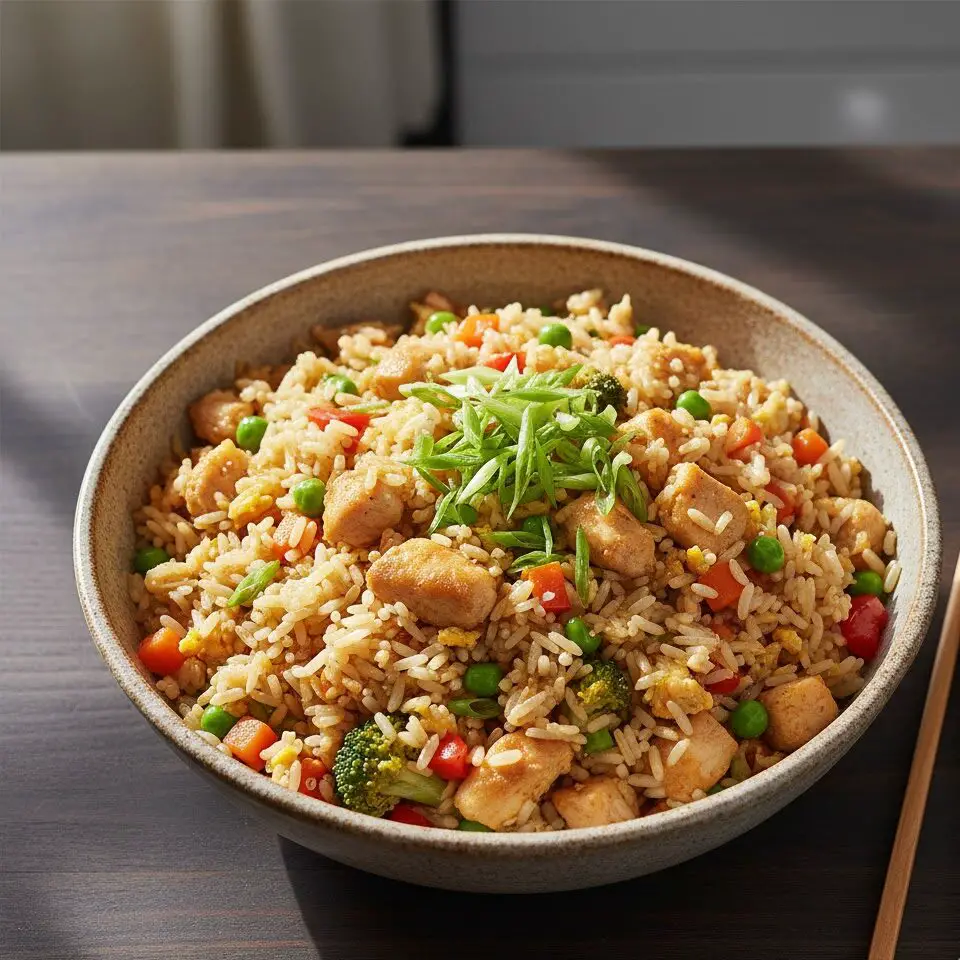
Chicken Fried Rice Recipe: A Quick One-Pan Dinner in 25 Minutes
A quick and colourful chicken fried rice made with tender diced chicken, scrambled eggs, crisp vegetables, and fluffy day-old rice, all tossed in soy sauce and sesame oil. Ready in 25 minutes and serves 4.
Ingredients
- 400 g chicken breast, diced into 2 cm pieces
- 300 g cooked rice, cold and day-old
- 2 eggs, lightly beaten
- 3 spring onions, finely sliced
- 2 small carrots, diced
- 1 red pepper, chopped
- 100 g broccoli florets, cut small
- 100 g frozen peas
- 2 cloves garlic, finely chopped
- 1 tbsp toasted sesame oil
- 3 tbsp soy sauce (reduced-salt if preferred)
- 1 tbsp sunflower oil
- Sea salt, to taste
- Ground black pepper, to taste
Instructions
- Prepare all ingredients: dice the chicken, chop the vegetables, beat the eggs, and break up any clumps of cold rice with a fork.
- Heat the sunflower oil in a large wok or deep frying pan over medium-high heat. Add the diced chicken and cook for 6 to 8 minutes until golden and cooked through. Remove and set aside.
- Pour the beaten eggs into the hot wok. Let them set for 10 seconds, then scramble into soft pieces. Remove and set aside with the chicken.
- Add the sesame oil to the wok. Stir in the garlic, carrots, broccoli, and red pepper. Stir-fry for 5 minutes until the vegetables begin to soften.
- Add the cold rice, breaking up any clumps. Stir-fry for 2 to 3 minutes until warmed through and lightly toasted.
- Return the chicken and scrambled egg to the wok. Stir everything together.
- Pour the soy sauce around the edge of the wok. Add the frozen peas and spring onion greens. Stir-fry for 2 to 3 minutes until everything is hot and well combined. Season with salt and pepper. Serve immediately.
Nutrition
- Serving
- 1 plate
- Calories
- 400 calories
- Sugar
- 6
- Sodium
- 680
- Fat
- 12
- Saturatedfat
- 3
- Unsaturatedfat
- 7
- Transfat
- 0
- Carbohydrate
- 45
- Fiber
- 4
- Protein
- 30
- Cholesterol
- 135